Stay In This World
The stories, the culture, the conversations. Every week.
No spam. No third parties. Just Unruly.
One film cannot fix a broken infrastructure. But it can change what a generation believes is possible.
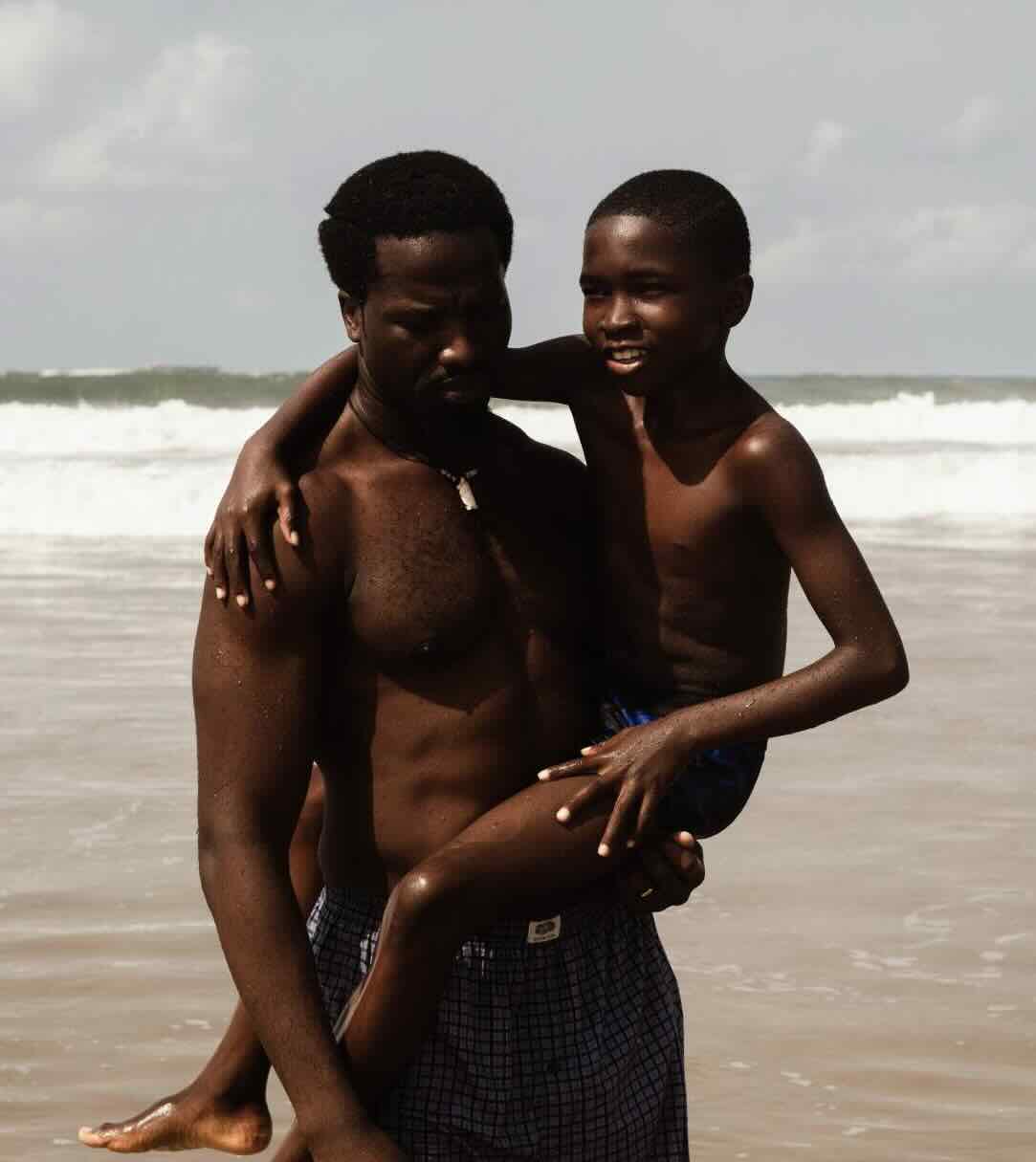
In June 2026, almost a year after its first theatrical run, My Father’s Shadow will return to Nigerian cinemas for a limited theatrical release. This does not come as a surprise. Since its first run, My Father's Shadow has accumulated the kind of international prestige that tends to transform African art into a national conversation: festival acclaim, a BAFTA win, five AMVCAs, and glowing criticism from foreign publications suddenly interested in the emotional possibilities of Nigerian cinema. There’s something about the re-release, and success of My Father’s Shadow that has felt significant and symbolic for reasons beyond awards, for the Nigerian film industry and our entire creative landscape. A film that has managed to create enough demand to return.
Taking the historical success of Nigerian cinema into account, a bold assumption can be made to say that on paper, My Father’s Shadow should not have become this kind of success story, especially because it is considered an indie film, a film genre that is not popular with the mass Nigerian audience.In an economy where going to the cinema increasingly feels like a luxury, Nigerian audiences are often imagined as practical consumers of entertainment. The assumptions around what works commercially have become so deeply embedded within Nollywood that they now feel almost immovable; fast pacing, familiar stars, emotional exaggeration, “memeable” dialogue, broad comedy, and spectacle large enough to justify the cost of a ticket. Beyond film, Nigerian creative industries have increasingly begun to operate under the logic of immediacy, which in turn means profit in certain instances. Music is made for virality. Writing is shaped for dynamic algorithms. Fashion is shaped to model repetitive aesthetics, and the attention spans of the audience are treated as permanently damaged. Therefore, creative industrialists are forced to wrestle between their creative instincts and economic fear.
However, the successful trajectory of My Father’s Shadow might be the beginning of the disruption of what many Nigerian creatives will believe is possible across multiple creative industries. Akinola Davies Jr. debut feature is, by any conventional Nigerian commercial logic, a risky piece of work, considering that the film embodies elements that are not popularly palatable to the Nigerian audience, especially if you’re looking to ‘win big’ in cinemas and the box office.
The film stars Ṣọpẹ́ Dìrísù as Fola, a hard-luck father who takes his two estranged young sons on an impulsive day trip to Lagos to collect a paycheck, all while Nigeria's fragile 1993 democratic election unravels around them. It is a delicately slow film, with a pace that holds feeling in each scene, long enough for you to feel the weight of what is inside it, void of any emotional spectacle that draws away from the depth of the story. This is not the template for a commercially safe Nigerian film, and that was never the point. The story had been developing since 2012, when Akinola's brother and co-writer Wale Davies wrote the first draft, a short piece about two brothers and a father, rooted in the loss of their own father when they were very young. For over a decade, the Davies brothers held the idea and eventually shaped it into something that did not compromise its essential nature in the pursuit of wider appeal. Akinola has spoken about the film as a "weird family heirloom", something made to mean something, to the brothers themselves, to their family, to their community. The film went on to accumulate one of the most decorated runs in recent African cinema history: a Caméra d'Or Special Mention at Cannes, Breakthrough Director for Davies Jr. , Best Director at the British Independent Film Awards; Outstanding Debut by a British Writer, Producer or Director at the 2026 BAFTAs; a selection as the United Kingdom's official submission for Best International Feature Film at the 98th Academy Awards; and, finally, five awards at the 2026 Africa Magic Viewers' Choice Awards, including Best Movie, Best Director, Best Writing, Best Score, and Best Sound Design, a sweep that confirmed what the world had already decided: My Father's Shadow is not just a landmark Nigerian film, it is a landmark film, full stop.
The decision to make it on those terms rather than other terms was itself a kind of bet, and the whole world is currently witnessing that bet pay off, locally and internationally. To understand what the weight of this kind of bet cost, you have to understand what it means to create art outside the commercial mainstream in Nigeria. The actual reality of pursuing niche creative expressions in Nigeria is deeply complicated. For one, the financial infrastructure to fund artists, and their creative expressions, in varied forms, simply does not exist here in the way it does globally. Also, underfunded productions struggle to meet global technical standards, making international distribution harder. There is no reliable system that supports art grants, there are no robust film festival circuits that function as a pipeline to funding, no culture of institutional support for work that prioritizes artistic vision over immediate return on profit. Investors who do engage with creative work want something that looks like a sure thing, which, in practice, means something familiar, which in turn results in a self-reinforcing loop. This cycle has created a precedent for filmmakers and creative industrialists to perceive the industry as one that scales majorly commercially legible work, and this restricts not only the creative instincts of filmmakers and creatives but limits the audience too. This is the part of the conversation that is flattened when people romanticize alternative art in Nigeria. The issue here might not be that the Nigerian audience “does not support” unconventional work, but that entire industries have become structured around prioritizing practicality and anticipating rejection of what is not considered profitable before audiences themselves have spoken.
There are brilliant Nigerian films, essays, photographs, and fashion projects that will continue to disappear every year, because they do not fit neatly into the existing commercial structures that guide the creative industry. There are artists who eventually give up on their creative pursuits, or telling the stories that truly matter to them, in the way they want to, because survival cannot sustain endless experimentation, definitely not in this economy. This is the unfortunate material reality that shapes every creative decision a Nigerian artist makes, long before they sit down to write, shoot or compose anything. The question of what you can afford to make is prior to the question of what you want to make, and for most people working outside the mainstream, those two questions have very different answers. The market's dominance is cited as proof that this is what audiences want, and the loop continues.
Long before international streaming services like Netflix, Prime Video, and Showmax began investing in African content, Nigerian filmmakers were building an industry with astonishing speed and ingenuity. Films were shot within record time frames, distributed, and consumed by millions across the continent. The industry grew because Nigerians insisted on telling their own stories even when international systems ignored them/ devoid of international recognition and validation. However, the improvisation and grit we’re used to, while admirable, cannot replace sustainability. Many Nigerian creatives still operate inside systems that reward output and numbers over originality and development. The importance of visibility is so crucial in this industry, sometimes overriding and ignoring the intricacy of craft. This creates an exhausting paradox. Nigerian creatives are constantly praised for their resilience, but resilience is often just another word for surviving conditions that should not exist. When audiences celebrate how Nigerian filmmakers “do so much with so little,” what is left unsaid is why they are still being forced to work with so little in the first place.
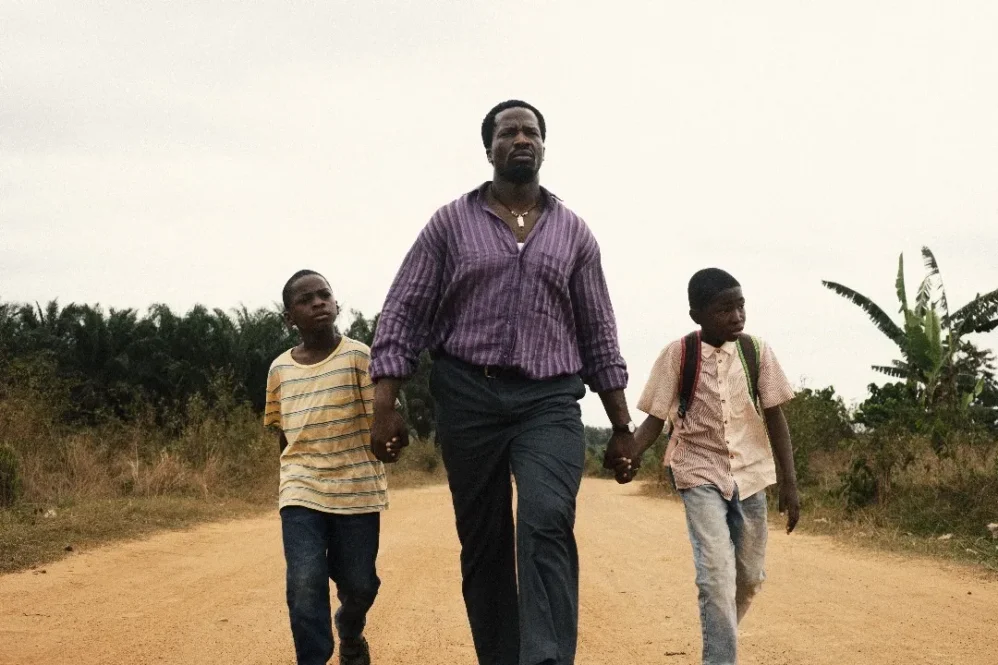
My Father’s Shadow fits into this conversation similarly because of the ecosystem surrounding it. The film was produced with international collaboration involving companies such as Element Pictures, BBC Film, and the BFI. It had access to forms of financing and institutional support many Nigerian filmmakers still cannot reach. Funmbi Ogunbanwo, one of the film's two producers and the founder of Lagos-based Fatherland Productions, notes that this history making film would not have even existed without the financial support of the BBC and British Film Fund. This does not diminish the film’s achievement. If anything, it reinforces that Nigerian filmmakers can thrive when given resources, time, and trust. After their major win at the AMVCA, Funmbi Ogunbanwo, and Wale Davies, producer and writer of My Father’s Shadow, called for Nigerian financiers to invest more in Nigerian films, and the Nollywood industry, in an interview with Nollywire. The importance of financial systems and infrastructure that support creatives in Nigeria cannot be overstated. Without it, there will always remain a limit to the abundance of dynamic stories that can be produced and exhibited in Nigeria.
There are still so many unanswered questions creatives will face when weighing the emotional cost of their creative pursuit. How does one remain imaginative when they’re creating in a bubble of economic anxiety? Nigerian creatives are constantly battling exhaustion, comparison, self-doubt, and fear of irrelevance, trying to produce the next big thing. The pressure to “make it” quickly can distort growth in various ways. Social media intensifies this anxiety further, creating endless visibility into other people’s success. Creatives begin to chase trends not because they lack originality, but because originality can feel financially dangerous. In many ways, the Nigerian market can be described as "largely driven by what sells fast, not what lingers in the heart." That orientation does not just shape what gets produced, but it also shapes what artists believe they are allowed to imagine.
The cost of choosing otherwise, of refusing to simplify yourself and your art into something more marketable is real and it is continuous. It means raising funding in ways that are exhausting and uncertain. It means working without the safety net that mainstream commercial structures, however imperfect, do provide. It means making peace with the possibility that your work might not reach enough people to sustain you, no matter how good it is. This is the part of this story that cannot be smoothed over in the telling. The success of My Father's Shadow is genuine, groundbreaking even, but it does not erase the harsh realities of creating in Nigeria that creatives have to confront frequently. It does not mean the infrastructure we so badly need to sustain the success of the industry long-term is fixed, or that the next person with a somewhat quiet, personal, formally ambitious film will find their path any less difficult. The conditions that make this kind of work hard to make in Nigeria have not changed because one film won at Cannes. The honest version of this story has to hold both things at once: the genuine significance of what the Davies brothers achieved, and the structural reality that made achieving it this difficult in the first place.
Regardless, My Father's Shadow has set an excellent precedent of what creatives can believe is possible. My Father's Shadow premiered in the Un Certain Regard section of the Cannes Film Festival, the first Nigerian film ever to feature in the festival's official selection, in Cannes' near-eighty-year history. The significance of that sentence is worth sitting with. Nollywood is the second most prolific film industry in the world by output. Nigeria has been producing films commercially since the early 1990s. Generations of Nigerian filmmakers have made work of extraordinary range and emotional intelligence. And yet, until a semi-autobiographical, devastating film about a father and his two sons in Lagos in 1993 walked into the Un Certain Regard, Nigeria had never been in that room.
The film did not just premier in the festival, it received the Caméra d'Or Special Mention, awarded to the most outstanding debut feature in the official selection. It went on to win the Silver Peacock Special Jury Award at the International Film Festival of India. Best Director at the Pingyao International Film Festival. Two Gotham Independent Film Awards, including Breakthrough Director for Davies Jr. and Outstanding Lead Performance for Ṣọpẹ́ Dìrísù. Best Director at the British Independent Film Awards, from a pool of twelve nominations. Outstanding Debut by a British Writer, Producer or Director at the 2026 BAFTAs. It was selected as the United Kingdom's official submission for Best International Feature Film at the 98th Academy Awards. And then, in May 2026, it came home and swept the Africa Magic Viewers' Choice Awards with five prizes, including Best Movie, Best Director, Best Writing, Best Score, and Best Sound Design, winning against Nollywood titles that had dominated the industry conversation in the lead-up to the ceremony, and is now set for a re-release in Nigerian cinemas.
That trajectory from the Un Certain Regard to the AMVCA, is not just a list of accolades, it is proof that filmmakers and artists can trust their creative instinct, execute their expressions flawlessly, and win, home and abroad. The success of My Father’s Shadow that the whole world is currently witnessing is culturally significant, and it is without doubt symbolic. Re-releases are unusual, especially within Nigerian cinema culture because films are generally treated as short-cycle commercial products. The buzz this has created is also creating a new form of awareness and intrigue in the Nigerian audience. Even in the current era of increasingly prioritizing data over intuition, My Father’s Shadow has beautifully defied the odds.
What My Father's Shadow demonstrates, and this is the claim worth making, is that the general assumption about what the Nigerian audience wants is significantly incomplete. There is an audience for niche work. There has always been an audience for this work. The audiences who wept at Cannes and the audiences who packed screenings in Lagos when the film opened on September 19, 2025, are not fundamentally different people. They’re curious, emotionally intelligent, and entirely capable of engaging with a film that is slow and ambiguous but still holds deep meaning.
This matters beyond cinema, it impacts every creative industry. The creative industries in Nigeria share this same underlying anxiety about audience intelligence and appetite. The dominant logic that is communicated recurrently is identical across disciplines, that the audience is impatient, unsophisticated, and will not follow you anywhere unfamiliar. My Father's Shadow is a counterargument to all of it. It not only suggests that every uncommercial impulse is secretly viable, or that following your artistic instinct guarantees anything-it does not, but it demonstrates that the ceiling on Nigerian creative ambition is not determined by audience appetite. It is determined, at least in part, by what creative industrialists are willing to bet on, experiment with, and just try.
There is something else the film's success produces, which is harder to quantify, but perhaps much more important in the long run. It changes what younger creatives believe is possible for themselves. We’re seeing cultural narratives change in real time, not through proclamations or manifestos, but through the existence of proof. Before My Father's Shadow, a young Nigerian filmmaker with a niche, indie, personal, formally unusual story could be told, and often was told that this was not the kind of work that succeeded. After My Father's Shadow, that argument is a bit harder to make. The film's story is now part of the cultural record and will continue to pave the way for so many more landmark stories to be showcased to the world. It is available to every young creative who needs to know that this kind of bet is possible.That is no small feat. The expansion of what a generation of artists believes they are permitted to imagine is one of the most consequential shifts a cultural moment can produce.
Unfortunately, none of this resolves the structural problems. The funding infrastructure is still inadequate, and the commercial pressure is still real. A BAFTA win and five AMVCA awards do not build the institutions, the grant programs, the distribution networks, or the investor education that would make it systematically easier for the next generation of filmmakers and storytellers. The conditions that shaped the difficulty of this film's journey are largely intact. This is not a moment to paper over that with celebration.But it is, perhaps, a moment to be honest about what the success of this film has disproved. It has disproved the idea that Nigerian audiences cannot hold complexity. It has disproved the idea that ambitious Nigerian storytelling has no audience anywhere. It has disproved the idea that the path to international recognition runs exclusively through loud, and commercially legible work, and it has defied the logic, significantly, that creative instinct and cultural impact are fundamentally at odds, that to be true to your artistic vision is to sacrifice reach and returns.
Akinola Davies Jr. spent over a decade on a story, had a team that stood behind it, and then they stood in the Grand Théâtre Lumière in Cannes, in front of two thousand peers, and received a standing ovation. That is what it looks like to bet on your instinct. It is not smooth, it is not guaranteed, and the conditions under which the bet is made remain deeply unfair, but the film exists, and somewhere in Nigeria, a younger creative with a quiet, strange, true story they have been afraid to tell is watching all of this, and beginning to wonder.
That wonder is the most important thing My Father's Shadow produced. More important than any award, any review, any historic first. It has opened a door inside the imagination of an industry and left it open.