Stay In This World
The stories, the culture, the conversations. Every week.
No spam. No third parties. Just Unruly.
African women have always known what beauty looks like. The industry just convinced you to forget.
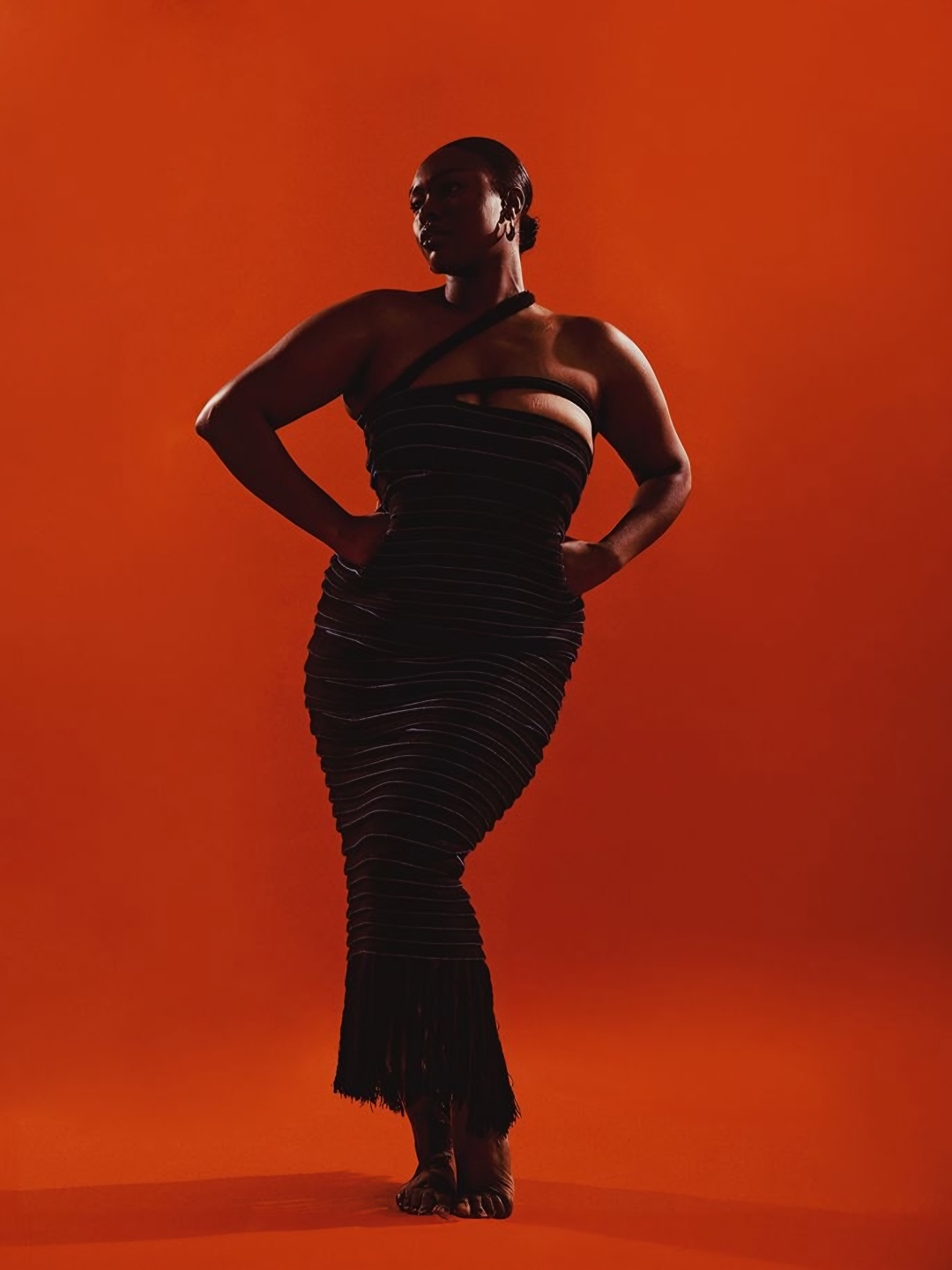
Chances are, you have seen a photograph like this. A grand or great-grand mother, an aunt, standing in her favorite traditional attire at a ceremony. She is fully-figured, unhurried in her body, entirely at ease. Nobody asked her to be anything else.
That woman was not considered beautiful despite her size. She was considered beautiful, in part, because of it. Something happened, between her time, and where we are now. Between the grandmother and the granddaughter scrolling through a feed of flat-stomached influencers selling teas that promise to fix something in her that wasn’t broken. That something is worth examining, because understanding it is the first step towards refusing it.
In pre-colonial Africa, fuller figures signified wealth, health, and fertility. A bigger bride was a beautiful bride because she came from a family that could afford to feed her well. Beauty was about abundance, not restriction.
This was not an accident of taste. It was a coherent value system rooted in the material realities of the continent. In communities where food was not guaranteed, a well nourished body was evidence of prosperity, of a family that could provide, of a woman who would thrive and carry life forward. In Nigeria, plus-sized women were celebrated as symbols of prosperity and fertility. A fuller figure was associated with good health and high social standing, making it an admired trait across many communities. Traditional ceremonies frequently showcased women of various sizes, with fuller figures receiving particular admiration for representing abundance and success. One of the most concrete expressions of this was the fattening room, a rite of passage among the Efik and Annang people of south-south Nigeria, where young women were fed generously before marriage as a cultural affirmation that a well-nourished body signified readiness, fertility, and respect.
In other parts of Africa as well, a fuller figure was viewed as a sign of health, prosperity, and respect. Women with curvier bodies were often considered more socially established and desirable. Many cultural traditions saw a curvier frame as a desirable marker of vitality and femininity.
For centuries, African sculptures, art, and historical depictions highlighted fuller figures as a representation of health, fertility, and strength. These beauty standards were rooted in the celebration of identity and varied depending on time, geography, and personal experience. They were not uniform across 54 countries and 3,000 ethnic groups. But the thread running through them was consistent: the full body was not a problem to be solved. Rather, It was a body to be celebrated.
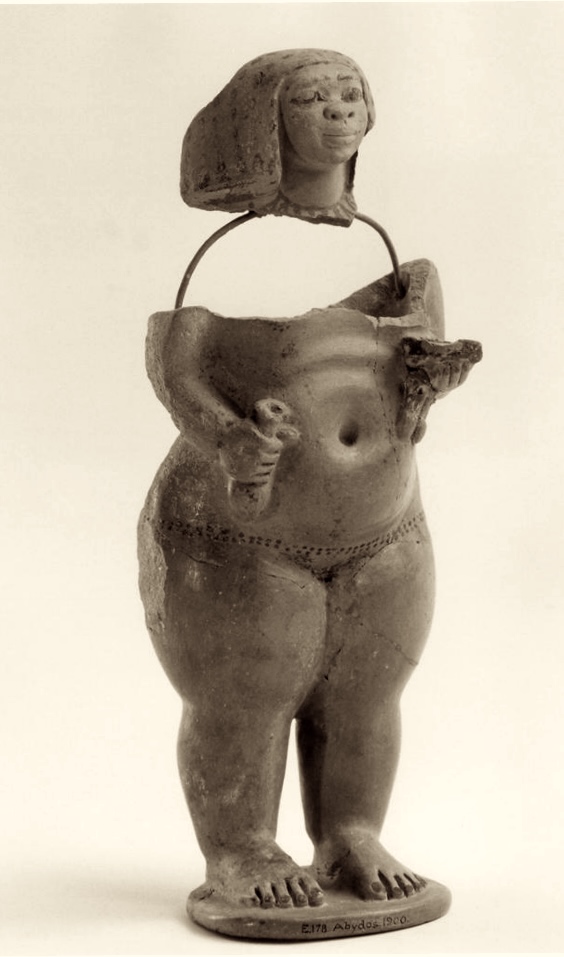
Then colonialism arrived with its own aesthetics, its own hierarchies of beauty, and its own insistence that the European body was the standard against which all others would be measured. The mission schools taught it. The imported magazines carried it. The television programs repeated it. Over generations, what had been internally generated and culturally specific became contaminated by an external gaze that had nothing to do with African women's actual lives, histories, or bodies.
Before going further, the health conversation deserves honesty. There are genuine medical considerations associated with certain body compositions. Research links some forms of obesity, specifically excess visceral fat, to elevated risks of conditions, including type 2 diabetes, cardiovascular disease, and hypertension. These are real findings and dismissing them entirely does not serve anyone, especially women.
But the health conversation as it is commonly conducted does not serve women entirely either. It is applied selectively, inconsistently, and almost always in the direction of shame. Women are lectured about their weight in contexts where thinness is assumed to equal health, a assumption that medical research does not actually support. Thin women with poor metabolic markers, high blood pressure, or disordered eating are rarely told their body is a problem. Full-figured women with excellent blood work, strong cardiovascular fitness, and good metabolic health are routinely told to lose weight regardless.
Health is individual, multifactorial, and best understood between a woman and her doctor, not between a woman and a stranger on the internet, a brand ambassador selling supplements, or a culture that has decided what her body should look like. A woman can be full-figured and healthy. A woman can be full-figured and unhealthy. The same is true of every other body type. The conversation that collapses this complexity into "lose weight" is not a health conversation. It is a cultural one, disguised as medicine.
.jpeg)
There is a specific experience that a lot of Nigerian women recognize immediately. A family gathering, a church service, a chance encounter on the street. An aunt you haven’t seen in a while. She looks at you and says, "You've added weight o. How will you find a husband looking like this?"
The comment is not always delivered as cruelty. Sometimes, it is concern. That is what makes it so difficult to push back against, and so revealing of how completely the imported standard has been absorbed. That aunt likely grew up in a culture that celebrated fuller figures. Her own mother or grandmother was likely praised for her size. But somewhere between that mother and this moment, the metric shifted, and she shifted with it without noticing.
What changed, was not just what she saw on television or in magazines, even though it had an effect. What changed was what she observed in the men around her. Because, the reconstruction of beauty standards under colonial and western media influence did not only reshape what women were told to look like. It reshaped what many men were taught to desire.
This is not a universal statement about Nigerian men, or African men, or men anywhere. Attraction is individual, varied, and not reducible to cultural programming. But the pattern is real and documented in lived experience across the continent: a generation of men whose aesthetic references were formed in significant part by western media, western cinema, western advertising, developed preferences that aligned more closely with the western body ideal than with the one their mothers and grandmothers embodied. When those preferences became visible in dating and marriage decisions, the community noticed and adjusted accordingly.
The aunt’s comment is the community adjusting. She is not wrong that the market, as it currently operates, has shifted. She is wrong that the market is a standard worth accepting. But, she has not been given the tools to make that distinction, and neither, often, has the woman on the receiving end of the comment.
What this means in practice, is that a woman navigating her body in contemporary Nigeria is not just managing her own relationship with it. She is managing her family's anxiety about her marriageability, her community's inherited ideas about health and abundance that have been partially overwritten by imported ones, and a media environment that tells her daily that the body she has is not the body she should want. These are not abstract pressures. They arrive in specific sentences, at specific gatherings, from specific people who love her and possibly mean well, with no idea that they are transmitting a standard that was even never theirs to begin with.
Understanding why that conversation is so loud requires following the money. The global wellness economy reached $6.3 trillion by the end of 2023 and is projected to reach nearly $9 trillion by 2028. The weight loss management market alone reached an estimated value of $24.23 billion in 2024. The fitness industry is projected to be worth $257 billion in 2025, climbing to $434 billion by 2028.
These numbers are not generated by people getting healthier. They are generated by people being made to feel that they are not healthy enough, thin enough, toned enough, or disciplined enough, and then being sold the solution. The wellness industry's business model depends largely on insecurity. A woman at peace with her body is a poor consumer. A woman convinced her body is a problem is a customer for life.
The mechanism is familiar by now. A social media algorithm surfaces content calibrated to produce comparison and inadequacy. An influencer with a brand partnership recommends a supplement, a programme, a device. A before-and-after photograph implies that the "after" body is the worthy one. A cultural moment, a new drug, a new diet, a new fitness trend, generates billions in sales before it is replaced by the next one. The product changes. The underlying message never does: your body, as it is, is not enough.
African women are an increasingly explicit target of this industry. As western markets saturate, the wellness industry moves into new ones. Nigeria's growing middle class, its high social media engagement, its cultural moment of visibility: these are not just signs of a thriving culture. They are, to a wellness industry looking for new consumers, a market opportunity.
The same culture that celebrated the grandmother is now being sold the idea that she needed fixing. It is a pattern that runs through more than beauty: across food, medicine, education, and governance, Africa has repeatedly been convinced to look outward for solutions to problems that were either imported or invented. To adopt systems that were never built for it, nor did it need. To measure itself against standards it had no hand in creating. The body is just the most personal place that pattern lands.
.jpeg)
None of this is to say that a woman who chooses to lose weight, eat differently, or pursue a different relationship with her body is wrong. The argument here is not that one body type is superior to another.
It is that the choice belongs to the woman, and that choice is only genuinely free when it is made outside the noise of commercial interest and cultural pressure.
A woman who decides to change her body because she wants to, because it serves her health as she understands it, because it aligns with how she wants to move through the world, is exercising agency. A woman who decides to change her body because she has been made to feel that her current body is a source of shame, a social liability, or a failure of discipline has not been given a free choice. She has been given a manufactured problem and a product to solve it.
The grandmother was not ignorant of beauty. She lived inside a culture that had thought carefully about what beauty meant, what it signified, what it was for. She was not waiting to be corrected by a wellness industry that did not exist yet. She was already the standard. African women carry that inheritance. It did not disappear. It was buried under decades of imported aesthetics, algorithmic pressure, and an industry that profits from self-doubt. But it is still there, in the archive photographs, in the praise songs, in the language that still calls a well-fed woman a blessed one.
The body you are in right now has a history behind it that reaches further back and means more than any supplement brand's marketing strategy. What you do with it is yours to decide.