Stay In This World
The stories, the culture, the conversations. Every week.
No spam. No third parties. Just Unruly.
How Traditional Textiles Preserved History When Words Failed
Long before microchips stored our data or the printing press reached our shores, our ancestors were already preserving knowledge. They wore archives around their waists, wrapped laws across their shoulders, and dyed resistance into cotton. We come from people who didn't just record history—they wove it.
Centuries before colonial administrators arrived with alphabets, ledgers, and the belief that civilisation depended on the written word, West Africans had developed another way of documenting the world around them. Pattern, colour, and weave carried the weight of constitutions, libraries, and newspapers. Without ever opening a book, people could read a passerby's lineage, recognise a kingdom's triumph, or understand the values a community lived by simply by looking at what someone wore.
Clothing was never just adornment. A garment could announce political status, preserve collective memory, communicate moral philosophy, or signal belonging. Fabric wasn't simply something you wore; it was a language.
When colonial powers later attempted to rewrite African identity by destroying written records and dismissing indigenous knowledge systems, they encountered an unexpected problem. It's difficult to erase an archive when it's woven into the everyday lives of the people who carry it.
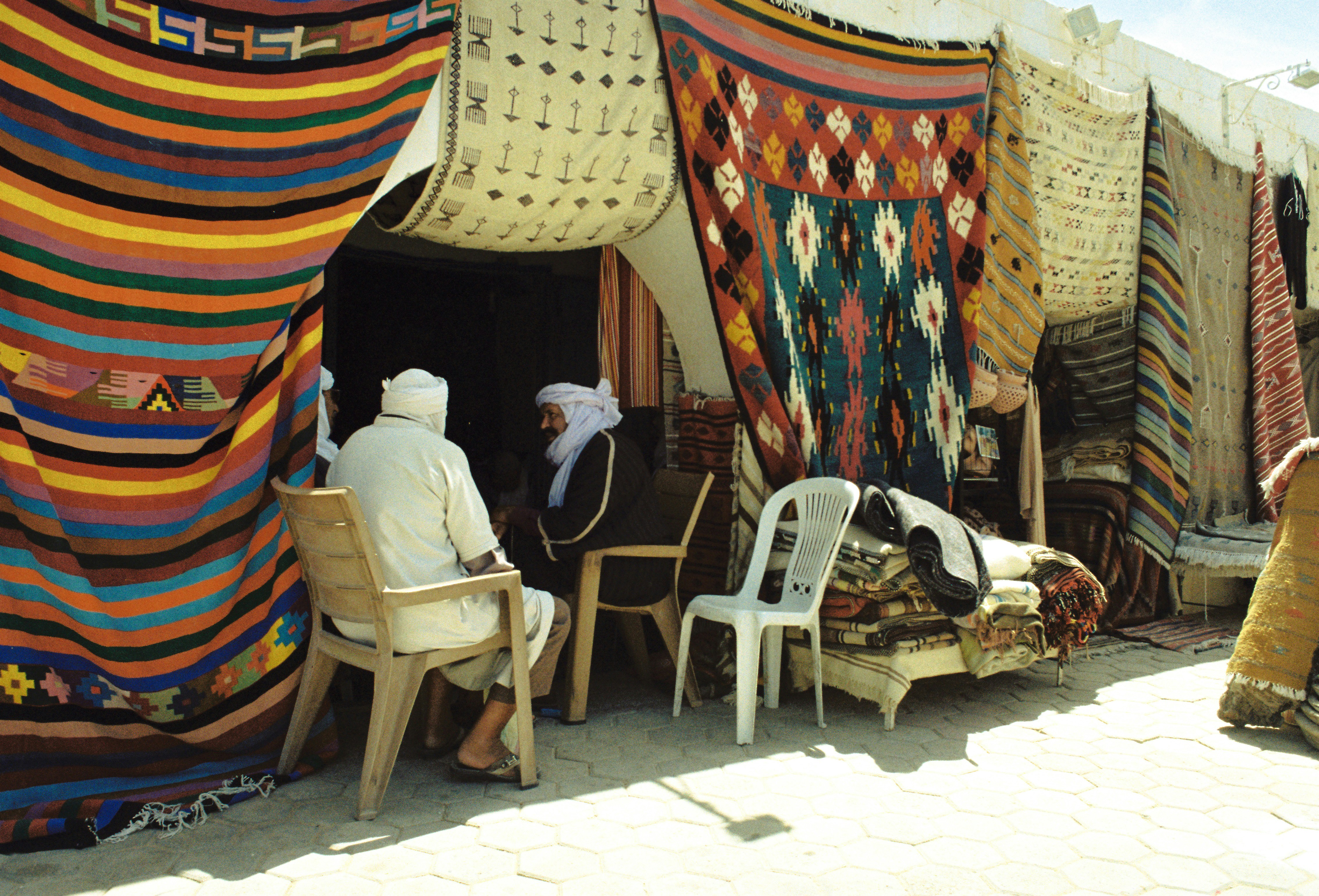
If you've only encountered "African print" as a broad aesthetic, it's easy to assume these textiles are variations of the same tradition. They aren't. Àdìrẹ, Kente, Adinkra, and Bogolanfini are four distinct textile systems, created by different peoples across West Africa—among the Yoruba of Nigeria, the Asante and Akan of Ghana, and the Bamana of Mali. Each developed its own visual language, complete with its own grammar, vocabulary, and conventions governing who could "speak" through cloth and when.
Each system encoded meaning into a medium that could survive what books and even oral histories sometimes could not: war, displacement, fire, and the deliberate cultural erasure that often accompanied colonial rule. Cloth could be folded into a travel bag and carried across borders. It could be buried with the dead and still speak to those who recognised its symbols. It could be worn in plain sight while languages, religions, and political systems were being forcibly reshaped around it.
To understand why these textiles endured, we first have to understand each system on its own terms.
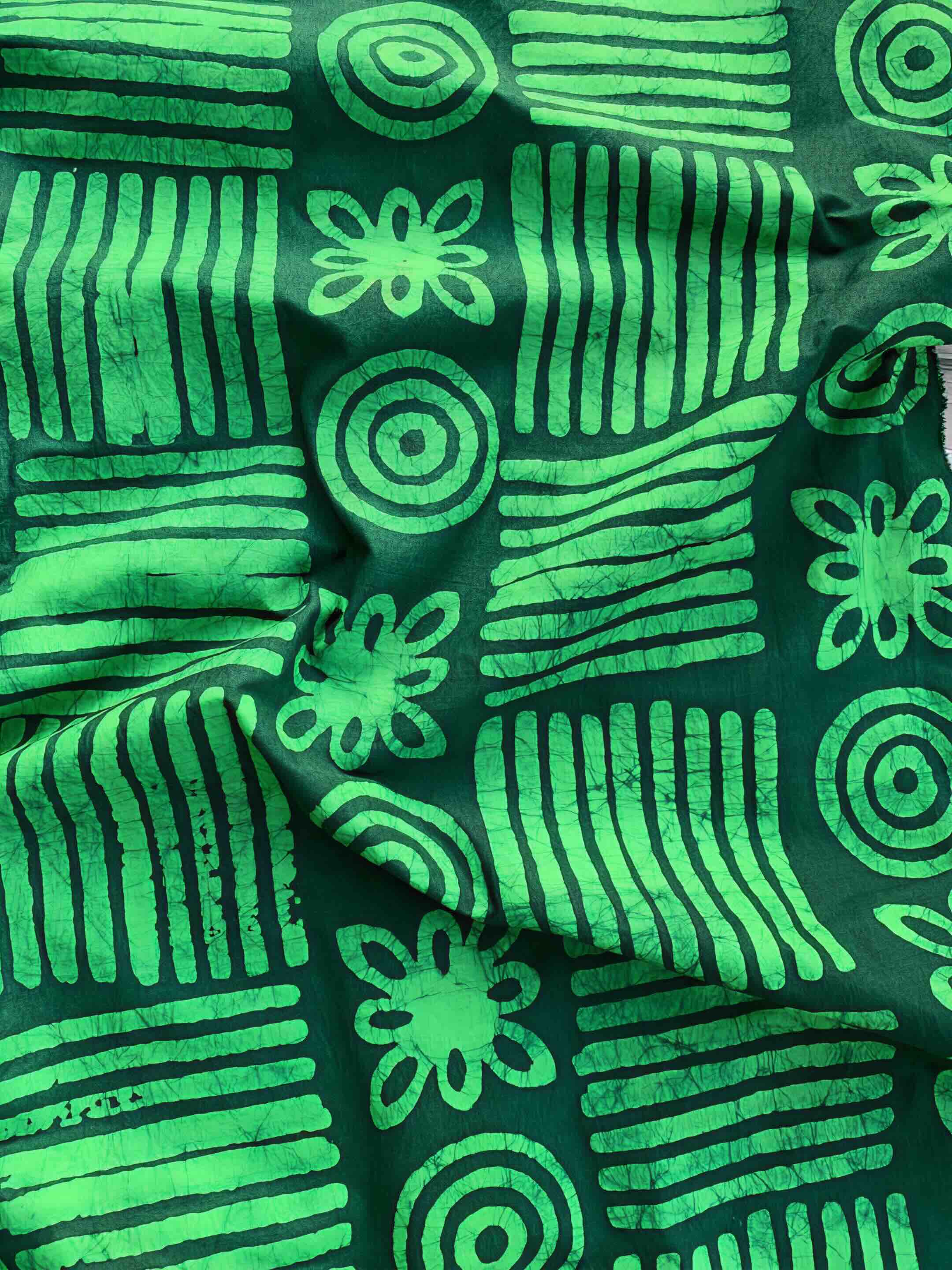
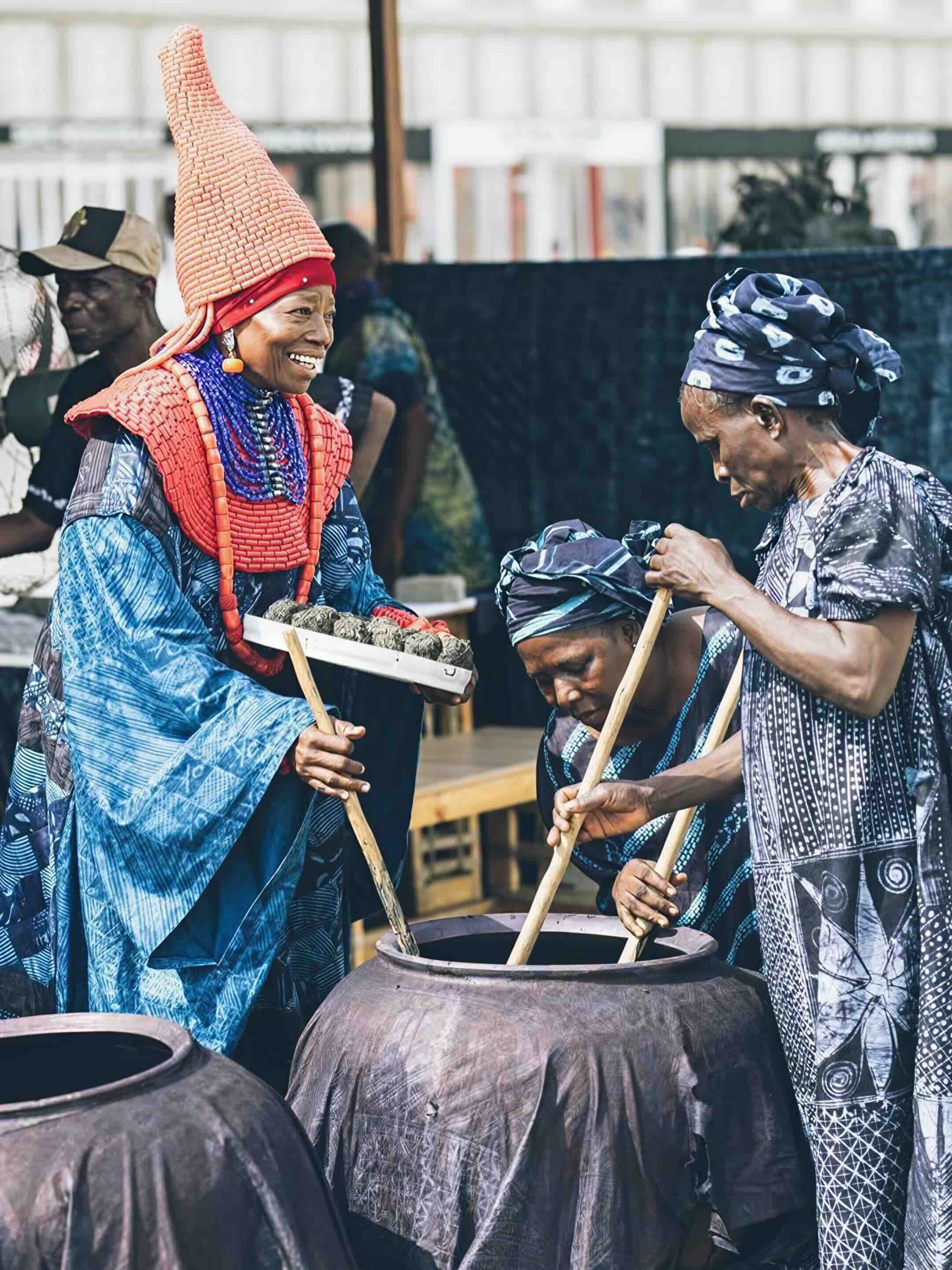
In the early decades of the twentieth century, family compounds across Abeokuta were dotted with indigo dye pits, each tended by women who had inherited more than a craft—they had inherited a language. A length of white cloth would emerge from the dye vat almost black, only to transform before your eyes. As the indigo oxidised in the open air, spirals, grids, and intricate motifs slowly appeared, revealing patterns that seemed to bloom from nowhere.
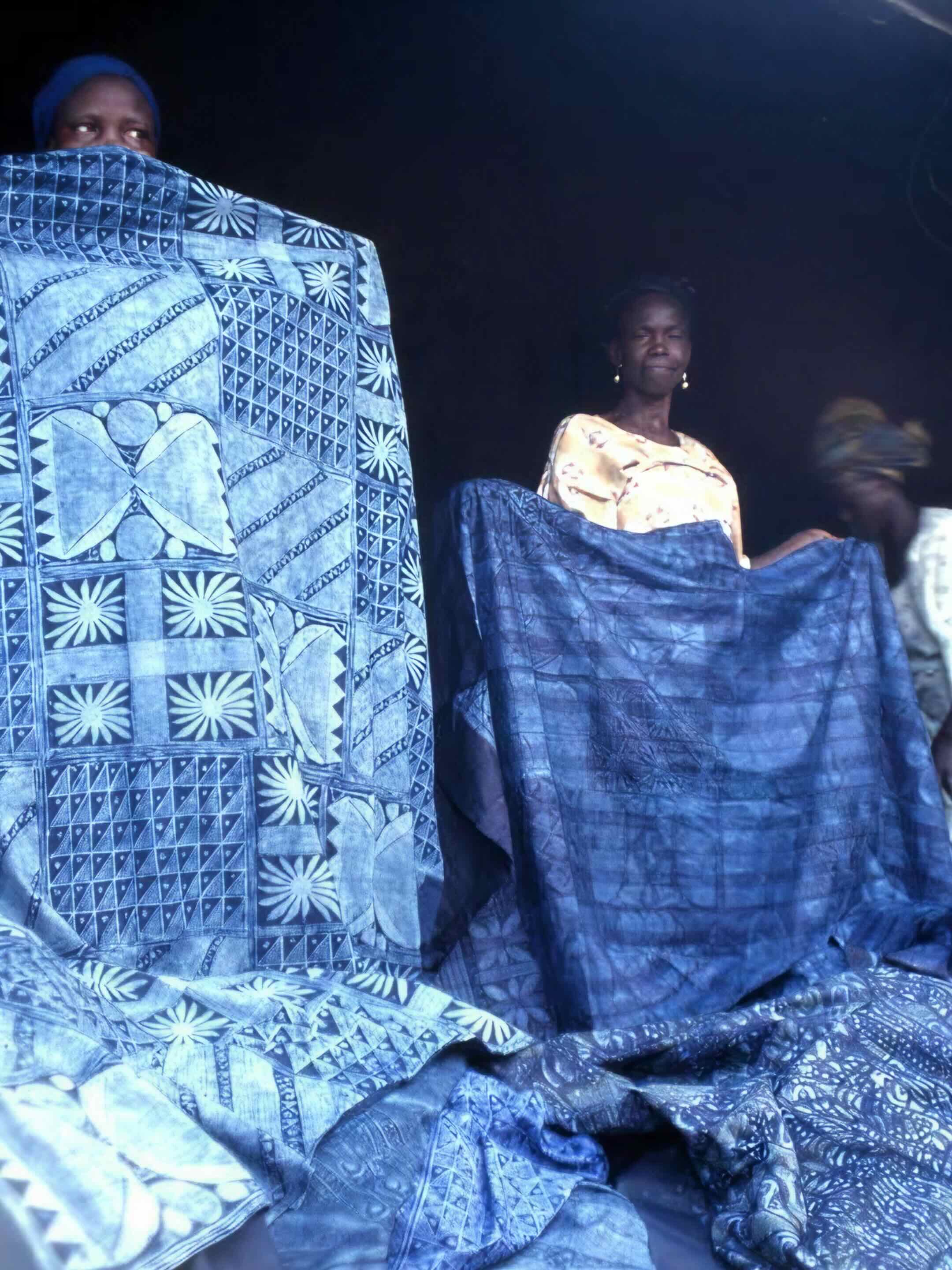
This is Àdìrẹ, the Yoruba indigo-resist textile. Although its name literally translates to "tie and dye," that description barely scratches the surface of what it represents.
Every Àdìrẹ pattern has a name, and every name carries meaning. Oniko, the circle, evokes the sun and the cycle of life. Olókòtó, the spiral, reflects the unpredictable rhythm of existence. Grids and intersecting squares point to crossroads, becoming visual shorthand for choice, consequence, and the moral weight of decision-making.
These weren't decorative flourishes. They were a shared visual language. Through cloth, women documented local events, preserved proverbs, passed down moral lessons, and even posed riddles for others to interpret. When colonial contact introduced bicycles, umbrellas, and electric fans, Àdìrẹ artists didn't abandon tradition—they absorbed these new symbols into an existing visual vocabulary. The archive expanded without losing its grammar. Just as remarkable as the symbolism was who controlled it.
By the early twentieth century, Egba women had transformed Àdìrẹ from a domestic craft into one of West Africa's most successful indigenous industries. At the centre of it all was Abeokuta's Itoku Market, where women dominated every stage of production, from design and dyeing to trade and distribution. At a time when colonial administrators were redirecting Yoruba labour toward export crops like cocoa, these women built an economy on their own terms. Every wrapper sold was an act of economic independence stitched together in indigo.
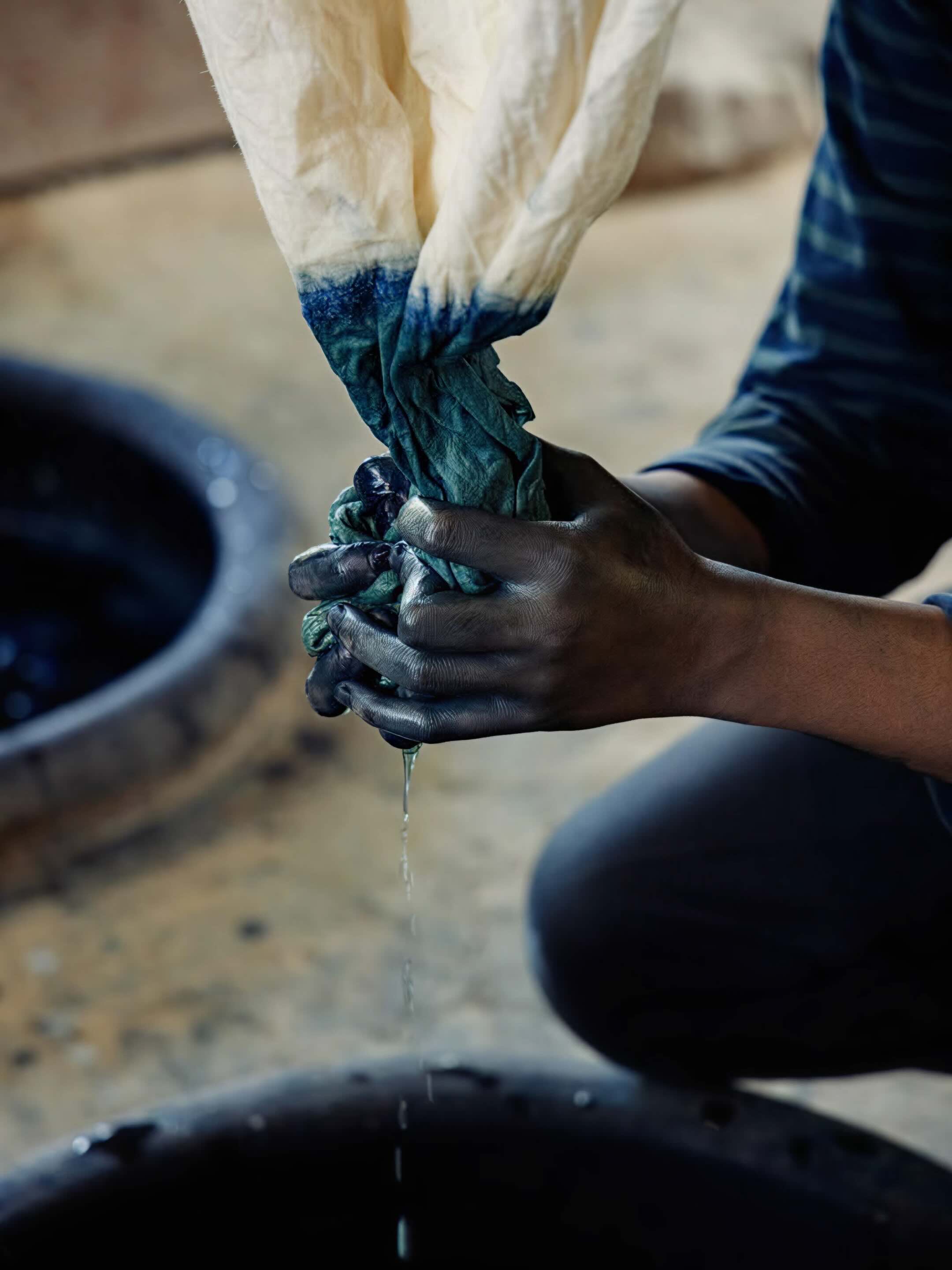
Then came 1946. The Abeokuta Women's Union, led by Funmilayo Ransome-Kuti, launched one of the most significant anti-colonial protests in Nigerian history. Thousands of women mobilised against the Sole Native Authority and the crushing taxes imposed on Egba women, many of whom were the very traders and dyers sustaining the Àdìrẹ economy.
They marched wearing Àdìrẹ. Not banners. Not pamphlets. Cloth.
History often reduces this detail to a note about "traditional dress," but it was far more than that. It was a communication strategy. At a time when the British colonial government controlled the courts, the schools, and the press, these women chose a medium the administration couldn't easily censor, confiscate, or fully understand. Their unity was published in indigo, expressed through a language that required no colonial approval.
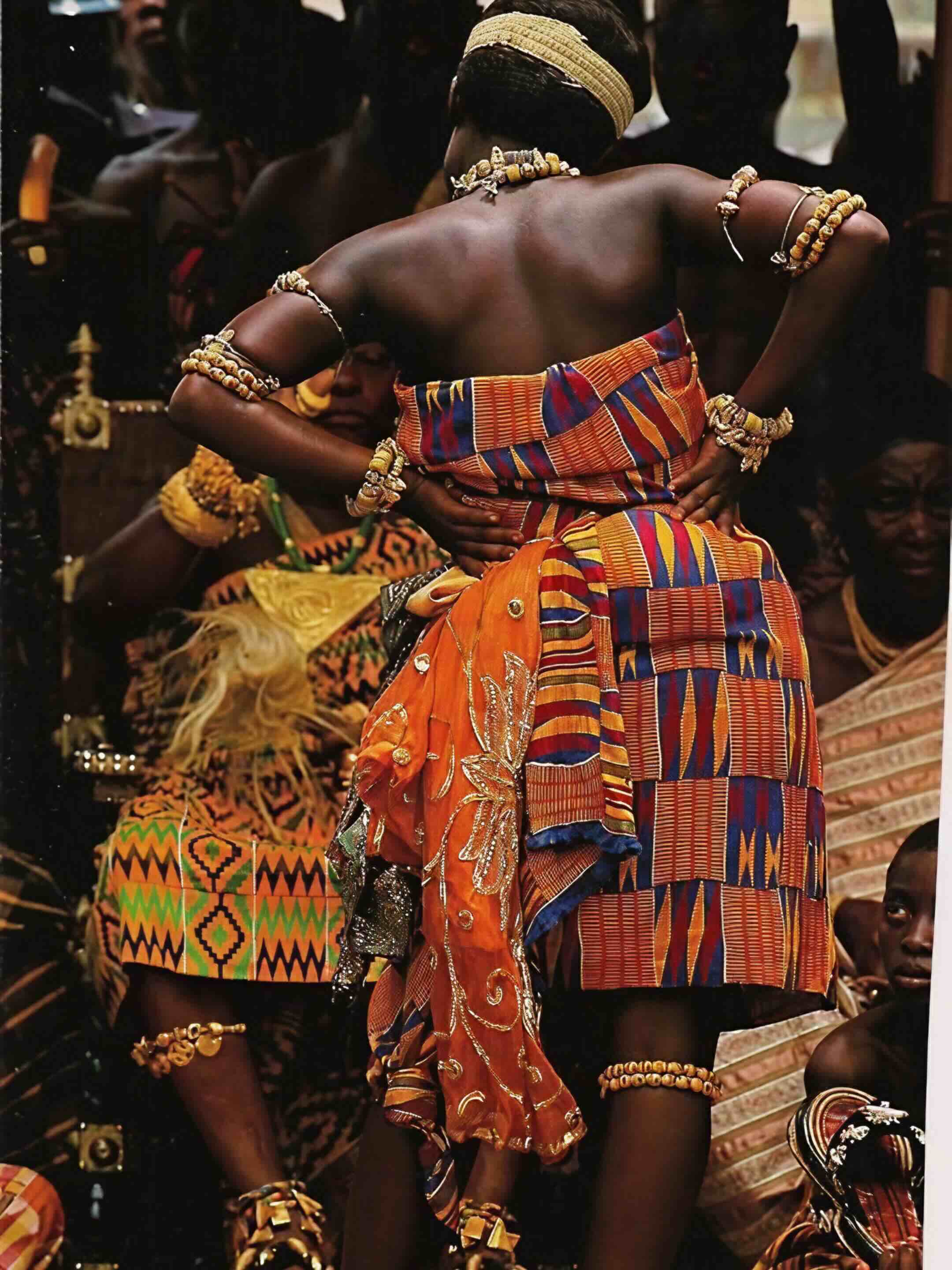
If Àdìrẹ was a people's archive, Kente was a royal one. According to Asante oral tradition, Kente began in the village of Bonwire, where two friends, Ota Karaban and Kwaku Ameyaw, watched a spider spin its web and became determined to recreate its intricate patterns in thread.
Other historical accounts trace its origins to the neighbouring Bono Gyaman state during the seventeenth century. Whether inspired by a spider's web or shaped through regional exchange, the woven cloth eventually reached Asantehene Osei Kofi Tutu I, founder of the Asante Empire. Recognising its significance, he reserved it for royal and sacred ceremonies, establishing Bonwire as the kingdom's weaving capital.
Kente's story also challenges the idea that African traditions developed in isolation. By the late sixteenth century, imported silks from Italy, India, and North Africa were making their way into the Asante kingdom. Rather than simply wearing these fabrics, Asante weavers carefully unravelled them and rewove the threads into distinctly local designs.
Far from being a static tradition frozen in time, Kente constantly adapted. It absorbed foreign materials without surrendering its identity, transforming imported silk into an unmistakably Asante visual language.
As the technique spread to the Ewe people, it evolved again. While Kente remained closely tied to royal authority within the Asante kingdom, Ewe weavers embraced it more broadly, introducing new motifs and expanding its use beyond the royal court.
Every strip of woven cloth carried meaning. Colour combinations, geometric arrangements, and weaving patterns communicated history, philosophy, political authority, and spiritual belief. Kente wasn't simply inspired by Asante culture—it documented it. To those who understood its visual language, a piece of cloth could be read much like a written text.
Where Kente speaks through colour and structure, Adinkra speaks in stamped symbols—closer to a glyph system than a weave. These symbols are decorative, but they also carry meaning. Each one encodes wisdom, reflections on life and nature, and proverbs passed down through generations.
The oldest known Adinkra cloth dates to 1817. It carries fifteen stamped symbols, including stars, drums, and diamonds, printed with carved calabash stamps and vegetable dye. Today, it sits in the British Museum, donated in 1818 by British diplomat Thomas Bowdich, who had witnessed its creation in Kumasi just a year earlier. The irony is hard to ignore: the earliest record of Adinkra’s sophistication is not in Ghana but in London, arriving at the start of the colonial scramble for the Gold Coast.
In Akan society, these symbols were a functional language. They preserved proverbs, carried ethics, and expressed worldview. Wearing one was never just aesthetic. Leaders chose symbols to signal wisdom or resilience, depending on the moment. Used mainly for funerals and rites of passage, Adinkra—rooted in the idea of farewell—made grief, identity, and continuity visible in cloth.
What makes Adinkra important here is how flexible it is. As the Asante kingdom expanded and met new cultures, the symbols evolved. They began to reflect on new events and changes in society. It works less like static text and more like an open system, one that keeps absorbing and recording history as it changes.
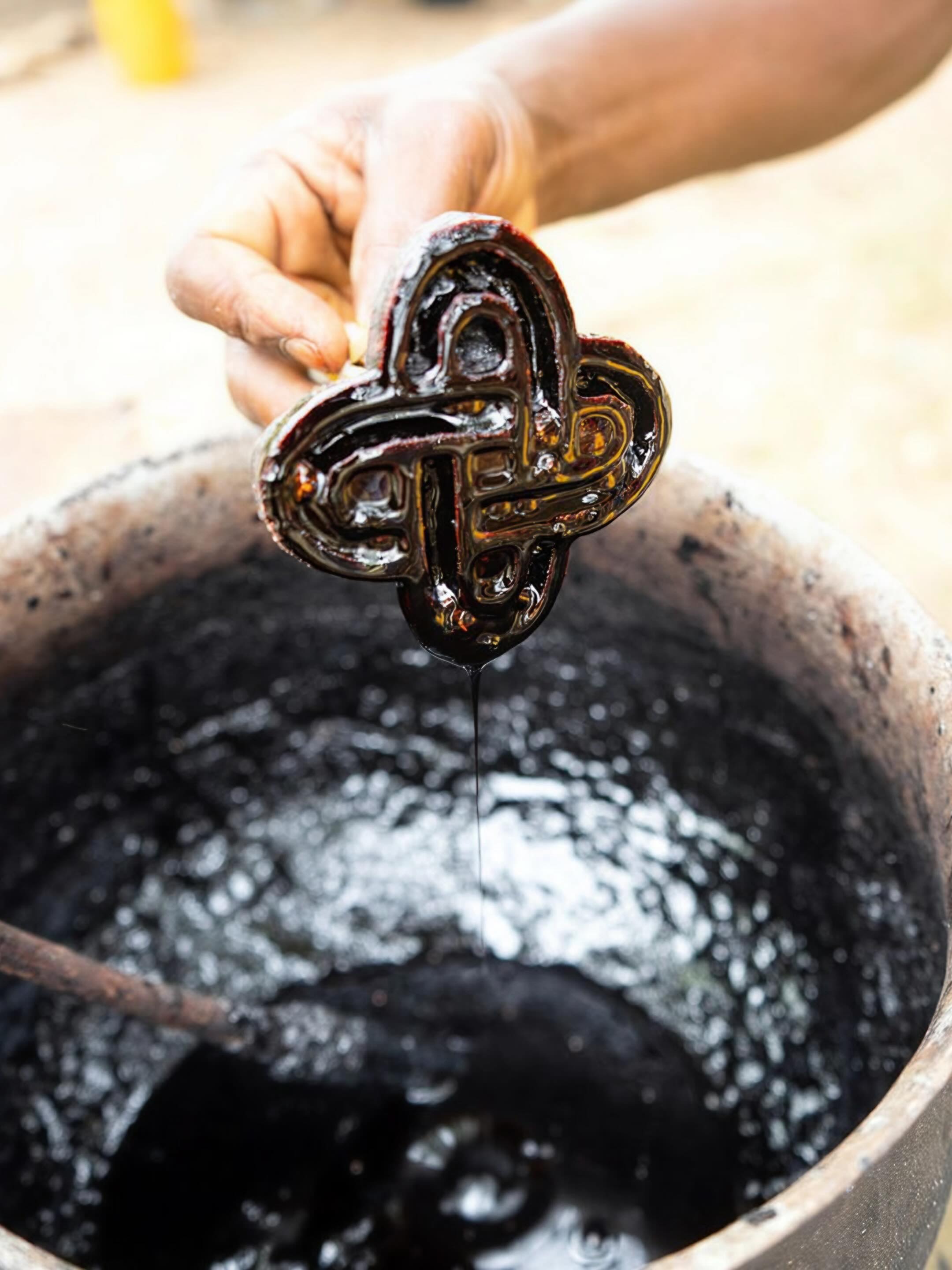
Bogolanfini (Bamana mud cloth from Mali) moves closer to the body itself. It marks life at its most vulnerable and transitional moments.
The production of Bogolanfini is a masterclass in gendered collaboration. Men weave the narrow cotton strips into a blank canvas, and the Bamana women transform it through a highly complex chemical process using local plant extracts and fermented, iron-rich river mud. This visual language is passed down from mothers to daughters through years of disciplined apprenticeship. While individual motifs look like abstract geometric shapes, when combined, they act as an advanced script capable of recording a proverb, a song, or an entire historical milestone.
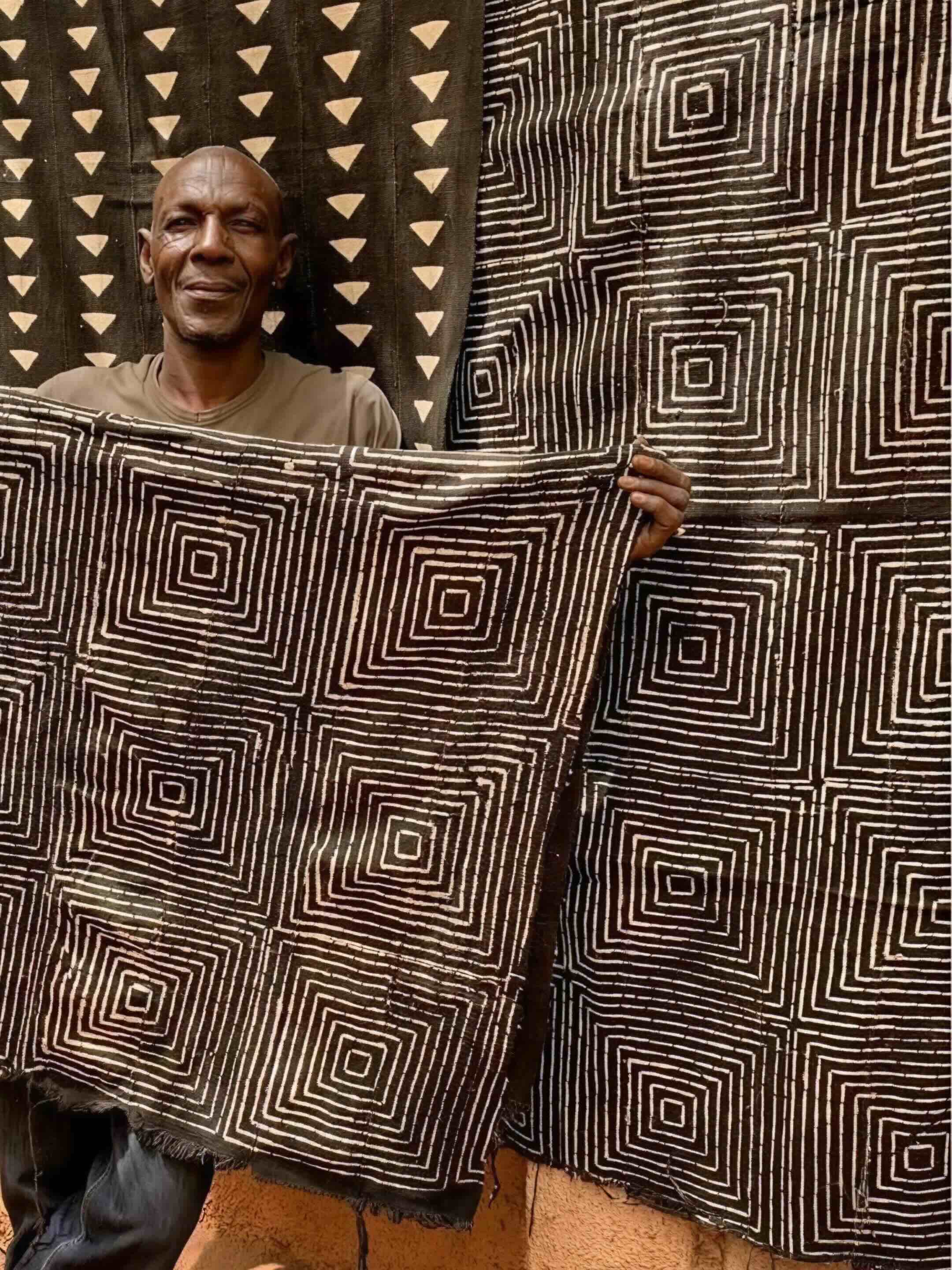
Bogolanfini is also protective. Hunters wear it as camouflage and spiritual armour. For women, it is especially important during key life transitions like initiation rites and childbirth. In Bamana belief, these moments release powerful spiritual energy called nyama. The cloth is thought to absorb and neutralise it.
During colonial rule, Bogolanfini also became a form of record-keeping. Instead of written archives, history was painted directly onto cloth. Some patterns are said to depict battles between Malian warriors and French colonial forces, alongside mythic symbols like sacred crocodiles.
Even when colonial systems tried to erase local memory, this archive remained. History survived in fabric—folded, worn, and passed from mother to daughter. Bogolanfini became more than cloth. It became a portable record of identity, resistance, and survival.
Put these four systems side by side and the pattern becomes clear: cloth was designed to survive in ways written and printed records often were not. Manuscripts can be confiscated, banned, or quietly “lost” by systems that benefit from their disappearance. Oral history carries depth and nuance, but it depends on continuity — break the chain through war, slavery, or forced migration, and whole worlds of knowledge can vanish within a generation.
Cloth works differently. It moves with the body instead of sitting in a vulnerable archive. It can be packed into a bag during displacement and unfolded years later, still carrying meaning. It is durable, but also portable. Alive in motion. And unlike text, it doesn’t require formal literacy. You don’t need to read a manual to understand a pattern you grew up seeing — on your grandmother’s hands in a dye pit, on mourners at a funeral, on a newborn wrapped in cloth at naming ceremonies. The “reading” happens through life, not in classrooms.
That’s what made it so hard to control. Colonial systems could restrict books, schools, and written languages. But it was much harder to erase something people were wearing, sharing, and reproducing daily. The system was also decentralised by design. There was no single archive to destroy or central authority to silence. Knowledge lived across thousands of homes at once, passed down, remade, and reinterpreted by each generation of dyers and weavers.
But that openness came with a cost.
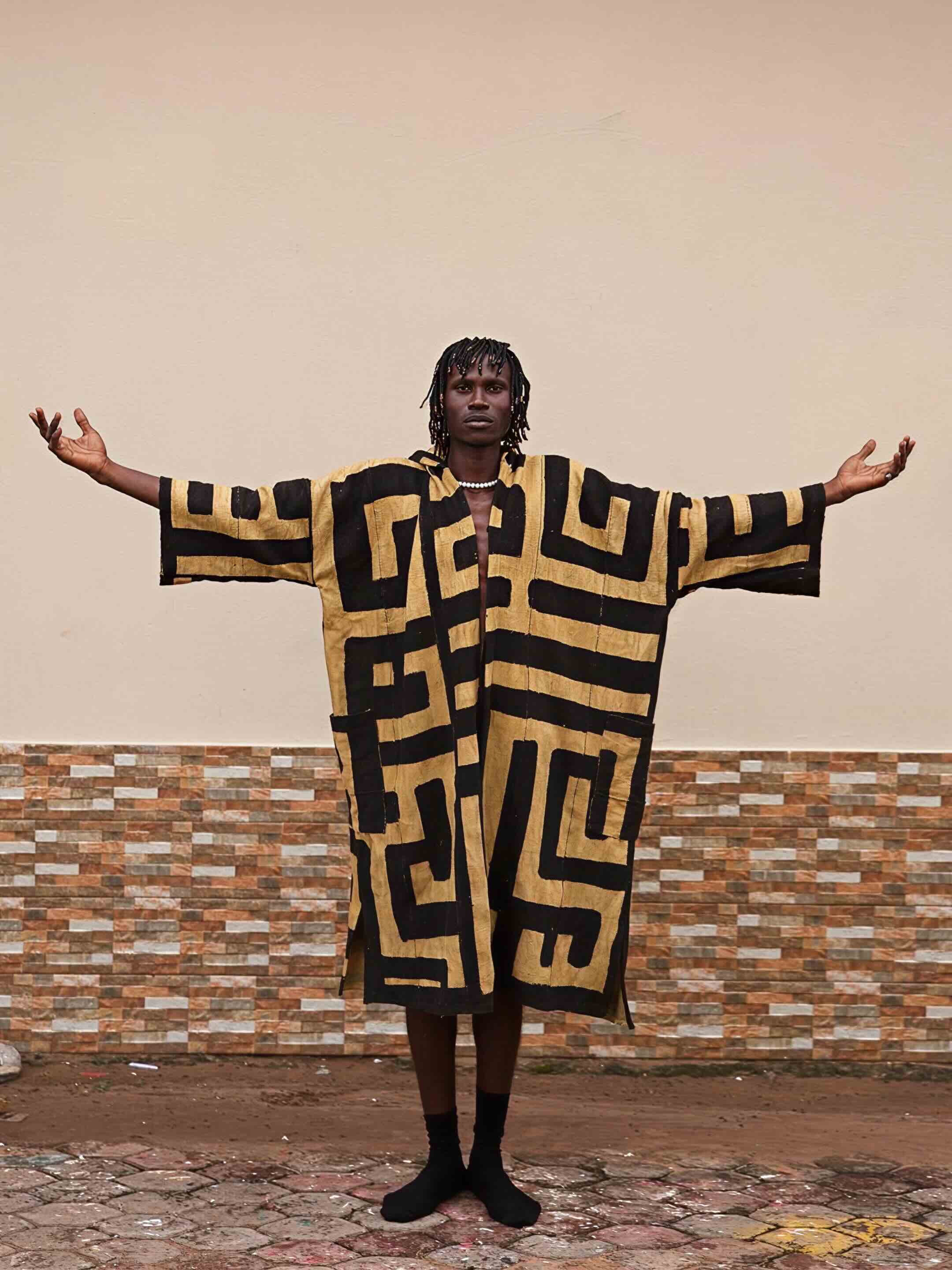
For much of the twentieth century, these textile systems were treated as raw material rather than authored knowledge. Patterns were taken, reproduced at scale, and sold globally — often without credit, consent, or compensation. Kente, Ankara, Maasai beadwork, and others became global aesthetics stripped of the communities that created them. What was copied was never just design; it was language.
This matters because of how we’ve been taught to decide what counts as “serious” knowledge. A pattern that survives wars your written records didn’t. That travels across borders, folded into a wrapper. That is worn into protest, ceremony, and everyday life until it becomes part of the argument itself — it cannot be reduced to decoration. It is infrastructure. A distributed archive, designed to survive without literacy or permission.
So when you wear any of these African-made textiles, you’re not just referencing history. You’re entering a system that has been running long before anyone tried to define what African knowledge was allowed to look like.
You're plugging into a system that has been quietly, stubbornly running since long before anyone told us our ancestors couldn't write. They could. They just used a different alphabet—one made of indigo, mud, silk, and proverbs—and they built it to survive exactly the kind of erasure that was coming for them.
It did survive. It's still running. And increasingly, the people who inherited it are insisting, rightly, on writing the next chapter themselves.