Stay In This World
The stories, the culture, the conversations. Every week.
No spam. No third parties. Just Unruly.
How postcolonial societies decided which foreign media is acceptable and which is not.
It's 1:45 in the afternoon on the sixth of June, and Nigeria is doing what it has been doing since the start of 2026, burning. The kind of heat that feels less like a personal grievance, as though the sun has received specific instructions. While on board a yellow danfo crawling toward Akoka, Yaba, I overheard two women, who look to be in their early twenties, deep in conversation about anime which they both concluded as childish while reading manga is seen as worse. Somewhere else in the country, on this same day, a man is probably being mocked for streaming 'Queen of Tears' in 1080p. The mockery has nothing to do with the show and everything to do with him, because a man watching a K-drama is, in the social grammar of many Nigerian spaces, doing something that requires explanation. A woman watching the same show would require none. The viewing itself is not the offense. The viewer is.
This pattern holds, with minor variations, across Bollywood, C-dramas, anime, and manga, each genre carrying its own specific ridicule within Nigeria. And yet place any of these beside a Marvel film, a 'Mission: Impossible' installment, a DC franchise entry, and the atmosphere changes entirely. Nobody is asking anyone why they watched 'Avengers'. The Western content passes through without friction, without comment, without the need to justify itself to anyone on a danfo or anywhere else. What this reveals is not simply a difference in taste but a hierarchy that governs how Nigerians relate to foreign media, depending on where that media comes from. And the logic underlying it, upon perusal, has almost nothing to do with quality. It has everything to do with proximity to Westernness, with the long shadow of colonial inheritance, and with how prestige gets defined and defended in a postcolonial society still negotiating the terms of its own cultural life.
There is a particular kind of silence that bleeds into Nigerian social life, one that arrives, uninvited, the moment someone mentions in the wrong company that they watch anime. It is not hostility, exactly but more like an involuntary adjustment, a pause in which the other person quietly decides what category to place you in based on what you watch. A Nigerian who watches 'Grey's Anatomy' is unremarkable. So is the one who has followed every season of 'Suits', who has strong opinions about the best 'F.R.I.E.N.D.S' episode, who stayed up through the night to watch the 'Game of Thrones' finale in real time. Nobody is pausing to recalibrate around them.
Then there are the other categories. The otaku. The K-drama devotee. The person currently fourteen episodes into a sixty-episode Chinese historical epic. Neither of them get a raised eyebrow. Rather, they are asked, "why are you watching that" or something along these lines, mixed with amusement and mild concern, as though someone has watched them take a wrong turn and feels compelled to say something. What the hierarchy actually tracks is distance from a Western axis. The closer a piece of content sits to American or British cultural production, the less it needs to justify its place in a Nigerian living room. American content has been so thoroughly normalized in Nigeria that consuming it says nothing about you at all. It is the default setting against which everything else gets measured.
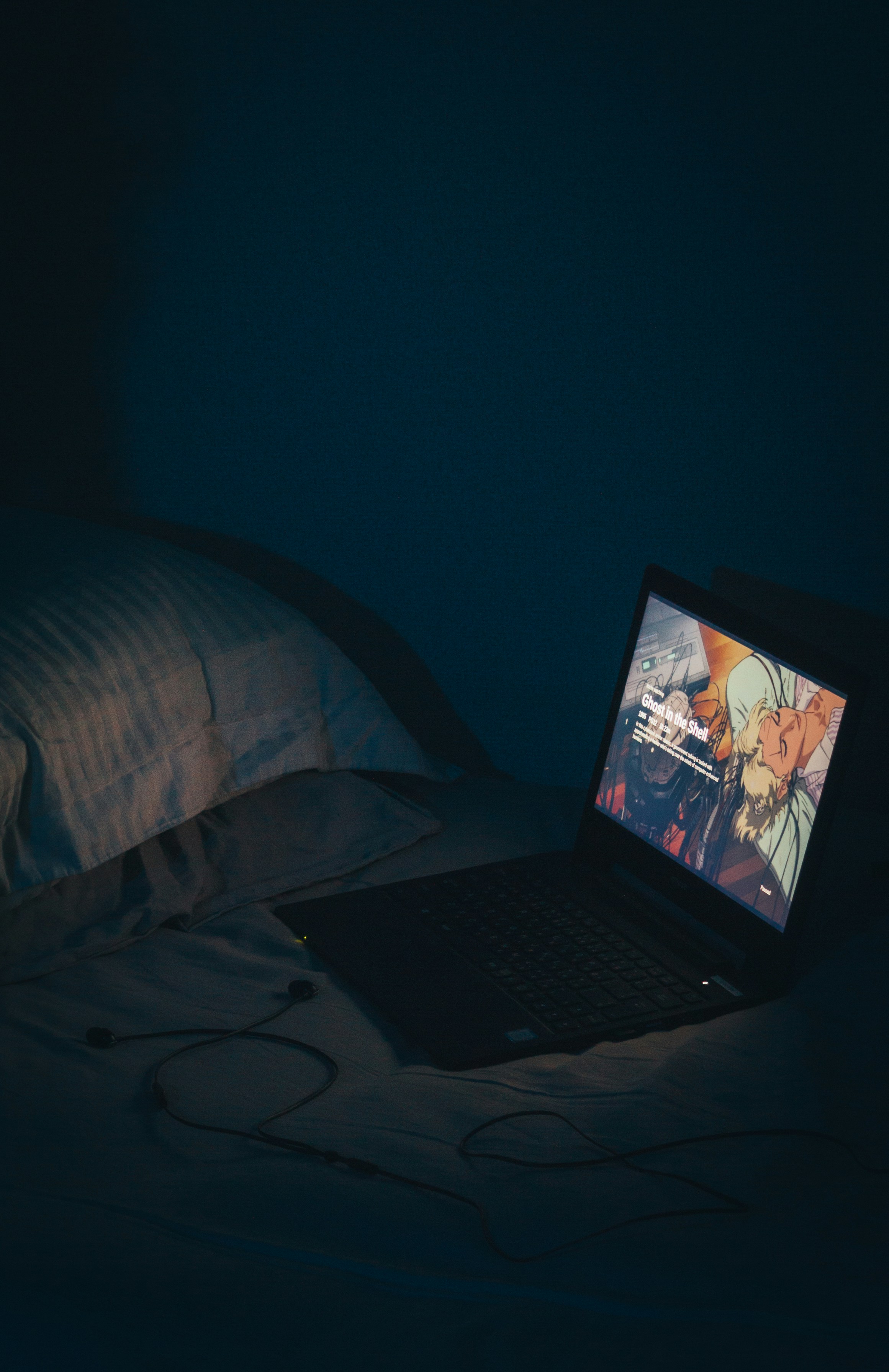
And this is where the real strangeness lives: none of these worlds are Nigeria. None of these stories were made with a Nigerian in mind. A Korean romance and an American film are, in any objective sense, equally foreign to a viewer in Lagos. But watching only one of them, in most Nigerian social contexts, gets questioned. That asymmetry is an inheritance and understanding where it came from is the only way to understand why it refuses to leave.
Britain's colonization of Nigeria did not only reorganize its politics. It reorganized what counted as educated, what counted as cultured, what counted as worth wanting. It determined that English would become the language of aspiration, that indigenous law would answer to imported law, that the texture of a well-lived Nigerian life would be measured, increasingly, against a standard that had been set somewhere else entirely. More than that, it undertook an erosion of the Nigerian sense of self, replaced by a version oriented toward everything that belonged to another. That inheritance did not end at independence. It is still very much at work in what Nigerians consider normal to consume, and it is still at work in the question asked on the danfo, in the pause before someone admits what they were watching last night.
This is why there is a specific social transaction happening when a Nigerian references American television fluently, when they can place a 'Suits' character, debate a 'Breaking Bad' season, or speak with authority about the Marvel timeline. It signals a kind of cultural literacy that history has quietly fused with education and class. East Asian content carries no such signal, which is precisely why engaging with it reads as eccentric rather than sophisticated, even among people who are, by every other measure, educated and globally literate. Consider the person who finishes a Korean legal thriller, something set in Seoul, and wants to talk about it. They find someone who has seen it. And then, almost without thinking, they adjust how they describe it. They mention it carefully, they gauge the room first, they edit the origin before the conversation can go somewhere uncomfortable. This is how the hierarchy sustains itself without enforcement. Not through confrontation but through the thousand small decisions people make to avoid the question, to watch alone, to not mention it, to absorb something that moved them and then fold it away before anyone can ask why.
Part of what makes American or British content feel like familiar territory in a Nigerian living room is that it arrives in English with no subtitles, no translation, no negotiation with foreignness needed. K-drama and anime demand subtitles, which marks them as genuinely foreign in a way that American content, despite being equally foreign in origin, never quite feels. The mockery, when it comes, tends to arrive in recognizable forms. The first is the childishness accusation, aimed mostly at anime watchers. "Why are you watching cartoons?" The question reveals less about the person being asked and more about the assumptions of the person asking; specifically, that animation is a medium for children, a delivery system for Saturday morning distraction rather than a legitimate form of storytelling.
The second form is stranger, and more revealing. "Why are you watching people who don't look like you?" is a question almost always posed by someone who watches American content without raising the same objection to themselves. If it were seriously about representation, Hollywood, which has spent most of its history producing stories centred on people who also do not look like most Nigerians, would attract the same suspicion. The question is not about who is on screen. It is about which foreignness has been granted the status of normal, and which has not.
It is conditioning, passed off as common sense. And yet, despite all of it, the audience exists. It has always existed. Anime has had a Nigerian following since the early 2000s, when 'Dragon Ball Z', 'Naruto', and 'Bleach' became fixtures of childhood and adolescent television: watched after school, debated in classrooms, illegally distributed on CDs sold at roadside stalls before anyone had a name for what the genre was. K-drama arrived through a different channel but with equal determination, shared files and Bluetooth transfers circulating faster than any official distribution could have managed. If these genres are so stigmatized, why are they so widely watched? What anime, K-drama, and C-drama offer, and what both Nollywood and Hollywood frequently do not, is a specific combination of things: emotional range that isn't performed, romance built on patience rather than spectacle, non-Western models of aspiration, and pacing that trusts its audience to stay. The private consumption tells the true story, that the public dismissal is the performance.
This hierarchy raises a weight-bearing question: who benefits from Western media being the default? There was no meeting, no agreement, no coordinated decision that a Nigerian in 2026 should feel more at home watching 'Judge Judy' than a Korean drama. It happened the way most cultural inheritances happen: gradually, structurally, through institutions and incentives and the slow accumulation of what gets treated as normal until normal stops feeling like a choice. The colonial education system that had Nigerians reading Shakespeare before Soyinka did this work. So did the social respectability attached to English fluency, and by extension, to the world that English-language media depicted. The beneficiaries are specific and ongoing: streaming platforms with deep investments in American and British libraries, a cultural economy that flows westward by default rather than by merit. Once a hierarchy serves an industry this well, it does not need defending. It only needs time, and time is the one thing it has had.
These genres did not arrive through any of the channels that typically deliver cultural legitimacy in Nigeria. They reached Nigerian audiences because they went looking for them, because they were possessed with something in them that was meeting a need that the existing menu of acceptable content was not. The question "why are you watching that" assumes the viewer has made a mistake. But look at what the question is actually protecting, at the hierarchy it is keeping in place, and another reading becomes available: the person watching is not the one who is lost. They are simply the one who went looking for something the map didn't show them, and found it.