Stay In This World
The stories, the culture, the conversations. Every week.
No spam. No third parties. Just Unruly.
Cultural legacy and a reckoning with the recycling age.
We are driven by nature to look at the odds, no matter how stacked, and resolve to conquer them anyway. This ambition is a defining force within the human spirit—a natural, restless urge to excel and dominate wherever we find ourselves.
Growing up in a typical Nigerian household, this hunger always came with a strict script. Our parents believed the absolute best in us, which usually meant being pushed toward the "Big Three": lawyer, doctor, or engineer. If your family were feeling particularly progressive, maybe another corporate white-collar path would suffice. But as the global economy shifted and new avenues for wealth and expression emerged, a massive cultural pivot occurred. The definition of success expanded. And then, we weren't just filling corporate cubicles; we were leaving indelible marks on the global stage through music, film, fashion, entrepreneurship, and digital creation.
That collective drive is, in the end, what legacy is all about. Every generation hopes to leave behind something its descendants can point to and say: they were here, and what they did still matters. Today, the evidence of those who successfully pull this off is no longer buried away in dusty history books; the digital era has magnified and immortalised their impact. You cannot discuss the global phenomenon of Afrobeats without paying homage to how Fela Anikulapo Kuti fiercely defined the genre. Similarly, figures like Pharrell Williams have conquered music and fashion—most recently redefining luxury as the men's creative director for Louis Vuitton—while Beyoncé has set a benchmark of excellence that will inspire artists for decades. Dead or alive, these icons prove that it is entirely possible to etch your name into the fabric of time.
But recently, there has been a change in how that mark gets made. We grew up watching "the greats"—monolithic figures who built empires that seemed to alter the literal fabric of reality. Looking around today, though, the world isn't just moving faster; it's looping. And that constant loop is exactly why we have to wonder what it actually means to build something that outlives you.
Is legacy still a massive, unyielding monument built from scratch? Or has it become something much more fluid—a sample that keeps getting re-pitched, a vintage aesthetic resurrected from the dead, or a creative blueprint passed from one icon to the next? This essay is an attempt to explore the facts around it.
Legacy is simply the solid foundation you build and leave behind for the next generation to stand on. It is not just a static record of what you did or a temporary buzz on a timeline, but a way of giving the people who come after you the psychological clarity, cultural tools, and material resources to build something of their own without having to start from scratch. It is proof that your presence rearranged something, even slightly, and that the rearrangement outlasted you.
A meaningful legacy is usually built across four main pillars:
While a meaningful legacy can be built through any one of these pillars, a truly fulfilled life usually leaves behind a combination of all four. For this essay, however, the focus sits squarely on creations and culture—the things we actually make, and what happens to those creations once the maker is gone or has moved on.
Every generation has built something it hoped would outlast its creators. There is a recognisable pattern in how human beings try to cheat death through culture: we find a medium we trust will leave a mark, pour our identities into it, and hope the future cares enough to remember.
Historically, that pattern was defined by scale and structural dominance. Think of classical architecture—the towering stone cathedrals of Europe, or the intricate, ancient palaces scattered across the African continent. The people who laid those foundations often knew they would never live to see the final roof go up. They were building for a future they would never inhabit, creating a physical anchor that would force anyone walking past centuries later to acknowledge that a great people had once been there.
But as the world shifted, legacy stopped belonging only to physical structures. It started with innovators who could redefine how we live, dress, and listen.
Take Pharrell Williams. He didn't simply make hit records in the early 2000s; as one half of The Neptunes, he and Chad Hugo built a sonic blueprint for R&B and hip-hop taste, before Williams founded the streetwear label Billionaire Boys Club in 2003 with Nigo. When he was named Men's Creative Director at Louis Vuitton—stepping into a role left vacant by the tragic death of Virgil Abloh—he wasn't simply switching jobs. He was cementing a legacy that had already been decades in the making, one that moved between sound, fashion, and now stewardship of a house with its own century-old mythology to protect.
Closer to home, the same instinct for preservation lives in things we still hold close. Think of the oriki—the praise poetry chanted by our elders, often at celebrations, or moments when a family needs reminding of who it is. It functions as a sonic archive. When an elder chants your oriki, they are pulling your ancestors into the room with you, anchoring you to people who lived hundreds of years before you were born.
Or look at Fela Kuti, who did not just record music; he built an entire universe in Kalakuta Republic, complete with its own politics, fashion, language, and spiritual charge. Decades after his death, the world is still working out what exactly he did and how he did it—which is, in itself, a marker of how total that legacy was.
The pattern of legacy, historically, has always been about setting a standard so distinct that it becomes myth. But the selection process for what survives is never accidental. Society constantly edits the past. We mythologise the icons who broke the mould while the background noise of history quietly fades. Legacy, in its truest historical sense, demanded an undeniable flash of original lightning—something that altered the landscape and could not be argued with.
Does that old pattern still hold for us now?
We are living through an era defined less by radical new inventions and more by the art of the loop. Walk into a clothing store, or look at a new real estate development, the pattern is obvious: the present recycles the past, openly and without apology.
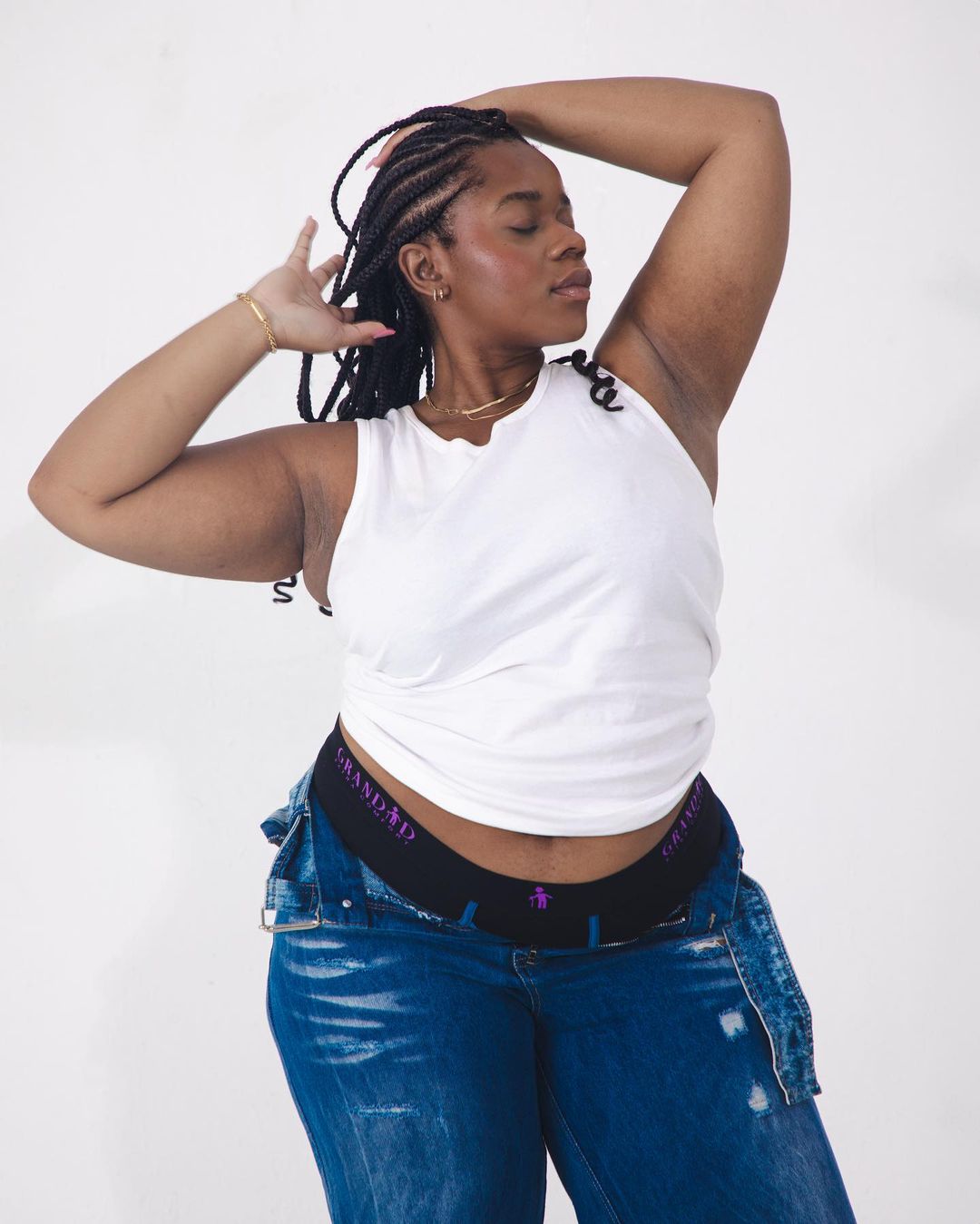
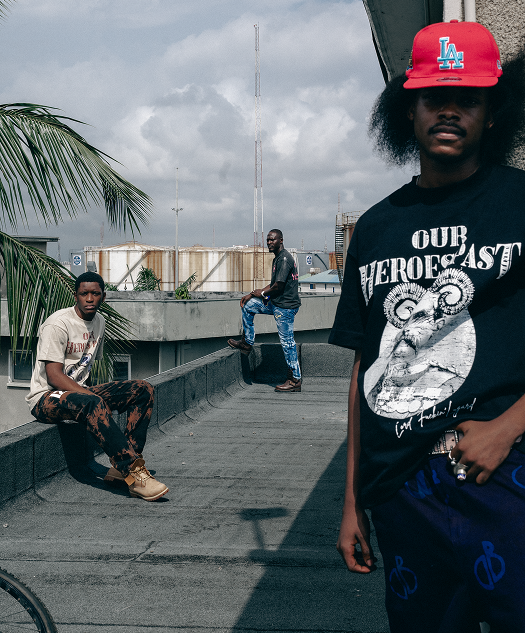
In interior design and architecture, the same minimalist, concrete, and Japandi-meets-mid-century aesthetic repeats itself everywhere, from coffee shops to apartment lobbies. In fashion, old trends like low-rise jeans, vintage leather jackets, and archive pieces pulled straight from the 90s dominate wardrobes again, remixed just enough to feel new. On our screens, we are constantly greeted by endless reboots, prequels, and new seasons of TV shows and movies that should have ended a decade ago. In music, songs are drowning in samples and interpolations; some of the biggest global hits of the last few years are built entirely on the bones of older tracks. We are watching sequels to classic albums drop, and entire micro-genres get born simply from putting a new electronic drum pattern under an old, familiar melody.
This is not inherently a bad thing, and it certainly is not a sign of creative laziness. There is a particular comfort in hearing a sound you thought was gone, repackaged and handed back to you. But if cultural legacy has always been built on the specific authenticity of something new, what happens when an era's defining skill becomes simply dressing old things in new clothing?
Does the endless recycling spell the death of legacy, or has recycling always been the secret engine of culture, only now fully visible because the technology to trace it exists?
Maybe building something that outlives you doesn't require inventing an entirely new colour. You could just apply the existing paint in a way no one else thought to try. This is where Virgil Abloh's now-famous "three percent approach" earns its place in the conversation. In his landmark 2017 lecture at Harvard's Graduate School of Design, Abloh explained the thinking behind his design ethos: he was only ever interested in restraining himself, editing an existing classic by roughly three percent rather than reinventing it outright. He didn't invent the sneaker; he edited them just enough that we were forced to see them differently.
In the digital age, building a cultural legacy that outlives you remains entirely possible, but the terms of engagement have changed. Legacy today is no longer about constructing an isolated, untouchable fortress. It is about creating a blueprint so durable and deeply felt that the next generation has no choice but to sample it. When a young producer chops up an old record, they are not burying the past. They are resurrecting it, keeping a name alive by giving it a new pair of lungs, a new audience, and a new context to mean something in.
The danger of this three-percent reality emerges when we confuse the liquidity of digital culture with actual capital. In wealth economics, researchers studying the Black intergenerational wealth gap often talk about the concept of the "leaky bucket." The core warning of this theory is that when a community lacks the structural frameworks, institutions, and ownership to anchor its own assets, the wealth it generates quickly leaks out into the wider global ecosystem rather than building its own future. The parallel to our current creative landscape is the same.
"If we treat our cultural wealth as cheap assets to trade for quick engagement on the timeline rather than capital to build with, we risk becoming the generation that inherited absolutely everything but built nothing."
Curation is a brilliant tool, but it cannot be the final destination. If we are to avoid cultural bankruptcy, the loop must be a launchpad, not a cage.
And so we sit inside this giant cultural loop, navigating the space between the comfort of the old and the hunger for the brand new. We look at the monuments built by the greats who came before us, and then we look at our own tools—our laptops, our microphones, our fabrics—wondering what our version of permanence will look like.
We may not know exactly how the future will judge this era of the endless remix. But the tape is still spinning, the samples are still dropping, and the timeline is wide open, waiting to see what we choose to leave behind, and how we choose to stain it.