Stay In This World
The stories, the culture, the conversations. Every week.
No spam. No third parties. Just Unruly.

Every major tragedy follows a predictable mechanical routine. Something terrible happens, the internet erupts, and for about forty-eight hours, everyone is locked into the same frequency. There is the initial shock, quickly followed by collective outrage. Timelines fill up with passionate threads, people call out the powers that be, and everyone feels compelled to share an opinion, partly to show they are paying attention and standing with those affected. Then, after all that momentum, an eerie silence takes over.
Before anyone has had the time to properly digest what happened, let alone figure out how to fix it, another crisis appears from nowhere, and the cycle resets. What felt completely unimaginable on Monday becomes background noise by Friday. There is the creeping guilt as well. You find yourself scrolling past a horrific headline, pausing for a fraction of a second to absorb the shock, and then simply flicking your thumb to move on because it feels like just another bad news day in a world full of them. We have all adapted to this pace, moving on from horrors at a speed that should terrify us, but we move on anyway.
This speed has completely changed the way we experience grief. In the past, mourning created a pause. It gave people time to sit with loss, process what happened, and carry it through weeks, months, or even generations. Today, grief has been pulled into the same cycle as everything else online. It appears on our screens, demands an immediate reaction, becomes a conversation, and then disappears once people move on to the next thing.
The internet asks us to care instantly, but it does not give us the space to truly process anything. We are constantly witnessing tragedy in real time, watching one crisis after another unfold, yet we rarely get the chance to step away, recover, and actually understand what we have seen.
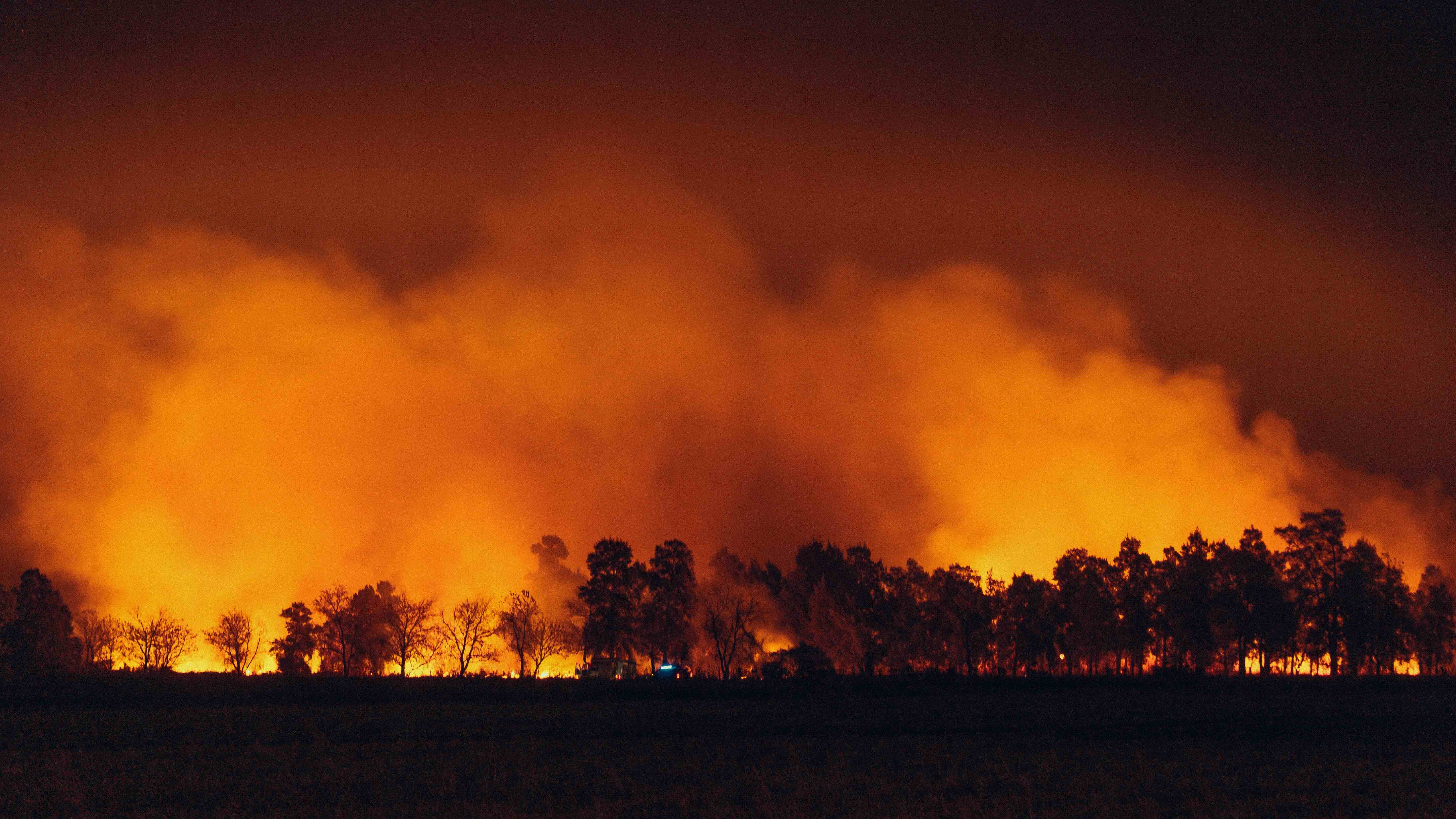
This response is not actually cold-heartedness or a sudden moral failure, even if the guilt makes it feel that way. It is a form of emotional numbness that acts as a survival mechanism. When the world is constantly on fire, the human brain has to build an internal shield just to keep from collapsing under the weight of it all. If a person felt the full, raw weight of every disaster thrown at them daily, they would not be able to get out of bed, let alone function. This numbness is an instinctive attempt to protect whatever peace of mind remains.
The trouble is that this armor is indiscriminate; it does not just block out the bad things. It slowly hardens everything else, lowering our capacity for genuine empathy and making it harder to feel much of anything at all, until we become hollowed-out observers of our own times.
The sheer volume of what people are exposed to now is historically unprecedented because the entire world's misery now lives in a pocket, buzzing against a thigh all day. Many years back, people might have heard about a war, a famine, or an economic collapse through an evening broadcast or a morning paper, leaving hours of space between the news and their actual lives. Today, a person can watch a live stream of a global conflict, scroll down to see a friend's holiday photos, and also read an analysis of rising local inflation, all within sixty seconds.
There is a famous line often attributed to Joseph Stalin:
“The death of one man is a tragedy. The death of millions is a statistic.”
It sounds incredibly cynical, but it captures how human empathy works when it becomes overwhelmed. The brain is wired to understand the suffering of an individual, someone whose face can be seen and whose story can be felt. But when that suffering is multiplied by millions and delivered through a screen twenty-four hours a day, the mind cannot scale up its emotions to match the numbers. The tragedy becomes data, a headline to be swiped away to make room for the next notification.
Because it is physically impossible to maintain genuine emotional distress day in and day out, collective behaviour online has turned into a highly stylised ritual. It is a five-phase loop that everyone rides:
While this cycle is often criticised as moral laziness or a symptom of shortened attention spans, it also functions as a necessary collective coping strategy for compassion fatigue. When people have to move from one tragedy to another like clockwork, eventually, caring becomes something that has to be rationed—not out of cruelty, but out of absolute necessity. The suffering of strangers is no longer something encountered occasionally in a newspaper once a week. It is a permanent resident of the pocket, demanding an emotional tax that we simply do not have the capital to pay.

These feelings are not new; in fact, psychologists have specific terms for what happens when the mind becomes overloaded like this, and understanding them helps explain why we sometimes feel strangely detached. One is psychic numbing, which describes our tendency to emotionally shut down when the scale of a crisis becomes too large to comprehend. The more people who are suffering, the less capable any individual feels of helping, so the brain begins to reduce its emotional response as a way of preventing complete exhaustion.
Alongside this is hedonic adaptation, a concept that usually explains why people become accustomed to positive changes, like buying a new car or receiving a pay rise, until the excitement eventually fades. But the same process works in reverse with frightening efficiency.
Human beings adapt to misery with an unsettling speed. When a crisis lasts long enough, or when new ones arrive quickly enough, the baseline for what feels “normal” begins to shift. A situation that would have caused absolute outrage and protests five years ago can become just another Tuesday because the mind has adjusted to a higher level of background chaos simply to stay afloat.
This constant overload is exactly what drives the modern outrage cycle. Because people are expected to care about everything all the time, outrage has become a performance rather than a catalyst for actual, structural change. It has transformed from an active force into a passive state of mind. We mistake the heat of our anger for the work of transformation, forgetting that anger without sustained organisation is just noise to the people in power.
But this exhaustion does not come only from the endless stream of bad news. It also comes from knowing, deep down, that many of these tragedies are not simply random acts of fate. They are often inevitable symptoms of systems that have failed repeatedly, warnings that were ignored, and institutions that only respond after people have already suffered.
The frustration is not just that another crisis has happened; it is the exhausting realisation that many people have seen this exact crisis happen before, raised their voices, demanded accountability, and watched nothing fundamentally change. The script is identical; only the dates and names are updated. Eventually, outrage starts to feel less like a pathway to action and more like an empty ritual people perform before returning to the reality that the same underlying problems remain untouched.
The cycle demands a quick reaction: a retweet, a hashtag, a statement of solidarity, so everyone can signal that they are on the right side of history before the algorithm shifts the conversation. But because this momentum is driven by the speed of the internet rather than real political or social resolution, the energy burns out almost instantly. The outrage rarely leads to justice, policy changes, or structural developments. Instead, it leads to a collective exhaustion. And when the next crisis inevitably arrives, the emotional tank is already empty, leaving everyone even less willing to believe that change is actually possible.

When things become truly desperate and the outrage cycle fails to produce meaningful change, another coping mechanism takes over. People start making jokes. Memes are created about impossible fuel prices, funny videos are filmed in the middle of flooding or gridlock, and systemic failures are turned into comic relief before the dust from the latest scandal has even settled.
It is an outlet many people have chosen to survive difficult realities, but it is also a complicated trap. When people laugh at their own suffering, they are also learning how to live with it. Over time, even those responsible for these failures can become comfortable with the jokes because humour has replaced the urgency that should have demanded action. The laughter softens the blow, making the unbearable somehow easier to carry. But it can also dull the anger required to demand something better.
This brings us to the concept of manufactured resilience. We are told that our ability to endure, to laugh through the darkness, and to bounce back from every successive crisis is a virtue. We praise communities for their strength in the wake of preventable disasters, completely ignoring the fact that they should never have been put in a position to be resilient in the first place. Resilience has been weaponised by failing structures to shift the burden of survival onto the individual. Instead of fixing the broken infrastructure, the system asks us to improve our coping mechanisms. It asks us to be stronger, to be more patient, to be more adaptable to their incompetence.
How long can a society keep sweeping things under the carpet, laughing off the debris, before it completely gives way beneath them? Human resilience is remarkable, but it should not become a badge of honour to see how much suffering people can quietly tolerate without breaking. When we celebrate survival without questioning the conditions that threatened it, we become complicit in the preservation of those very conditions.
There has to be a threshold where looking away stops being a survival tactic and starts becoming a form of complicity. It is easy to find comfort in the fact that a tragedy happened to someone else, in a different town, or to a different social class. It is easy to believe that because something has not reached your doorstep, it does not concern you. We build mental walls, convincing ourselves that our luck is actually security and that our privilege is a shield.
But relying on the distance of a headline is a dangerous, losing game. In an interconnected society, the rot in the foundation eventually reaches every room in the house. Just because a crisis has not reached a specific doorstep today does not mean the system is working or that anyone is truly safe. The machinery of indifference is impartial; it consumes everything in its path eventually. And if everyone remains numb, safely insulated behind their screens until the moment a crisis arrives at their own door, there may be no one left who remembers how to care, let alone how to fight.