Stay In This World
The stories, the culture, the conversations. Every week.
No spam. No third parties. Just Unruly.
Fifty-four countries. Over three thousand ethnic groups. Two thousand languages. Still, the world reaches for one word.

When I tell people I am Tarok, most of them have never heard of it. I say I am Nigerian and they nod. I say I am from the Middle Belt and the nod becomes less certain. I say I am Tarok — from Langtang North, Plateau State, from a people with their own language and their own way of understanding the world — and the nod stops entirely. What usually follows is a pause, and then a repositioning: “Oh, so you’re African.” As if that word, wide enough to swallow a continent, is somehow more precise than the one I just gave them.
I thought about this recently while watching Moi, un Noir, Jean Rouch’s 1958 film following young Nigerian migrants in Abidjan. The film is considered a landmark of ethnographic cinema. Rouch’s camera moves through the Tréichville neighbourhood with something that wants to be intimacy but keeps resolving into observation. The men on screen are real, they have names, dreams, a fierce inner life — but the gaze that holds them is unmistakably from outside. The title says I, a Black Man. But the “I” belongs to the director, not the men. Africa, once again, being named by someone who arrived from elsewhere.
There is a ceremony that happens before everything else in many parts of West Africa. Before the food, the conversations or any serious matter is discussed or any agreement is reached. The kola nut is brought out. It is presented, prayed over, broken, and shared. And in that breaking something is communicated that no speech could carry as efficiently. We are here together, we acknowledge what is sacred, we proceed as one.
The question I keep returning to is this: what if the kola nut doesn’t break cleanly? What if it splinters. What if the pieces are uneven, jagged, refusing the neat division that the ceremony requires. What does that mean for everything that was supposed to follow. Because Africa is a kola nut that has never broken cleanly. And the people who keep trying to present it as a single unified thing — a continent with one story, one struggle, one identity, one voice — have never actually held one in their hands.

Fifty four countries. Over three thousand distinct ethnic groups. Somewhere in the region of two thousand languages and that is before you account for the dialects within the languages, the tonal variations within the dialects, the specific words that exist in one village and have no equivalent anywhere else on earth. The Zulu and the Wolof and the Amhara and the Yoruba and the Tarok and the Tiv and the Berber do not share a culture the way the word Africa implies they do. They share a continent. Which is geography, not identity. Europe is also a continent and nobody asks a Swede and a Sicilian to explain their shared culture. And yet Africa gets flattened. Constantly. Lovingly sometimes, condescendingly often, but flattened either way into something smaller and simpler than it has ever been.
The diversity sitting inside this continent is the kind that takes your breath away when you actually stand inside it. Stand in Addis Ababa and then stand in Jos and then stand in Dakar and then stand in Zanzibar and you are not having four variations of the same experience. You are having four completely different civilizations, each with its own music and architecture and food and philosophy and way of understanding what it means to be a person moving through time. The coffee ceremony in Ethiopia is not the palm wine ritual in Igboland is not the attaya tea culture in Senegal is not the nyama choma tradition in Kenya. These are not regional flavours of the same thing. These are distinct and ancient and internally complex worlds that happened to grow on the same landmass.

Take the music alone and you could spend a lifetime. Afrobeats from Nigeria carries the kinetic energy of one of the world’s most densely populated and chaotically alive cities in every bar. Amapiano from South Africa sounds like what happens when a people who survived something unsurvivable decide to dance anyway — deep and melodic and unhurried in a way that feels almost philosophical. Mbalax from Senegal moves at a rhythmic complexity that makes the body feel like it is solving a beautiful equation. Bongo Flava from Tanzania, Afrobeats from Ghana wearing its own distinct clothes, Ethiojazz from Addis with its pentatonic scales and its ancient sadness. None of these are interchangeable. All of them are African. Both things are true simultaneously and the tension between them is the most interesting thing about the continent.
Then there is what Berlin did. In 1884, men who had largely never set foot on this continent convened to divide it into shapes that suited European administrative convenience. I think about this not as history but as something closer to home. I do not know precisely which borders cut through Tarok kinship networks, which neighbouring people we were separated from by a line drawn in a room we were never invited into. That not-knowing is itself the point. The Berlin Conference did not just divide land. It divided memory. It created gaps in the story that were passed down as silence, so that generations later a Tarok man from Langtang North can feel the shape of something missing without being able to name exactly what it is. That is a particular kind of violence — not the loud kind, but the kind that makes you uncertain of your own wholeness.
The wounds from that particular session of cartography have never fully closed. Yet, the cultures survived. Battered, hybridized, complicated by conversion and colonization and urbanization and globalization, but alive. The grandmother in Kano who still knows which praise songs belong to which lineage. The masquerade that still moves through the streets of Enugu carrying centuries of meaning in its costume. The griot in Mali who is still the living archive of his community’s history, still the most important person in any room he enters, still doing with memory what libraries do with paper. The adinkra symbols still being woven into Kente cloth in Ghana, each symbol a complete philosophical statement compressed into geometry. And the Tarok elder in Langtang who still opens every gathering with a prayer that has no translation in English — not because it is untranslatable, but because the thing it is saying has never needed to be said in English before.
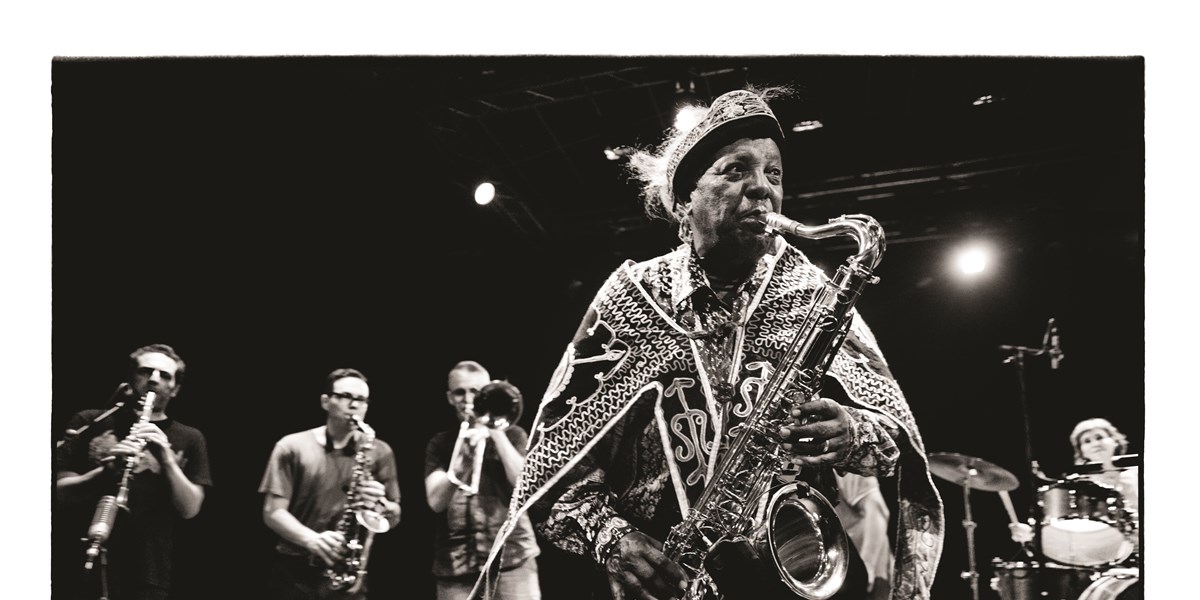
These are not museum pieces. They are living things. Breathing things. Things that are also in conversation with modernity, with the internet, with the diaspora, with everything the twenty first century is throwing at the continent at speed. And that conversation is producing something entirely new — something that is neither purely traditional nor purely modern but a third thing, distinctly African and distinctly now, that the rest of the world keeps trying to name and keeps getting slightly wrong.
Because you cannot name a kola nut that hasn’t finished breaking yet. Africa is still mid-ceremony. Still in the middle of the prayer over the nut, still figuring out how the pieces will fall, which hands will receive them, what the division will mean for the sharing that comes after. The diversity is not a problem to be resolved into unity. The three thousand ethnic groups are not a complication awaiting simplification. The two thousand languages are not an inconvenience on the way to one manageable African voice. They are the whole point.
A continent that contains that much human variation, that many ways of understanding the world, that many distinct answers to the question of what a good life looks like — that is not a continent struggling toward coherence. That is the most extraordinary repository of human possibility on the planet. The kola nut was never supposed to break into identical pieces. The beauty of the ceremony was always in the breaking itself. In the jagged, uneven, magnificently complicated distribution of something sacred among people who are not all the same and were never supposed to be.
The next time someone hears I am Tarok and the nod stops, I will not correct them toward “Nigerian” or “African”. I will let the pause sit. Because that pause — that small moment of not-knowing — is exactly the point. It is the space where the continent’s real complexity lives. It is what Jean Rouch’s camera could never quite reach. It is what gets lost every time someone flattens fifty four countries into one word and calls it a description.
What if the kola nut doesn’t break cleanly? Good. That means it is real.