Stay In This World
The stories, the culture, the conversations. Every week.
No spam. No third parties. Just Unruly.
On Seeing Stories, slowness, and what the attention economy is taking from storytellers.
There’s something fascinating about how quickly creative ideas become visible. A thought can quickly become a note, then a draft, and then a post. We live in an era defined by a relentless, high-velocity churn of content, where success is measured by visibility, and the primary currency is attention. The digital architecture of our lives rewards constant production of images, texts, and content. For the emerging creative, the imperative is to publish before one has truly learned to see, and that to observe without immediate output is to be unproductive.
This culture of constant production has a profound, often unacknowledged, toll on the creator. It rushes ideas out into the world before they've had a chance to fully form or find their emotional core. It makes creatives conflate the tool with artistic vision, suggesting that getting a better camera or more sophisticated software is a substitute for the slow, often painful work of developing a unique perspective. The act of storytelling gets reduced to a performance of storytelling, where the surface-level aesthetics of a narrative are prioritized over its foundational truth.
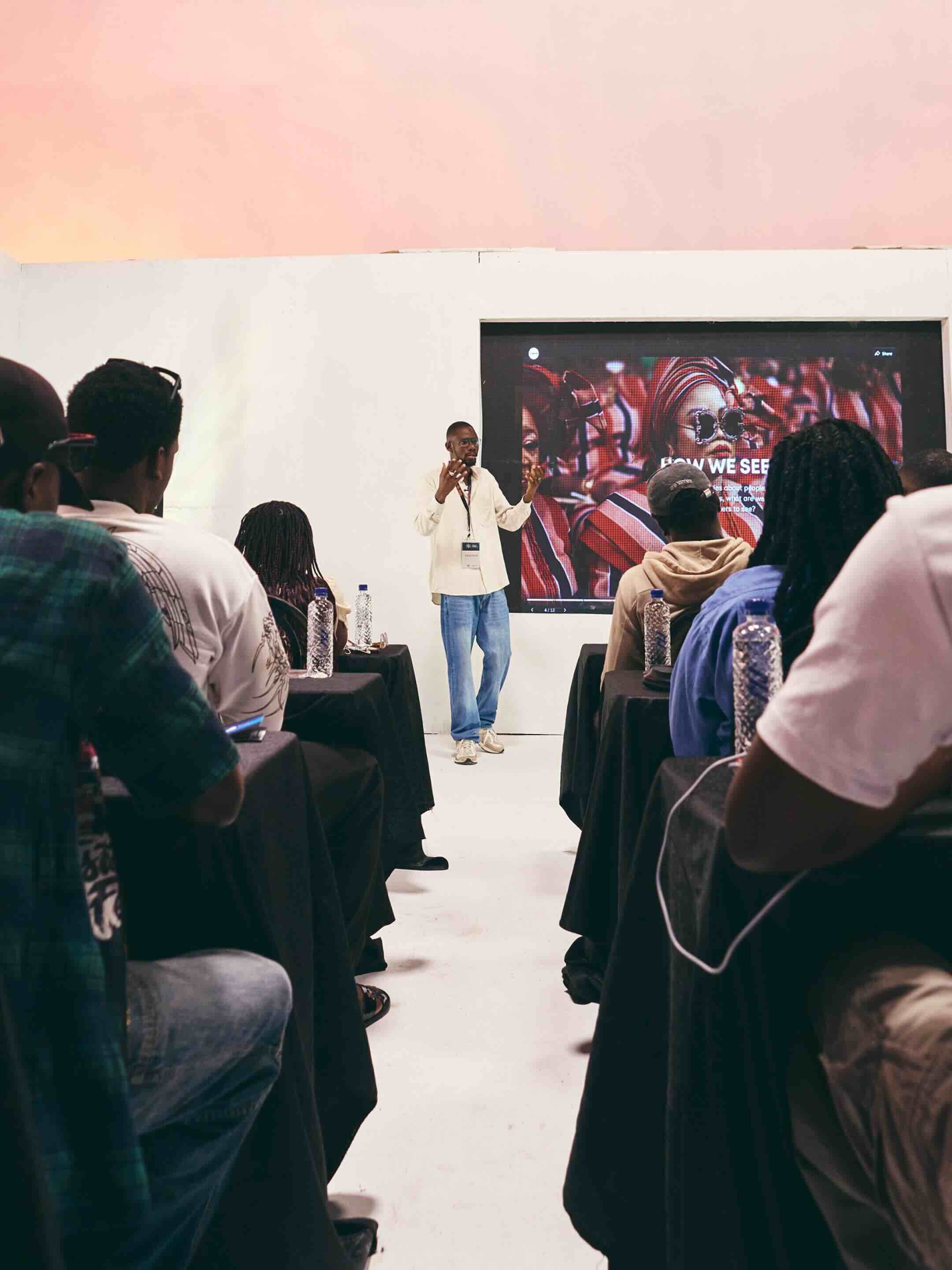
Yet, amidst this frantic activity, an important alternative is taking root, one that challenges the very premise of our production-obsessed culture. This cultural shift, which seeks to reclaim the deeper origins of creative work, finds a compelling illustration in initiatives such as the ‘Seeing Stories’ workshop, hosted by artist and visual storyteller Sope Adelaja. This gathering of creatives including photographers, filmmakers, writers, and artists served as a room of care and critique, a space where the fundamental question of narrative is stripped back to its essence. The central inquiry that anchored this cultural meditation, and indeed, every paragraph of this essay is:
"What does a story need from the person trying to tell it before it becomes anything?"
This question is a thesis in itself, a challenge to the prevailing notion that a story begins with picking a medium. The core argument here is that we have become a society that rewards production over observation, and that learning the act of seeing in the craft of storytelling is a necessary act of resistance. The philosophy exemplified by the ‘Seeing Stories’ workshop insists that seeing is a practice, a discipline that must be cultivated with the same dedication we'd give to learning a craft or a language. This idea is radical because it suggests that the most important work a storyteller does is often invisible, and deeply personal.
Sope Adelaja, whose own work across photography and film is marked by a profound sense of stillness and deep cultural resonance, embodies this philosophy. His transition from the fast-paced world of commercial editorial work to a more reflective, research-intensive practice was born out of a desire for depth, a desire that mirrors a growing cultural hunger for authenticity. “Before I’m a photographer, I’m a human, and then I see myself as an artist,” he notes. By prioritizing his humanity, his capacity for curiosity, and presence, Adelaja acknowledges that the storyteller’s primary tool is not the lens, but the self, a truth that resonates far beyond the confines of any single workshop.
This human-first approach demands that we treat observation as a serious practice. In spaces that champion this philosophy, such as the 'Seeing Stories' workshop, the goal is to develop a sustained gaze, a deeper attention that seeks to understand the hidden layers of a subject rather than simply document its surface. It is the difference between documenting a scene and truly seeing the story that resides within it. This discipline requires a willingness to sit with uncertainty, to allow a subject to reveal itself in its own time rather than forcing it into a pre-conceived narrative framework. It is, at its heart, the practice of paying attention as a form of care, a vital counterpoint to the shallowness of quick production.
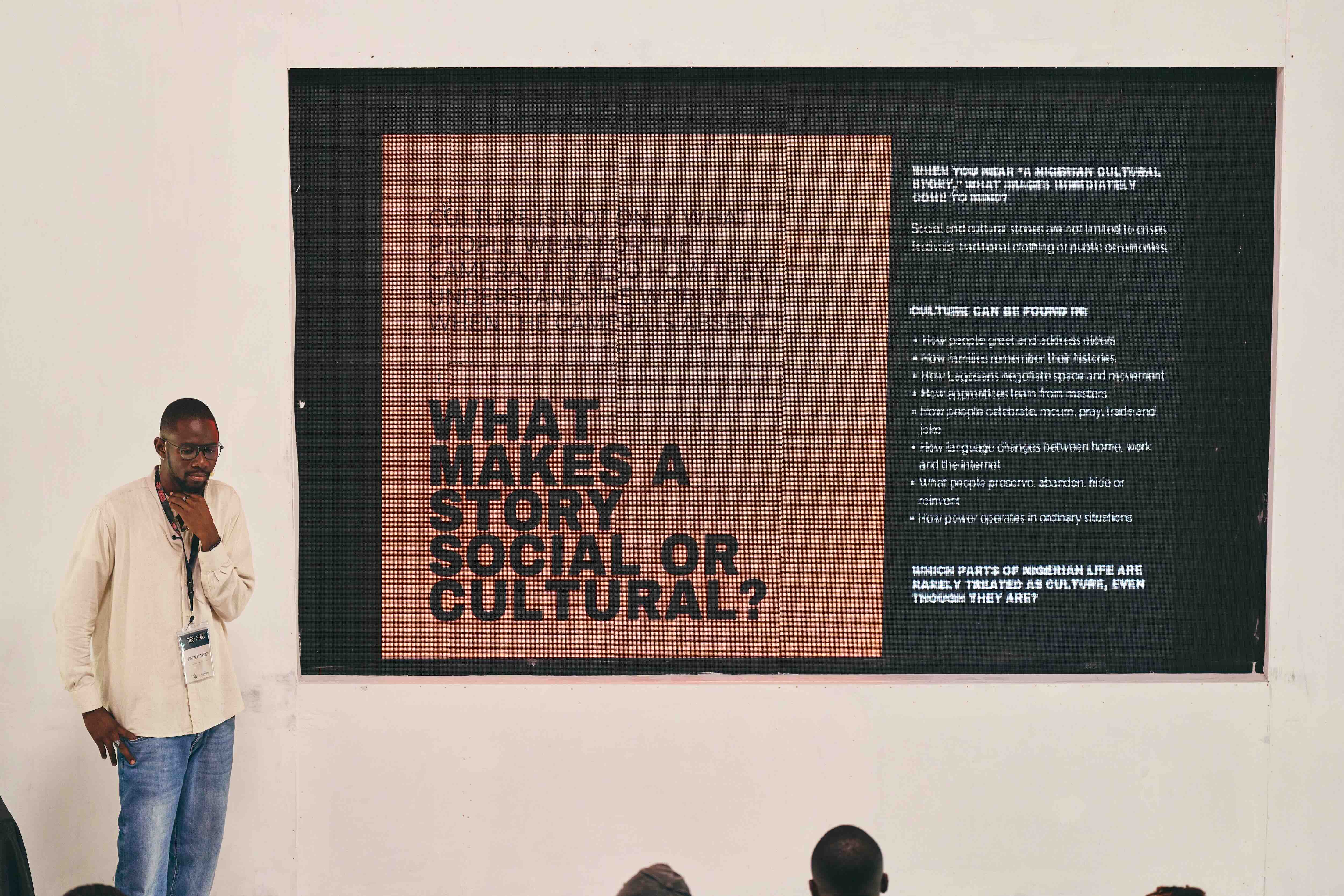
The cultural need for interdisciplinary storytelling is also addressed by initiatives that, like ‘Seeing Stories,’ bring together diverse creative disciplines. When a photographer works alongside a writer, or a filmmaker, these platforms highlight how universal stories really are. They suggest that a story, in its earliest form, is a basic truth looking for a way to be expressed. The choice of how to tell it, through a still image, a moving picture, written words, or by shaping a space, then becomes a second, though vital, act of translation. The beauty of this is how this interdisciplinary approach discourages the narrow focus on technical specialization and encourages a more holistic understanding of how stories are built, shaped, and carried.
Within this framework, slowness is understood not as a lack of productivity, but as a deliberate form of resistance, as embracing slowness in our current reality is a radical choice. It allows for the kind of deep research that Adelaja describes as essential to his own practice; hours spent in archives, the days spent in conversation with community members, and moments of reflection that allow an idea to take root. This slowness is the fertile ground from which authentic narratives grow, including stories that serve as "living archives", hold memory, honour lived experience and possess the power to transform how we see and remember the world we live in.
Critique, too, is reimagined within these spaces as an act of care. In the production-obsessed culture of social media, feedback is often reduced to a "like" or "comment," metrics that don’t sustain true development of creative work. In contrast, environments like ‘Seeing Stories’ offer a space for rigorous, honest, and supportive critique. A space where creatives are encouraged to be vulnerable, share their unfinished thoughts and their uncertain visions, and to receive feedback that is grounded in a shared commitment to the integrity of the story. It is a collaborative effort to ensure that the story being told is as clear and as true as it can possibly be, filling a void left by the often-superficial feedback loops of digital platforms.
The larger purpose of initiatives like 'Seeing Stories' points to a broader cultural shift. At a time when creatives are under pressure to produce constantly and independently, there is a growing recognition that ideas need rooms to grow in, spaces where slowness is permitted, where critique is generous, and where the presence of others sharpens rather than distorts the work. This is what Seeing Stories offers, and why it matters beyond any single workshop.
The distinction between story, narrative, and content is central to this intervention. Content is the product of a culture that values output above all else. It is ephemeral, and easily digestible. Narrative is the craft of the storyteller, the deliberate arrangement of elements to create meaning. But the story itself is something more primal, it is the truth that exists before the craft begins. Sope Adelaja’s work, such as his Threads of Light, Threads of Us exhibition, demonstrates this distinction. His images are not merely content for an exhibition; they are the result of a deep engagement with the themes of landscape, memory, and heritage. They are narratives built upon a foundation of profound seeing, exemplifying the kind of work that emerges when the cultural gap between production and observation is consciously bridged.
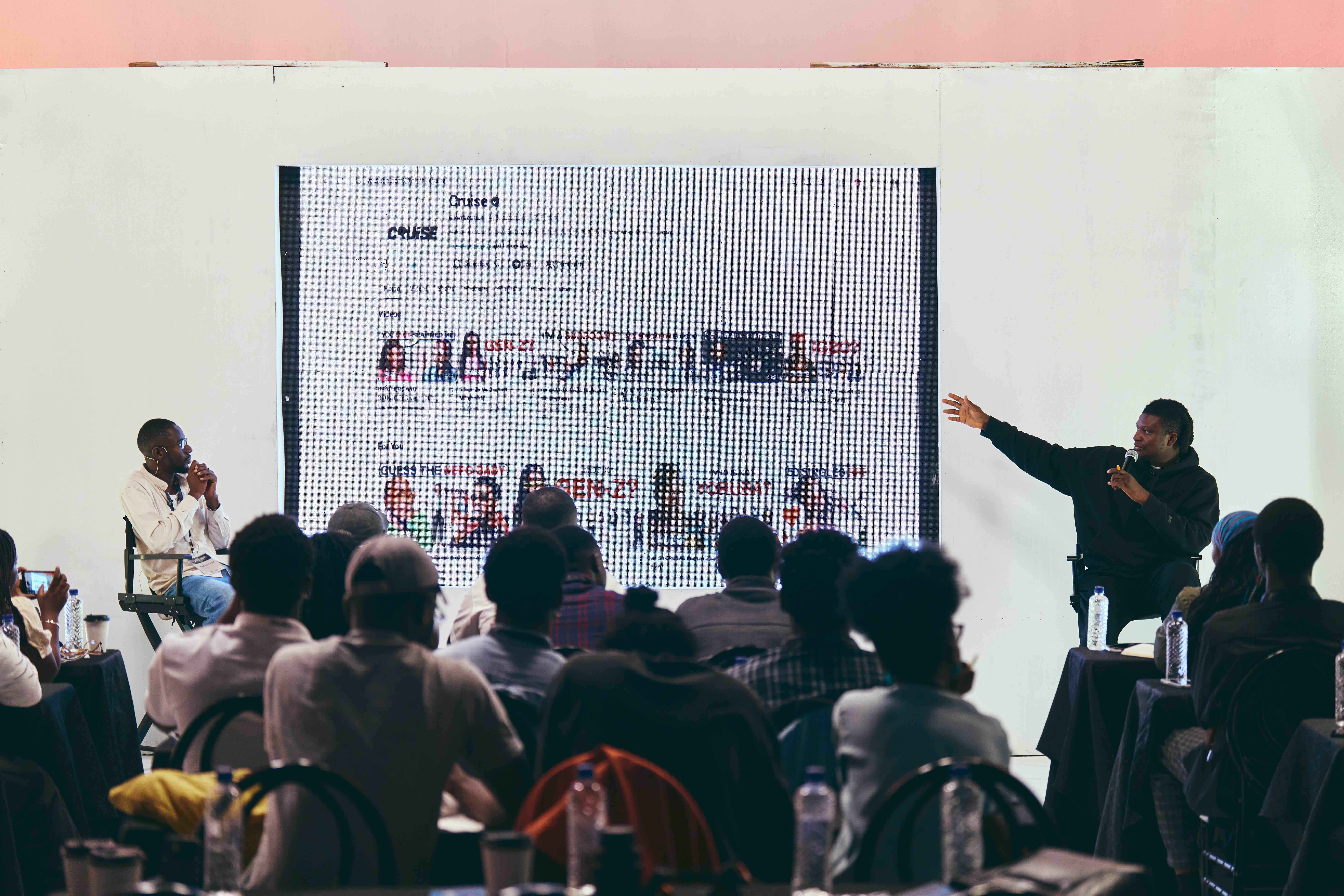
As initiatives like ‘Seeing Stories’ gain traction, it becomes clear that the recovery of the act of seeing in storytelling is tailored towards improving one’s creative work. There is a current realization that in our obsession with production, we have often neglected the very act that makes production meaningful. The ‘Seeing Stories’ workshop, and the work of Recreate Africa, serve as evidence of a broader cultural movement; a collective yearning for depth, for slowness, and for a more honest engagement with the stories that shape our lives.
In the end, what does a story need from the person trying to tell it before it becomes anything? It needs the teller to sometimes be still. It needs them to put down their camera, to set aside their pen, and to simply be present. It needs the teller to recognize that part of their primary responsibility is not to just produce, but to witness. The most important work of any storyteller happens in those unrecorded hours of observation, in the patient research, and in the quiet discipline of learning to see. It is only after this work has been done, after the story has been seen clearly enough to be carried with care, that it can truly become something. Images, film, and text are the vessels. The story itself develops through the practice of seeing and deep observation.
Across disciplines, the distance between noticing something and sharing it has grown remarkably short. It has made creative work feel more immediate, more conversational, and in many ways more accessible. But it also raises a question: in all this movement from observation to expression, how much time do we spend with what we have seen before we decide what it means?