Stay In This World
The stories, the culture, the conversations. Every week.
No spam. No third parties. Just Unruly.
How material, craftsmanship, and symbolism combine to produce an object capable of representing authority.
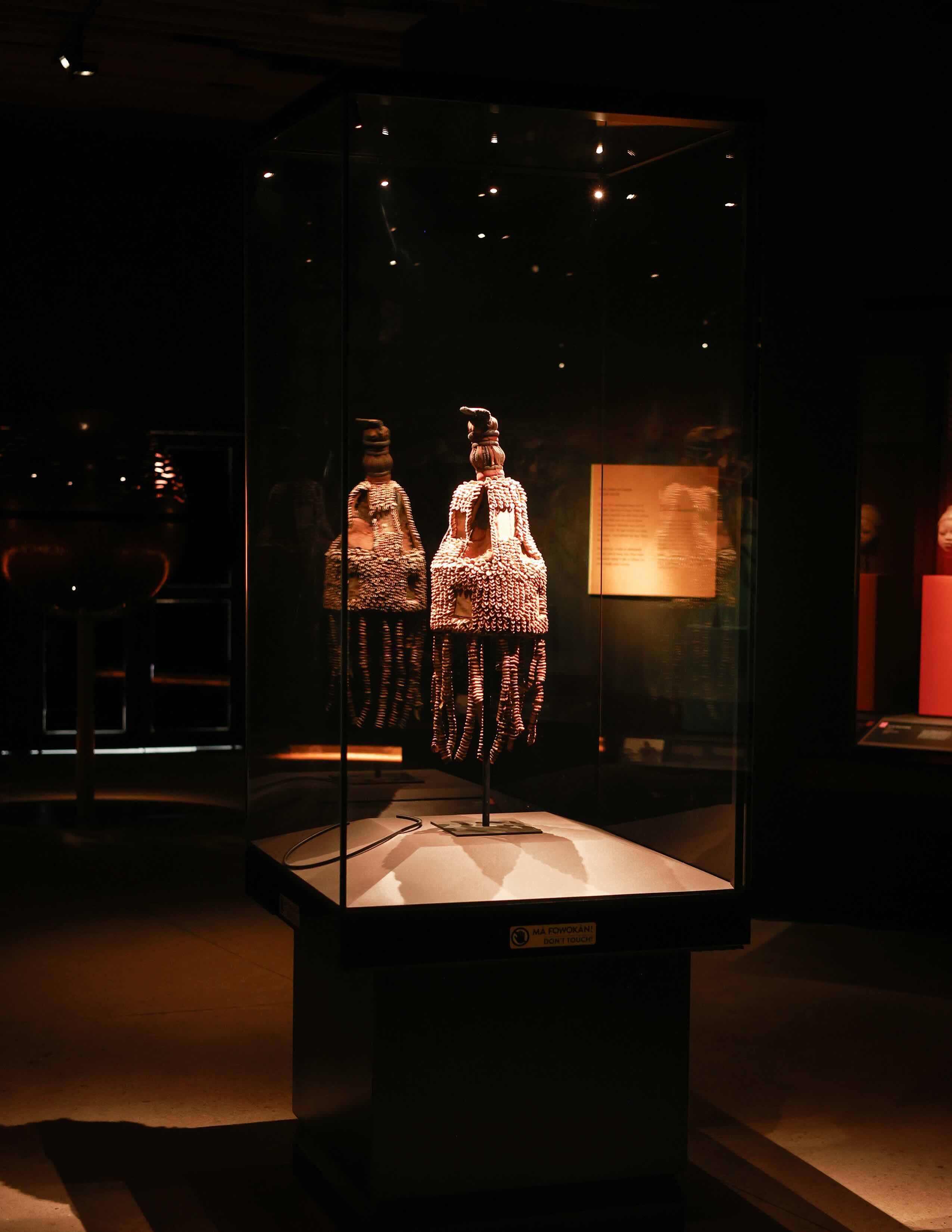
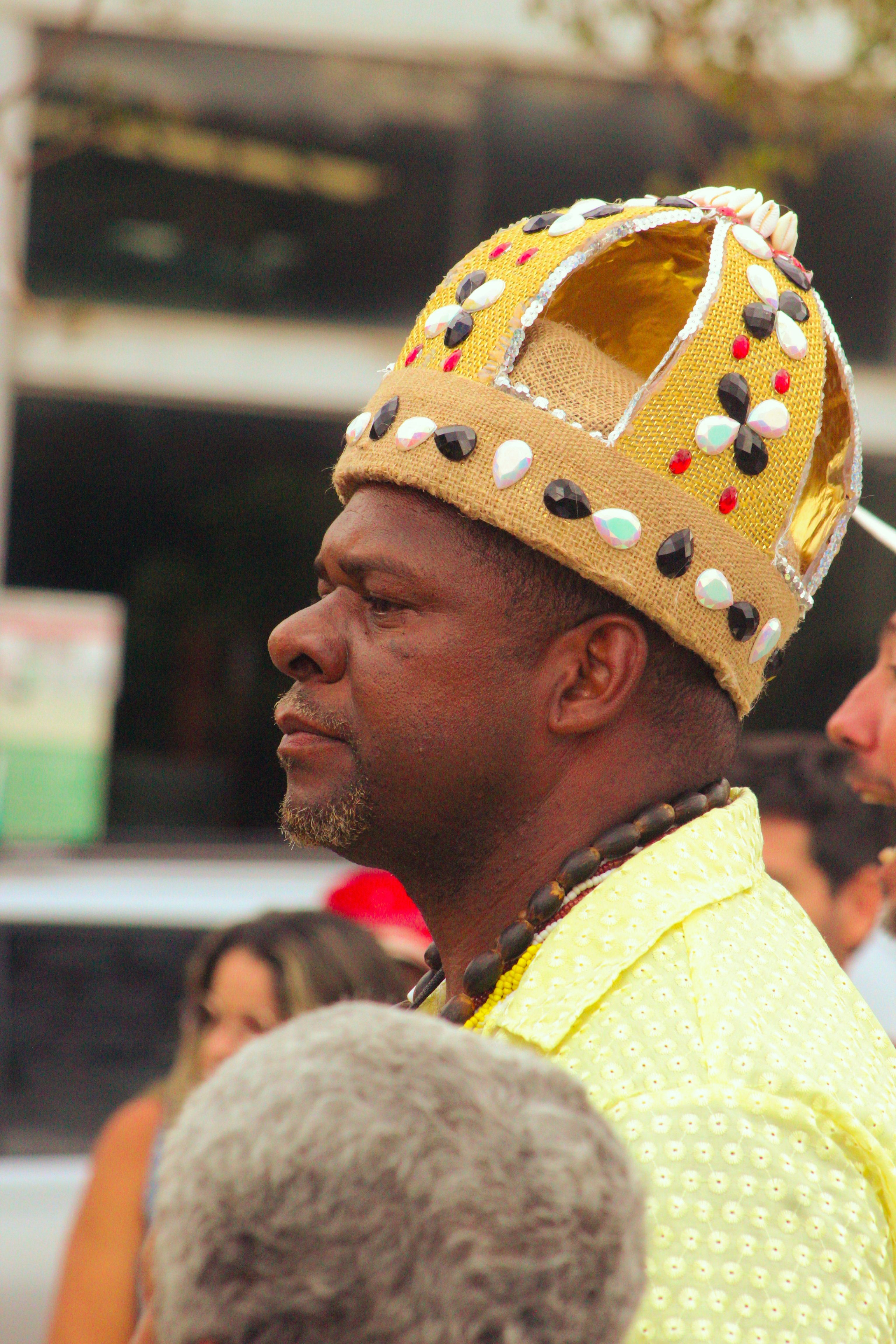
A king does not become powerful because he puts something on his head. The crown works because an entire society has already agreed that what sits above his head can carry something larger than the man beneath it. In Yorùbá culture, this idea produced one of Nigeria's most extraordinary objects: the beaded crown, or adé, and, at its most elaborate, the adénlá. It is easy to look at one and see decoration—glass beads, cloth, fibre, metal, colour, birds and faces arranged into an elaborate ceremonial hat. But this is precisely the mistake the object asks us not to make. A royal crown was not simply made beautiful and then given meaning. Its materials, construction, imagery, ritual preparation and eventual use were all part of the process by which an ordinary collection of materials became an instrument of authority.
The crown maker, therefore, was not only making headwear but constructing a meeting point between the political, the ancestral and the spiritual. The finished crown did not merely identify its wearer as king. It helped produce the condition of kingship itself.
That observation is important.
Much of the language used to describe African royal objects has historically reduced them to "regalia", things worn to display status. But in Yorùbá thought, like any other monarchy, the crown's importance goes deeper. A beaded crown could connect an ọba to Odùduwà, the ancestral founder associated with Ilé-Ifẹ̀ and the origin of royal authority in the Yorùbá culture; its veil could conceal the king's face; its birds could invoke powers associated with women and the spiritual world; and its materials could carry their own histories and associations. The object was simultaneously a political symbol, sacred technology and an extraordinary piece of craftsmanship.
The first thing to understand about the crown, then, is that its power was assembled.
The most recognisable Yorùbá royal crown is conical, heavily beaded and often finished with a curtain of beads that falls over the wearer's face. Museum collections preserve examples from across southwestern Nigeria, including crowns associated with places such as Ikere in Ekiti State and Epe in present-day Lagos State. Their physical construction varies, but the underlying principle is consistent: a firm internal structure is transformed by textile, fibre, thread and hundreds of beads into an object whose surface becomes its language.
This is important because the glass bead itself is not the beginning of the story.
Beads have had a long history in the region before the nineteenth-century explosion of European glass beads. Archaeological evidence shows that glassmaking existed at Ilé-Ifẹ̀ as early as the eleventh century. Yorùbá devotional and royal beadwork also incorporated locally available stones such as jasper and carnelian, alongside coral and cowries obtained through wider trade networks. By the nineteenth century, imported European glass beads had dramatically expanded the range of colours available to bead artists.
The crown maker therefore worked within an old visual and technological culture, but one that was continually absorbing new materials.
This complicates the familiar story of "traditional African craft." Tradition was not necessarily the refusal of foreign materials. The history of the crown demonstrates almost the opposite. Imported materials could be absorbed into indigenous systems of meaning and transformed by local makers into something that no longer belonged simply to the place from which the material came.
Red coral offers an especially revealing example. Portuguese traders introduced Mediterranean coral into West African trade from the late fifteenth century. Its colour and rarity fitted existing associations with power, blood and danger, and coral subsequently became deeply embedded in royal imagery in places such as Benin. In Yorùbá beadwork, meanwhile, later access to European glass beads provided artists with a much wider chromatic vocabulary.
The material was foreign. The meaning was not.
To make a crown, the maker first had to create a structure capable of carrying the enormous visual weight that would eventually cover it.
The surviving examples reveal the logic of this construction. A crown could begin with a woven or basketry framework, strengthened with fibre and covered or shaped with cloth. One National Museum of African Art example describes a structure made from starched cotton placed over basketry, while other surviving crowns contain iron, plant fibre, cotton and wire. Onto this underlying form the beadwork was attached, with separate elements constructed for birds, faces and other motifs.
This is where the crown maker's technical intelligence becomes easy to overlook.
Thousands of tiny beads needed to be organised into lines, fields, figures and geometric patterns without losing the shape of the object beneath them. The artist must understand tension, weight, proportion and attachment. A crown is not a flat textile. It is a three-dimensional object intended to sit securely on a human head while carrying an elaborate surface.
The veil creates another technical problem. It had to hang sufficiently densely to obscure the king's face, but remain flexible enough to move with the wearer. On some crowns, the veil is composed of networks or fringes of beads, while the body carries separate panels and raised elements.
The result is a strange reversal of ordinary craftsmanship: the better the construction, the less we notice the construction.
We see the finished surface. We do not see the thousands of decisions required to make that surface possible.
And then comes the most consequential part of the work: deciding what the surface should say.
The images on a Yorùbá crown are not simply illustrations. They establish relationships.
Faces appear on many adénlá crowns. Their exact identities and meanings can vary between objects, but they are consistently connected with ancestry, royal lineage and the presence of those who came before. One major example in the Metropolitan Museum of Art has four faces whose arrangement evokes the royal bloodline of Odùduwà. The crown thus becomes a way of placing the living king inside a much longer history.
The birds are equally important.
They are often among the most visually striking features of the crown, perched at its summit or incorporated into its upper structure. Their symbolism is complex, but museum scholarship repeatedly connects them with powerful spiritual forces and with the authority of women—particularly the potent, often concealed powers understood as belonging to senior women. The bird is therefore not merely an ornament placed above the king. It can signify forces that the king must acknowledge and mediate rather than simply command.
This is one of the most interesting things about the crown: it does not depict authority as the absolute possession of the king.
Instead, it shows authority as something negotiated between the king, his ancestors, spiritual powers, women, political subjects and the unseen forces believed to sustain the kingdom.
Even the veil participates in this argument.
When the beads fall across the king's face, they conceal the individual beneath the office. The king becomes less visually available at precisely the moment when he is most visible as a ruler. Traditional interpretations describe the veil as protecting those who look upon the king from his spiritually powerful gaze. In this sense, concealment is not the opposite of authority. Concealment produces it.
The man disappears so that the office can appear.
The crown maker also works with colour, and colour in Yorùbá visual culture is rarely neutral.
Different beads could carry associations with particular òrìṣà, spiritual powers and qualities. White, for instance, is associated with purity and coolness and with figures such as Ọbàtálá and Olókun. Other colours and combinations could be selected according to the deity, person or ritual context being represented. Beadwork therefore required more than an eye for visual harmony. It required knowledge.
This helps explain why the crown cannot be reduced to an exercise in decoration.
A maker choosing between blue, white, red, yellow or green was not simply deciding what looked good together. Colour also establishes a relationship between the object and the spiritual world. Pattern could identify royal status. A face could invoke ancestry. A bird could refer to powers beyond the political realm.
The aesthetic decision and the metaphysical decision could be the same decision.
This is perhaps why the concept of ojú-ọ̀nà, literally concerned with the consciousness or sensibility of design, is useful here. The Metropolitan Museum describes it as an ideal of design awareness and originality in Yoruba beadwork. The crown maker was expected not merely to reproduce a formula but to exercise a sophisticated visual intelligence within an inherited symbolic language.
Tradition, in other words, did not eliminate creativity.
It gave creativity rules worth mastering.

There is a point at which craftsmanship alone stops being sufficient.
According to documentation accompanying important Yorùbá crowns, the making of an adénlá could involve prayer and offerings before the beadwork began. One Metropolitan Museum account describes the crown's woven frame as a representation of the world and notes that ritual preparation accompanied its elaboration. In some traditions, medicinal substances were inserted into the summit of the crown, effectively binding the object to the sacred lineage and power of the person who would wear it.
This means that the crown's transformation from material to authority happened in stages.
First there were materials.
Then there was structure.
Then pattern.
Then symbol.
Then ritual.
Only after all of these could the object become fully royal.
This distinction is crucial. A modern observer might see a crown in a museum case and assume that its meaning is contained entirely within its appearance. But historically, the object was not complete simply because the maker had finished sewing the final bead.
Its meaning depended on who could wear it, when it could be worn, what ceremonies activated it, and what histories were attached to it.
The crown was powerful partly because access to it was restricted. The great adénlá was associated with rulers who could claim descent from Odùduwà. It was not merely an expensive object that anyone wealthy enough could purchase and wear. Its authority depended upon a social system that recognised the legitimacy of its wearer.
This is the deeper lesson of royal craft: materials cannot manufacture authority by themselves. Society has to agree to believe in the relationship between the material and the office.
The same principle appears elsewhere in Nigeria, although the materials and visual language change.
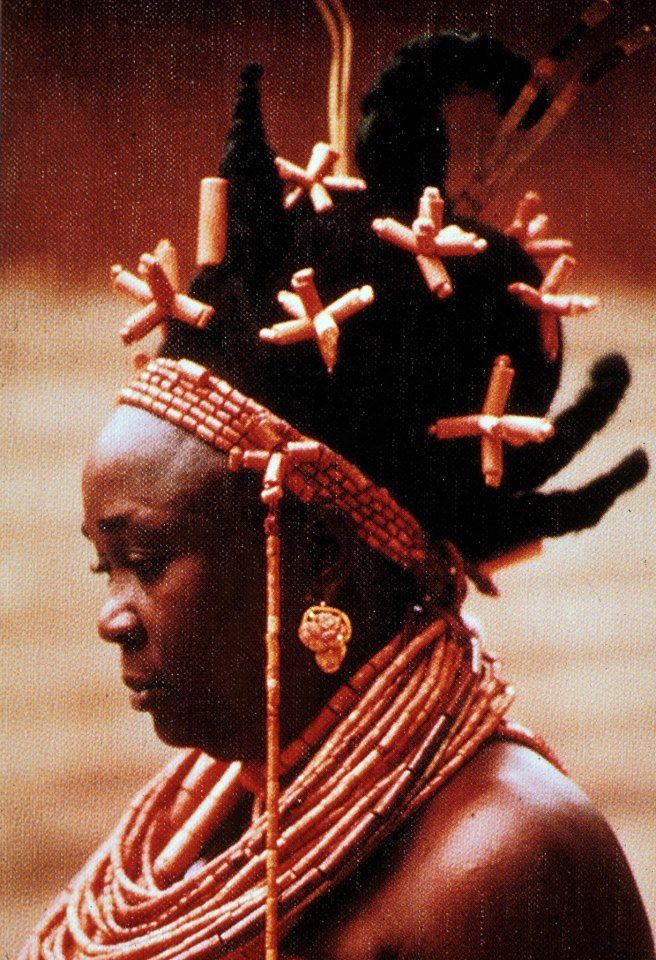
In the Kingdom of Benin, coral beads became central to royal identity. The Oba's ceremonial dress could include coral crowns, necklaces, collars, armlets and garments, while coral and agate communicated status and access to rare materials. Some surviving coral crowns date to the eighteenth and nineteenth centuries, and coral mesh remained a major component of Benin royal regalia.
But Benin also demonstrates how dangerous it is to flatten Nigerian royal traditions into one generic idea of “African royalty”.
The coral crown of an Edo Oba is not simply a Benin version of a Yorùbá adé. It belongs to a different political and spiritual history, with its own institutions, materials, rituals and meanings.
What connects them is not a single Nigerian style.
It is a Nigerian understanding that authority can be materialised.
Cloth can become status. Coral can become lineage. Brass can become historical memory. Beads can become spiritual protection. A crown can become an archive.
And this is why the destruction and dispersal of royal objects has consequences beyond the loss of beautiful things.
When British forces invaded Benin City in 1897, royal objects made from brass, ivory, coral and wood were looted from the palace and subsequently dispersed through sales, donations and private collections. The surviving objects therefore carry two histories: the history of their making and the history of their removal.
A crown in a European museum can still tell us about Edo craftsmanship. But its presence there also tells us something about the political violence that interrupted the environment in which that craftsmanship originally had meaning.
There is an irony at the centre of royal craft.
The person whose authority everyone is looking at is often not the person who made the object responsible for expressing it. In the Yorùbá culture, this is typically the responsibility of the Oníṣọ̀nà/Onínà: The general Yoruba term for a master artisan or craft designer who creates traditional cultural artefacts. And if a family becomes recognised for exclusively crafting royal crowns, they bear the title Aṣindemade.
The king receives the visual power. The maker supplies the technical and intellectual labour.
Yet historical records often preserve the ruler more clearly than the craftspeople who constructed his world. Museum catalogues can identify a crown as “Yorùbá artist” or “bead artist” while leaving the individual maker unnamed.
This anonymity is not necessarily evidence that the maker was unimportant. It may instead reveal how craft knowledge was historically organised: through specialised communities, workshops, apprenticeships, palace relationships and inherited expertise rather than the modern Western idea of the singular celebrity artist.
The crown maker needed to know how to construct a stable form, but also which motifs could legitimately appear on it. They needed to understand the properties of beads and thread, but also the associations of colour. They needed visual imagination, but also cultural discipline.
Their work sat between engineering and theology.
And perhaps that is why the crown remains such a powerful object.
It demonstrates that authority is rarely created by one thing. It is assembled from materials, labour, memory, belief and collective recognition.
The glass bead arrives through trade. The fibre comes from the landscape. The cloth provides the body. The metal provides strength. The pattern invokes history. The bird invokes powers beyond the king. The veil hides his face. The ritual gives the object another kind of life.
Then the crown is placed on a man's head.
And somehow, through all of those accumulated decisions, he becomes more than the man who walked into the room.
That is the achievement of the crown maker.
Not decoration. Transformation.
The unresolved question is what happens when the chain that once connected maker, material, ritual and ruler begins to break. We can preserve the crown in a museum, photograph its beads, catalogue its materials and explain its symbols. We can even reproduce its form. But can we preserve the authority that once made those materials speak?
Or, when the crown survives, but the world that taught it how to speak has changed, what exactly are we looking at?