Stay In This World
The stories, the culture, the conversations. Every week.
No spam. No third parties. Just Unruly.
A cultural inquiry into the definitions our society has maintained, and the ones it has not.

Long before Twitter gave anyone a global stage, the definitions were already being written. In homes, in churches, in town halls, in parliament, in medicine, in law, womanhood has been a subject with no shortage of commentary. What a woman's body is for. What a woman's emotions signify. What a woman owes her husband, her children, her community, her God. These definitions arrived with the authority of people who had studied the subject thoroughly, who had thought carefully about it, who knew.
Then the internet came. Then Twitter. The definitions did not change, they just got louder, faster, and harder to ignore. What would previously have been shared at a dinner table now reaches fifty thousand followers. The certainty has not wavered. If anything, the audience has made it more pronounced. Confidence performs better in front of crowds. In Nigeria, where the culture of communal observation already made other people's business everyone's concern, social media gave that tendency a megaphone it had never had before.
Open any Nigerian timeline on any given day and the commentary is consistent. A woman who calls for equity is labelled bitter, ugly, fat, or jobless. A woman who speaks about her safety is mocked, and the man who threatened it is defended. When gospel singer Osinachi Nwachukwu was killed by domestic violence in 2022, a Twitter user questioned why her male colleague had worked with "someone's wife" without obtaining her husband's permission first. Her vocal accomplishments, her career, her name, none of these were how she was identified. She was someone's wife. The marital category erased everything else.
This is not an edge case. It is a pattern, and it raises a question worth sitting with. The definition of womanhood is detailed, behavioural, and extensively maintained. But the definition of manhood carries its own weight. A man who fails to provide is shamed. A man who shows vulnerability is diminished. A man who does not protect is considered less than. These are not freedoms. They are a different set of constraints, equally rigid, equally enforced, and equally rarely examined. The question is not which definition is heavier. It is why both exist in the forms they do, and what the culture has built by insisting on them.
Ask what a woman is and the answers arrive quickly. A woman takes care of the home. A woman nurtures children. A woman manages the emotional temperature of her household without burdening the people in it. A woman maintains her body to a standard others set. The definition is long, detailed, and behavioural.
Now ask what a man is.
Men do not cry. Men do not complain. Men do not ask for help. Men do not show weakness. Men do not admit fear, doubt, vulnerability, loneliness, or confusion. Men provide. Men protect. Men decide. Men lead. Notice that most of these statements are structured as negations, manhood defined not by what it is, but by what it refuses to be. A definition built on negation is inherently unstable, because it requires constant maintenance. And a definition of womanhood that is this detailed, this behavioural, this extensively enforced, does a particular kind of work in relation to that instability. The two definitions are not independent of each other. They were built together, and they hold each other in place.

This is not simply a matter of temperament. It is the product of specific cultural and historical arrangements. The certainty with which womanhood is now defined in Nigeria was not always the only story. Among the Yoruba, women were the primary figures in long-distance trade, accumulating wealth, titles, and political influence that the historical record has largely chosen to compress into footnotes. Moremi of Ile-Ife and Queen Amina of Zaria held power that the culture remembers as legend rather than fact, which is its own kind of erasure. The colonial administration changed the arrangement. Male chiefs collaborated with the British to govern and collect taxes; female chiefs became less useful to that project and declined accordingly. The economy shifted toward cash crops controlled by men and European firms. Women were pushed into food-crop farming and petty trading, both earning less, both confirming the idea that women's economic contribution was supplementary to the real work being done. The legal frameworks the British installed reinforced patriarchal structures and quietly erased the indigenous arrangements where women had held ground. What colonialism produced was a patriarchy that blended what was inherited with what was imported, sealed it with the authority of tradition, and handed it down.
Religion has become another site where the definitions hold. In Nigerian churches and mosques, when there is trouble in a home, infidelity, neglect, financial recklessness, emotional absence, the counsel that arrives most reliably is directed at the woman. She is urged to pray for her husband. To cover him. To fast on his behalf. To hold the home together spiritually. The same logic extends to violence done against her. When a woman is assaulted, the question that surfaces in religious spaces is often about what she was wearing, where she was, who she was with, what she might have invited. The assaulter's conduct is a matter for prayer and forgiveness. The woman's conduct is a matter for examination. Statistics compiled by Amnesty International confirm that victim blaming is a prevailing attitude in Nigeria, contributing to a large percentage of sexual assaults going unreported. The spiritual labour of the home, like the domestic labour, like the emotional labour, and now the moral burden of men's behaviour, has been assigned to women by a culture that did not notice it was making an assignment. It simply called it her nature.
In Igbo kinship structure, the logic is visible in the bones of the system. The patriline, umunna, controls ancestral veneration, land inheritance, kola nut breaking, masquerading. These are not incidental rituals. They are the mechanisms by which a lineage reproduces its authority and decides who belongs to it. Women transition between lineages through marriage, their bride wealth marking the transfer from one family to another. The matriline, umunne, matters, but differently: it is where you go for refuge, not for power. A woman who marries out of her father's lineage does not fully belong to her husband's either. She moves between two structures, neither of which was built around the question of who she is in her own right.
There is something worth noting here. In Nigeria, the status of "real man" is not inherent. It is conferred externally, most reliably through marriage. A man who has not married has not yet, by the logic of the culture, fully become one. Manhood in this sense is a social milestone, not a biological fact. It requires external confirmation to hold. Set beside this the detailed, behavioural, extensively maintained definition of womanhood that the culture has produced, and a question begins to form: what is the relationship between a definition of manhood that requires constant external validation, and the energy spent defining what a woman must be?
This is not an original observation. Masculinity scholars have been making it for decades. Sociologist John MacInnes noted that "masculinity has always been in one crisis or another," which makes sense when you consider that a definition built primarily on negation carries inherent instability. Masculinity scholar Tristan Bridges explains that the crisis of masculinity is less about men losing concrete privileges, and more about the experience of those privileges becoming visible and contested. Once what was invisible becomes seen, that shift in consciousness itself can feel like a loss, even when nothing material has changed. What follows that feeling, and what it produces in public life, is one of the more pressing cultural questions of the current moment.
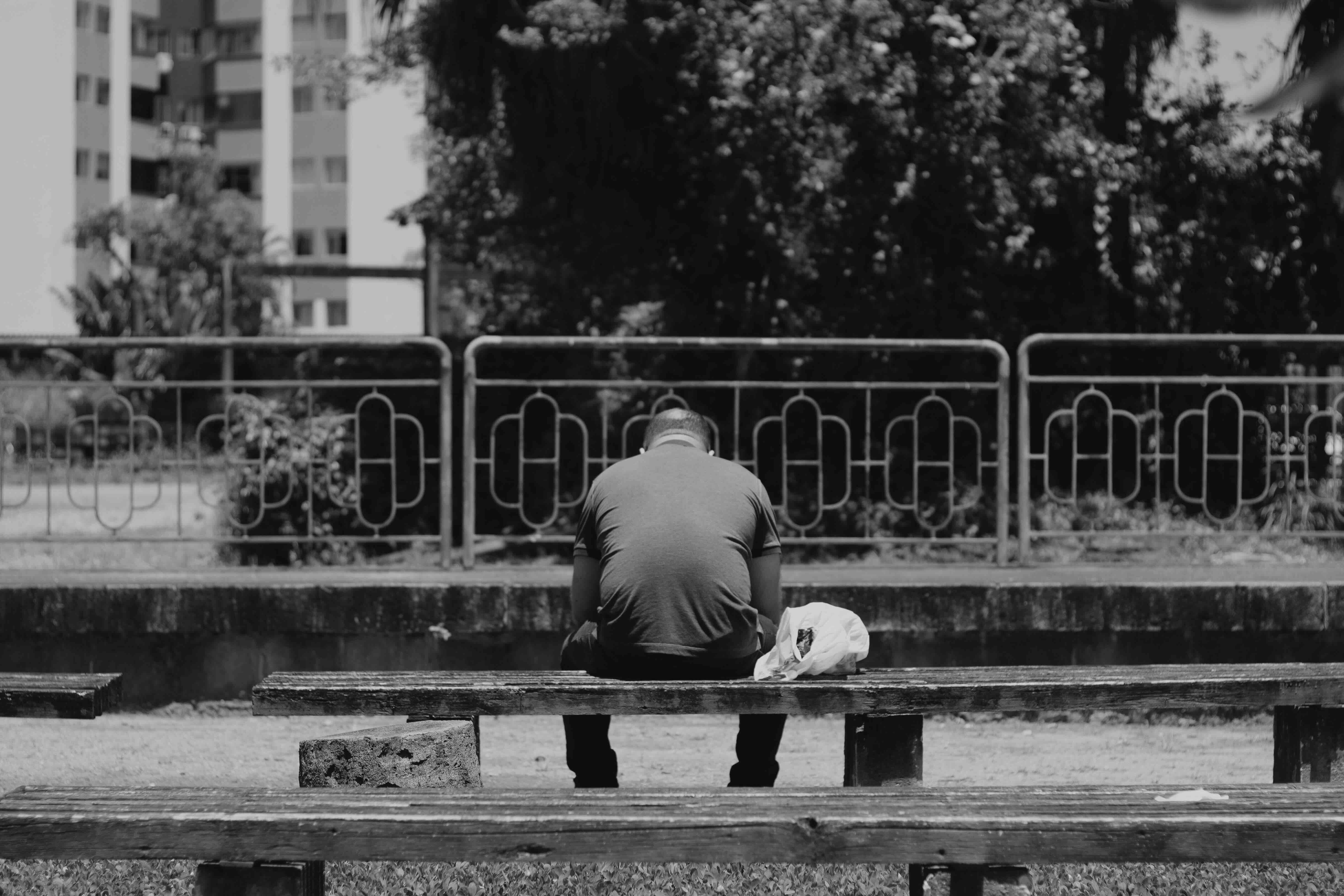
On Nigerian social media, the pattern has a specific texture. Male influencers have built entire platforms on defining and policing women, turning "feminist" into a digital slur, defending men who harm women while mocking the women who report it. The content is strikingly consistent across accounts and across years. Set beside the cultural history this essay has traced, what that consistency reveals is worth asking about. A definition of manhood built primarily on negation requires constant maintenance. When the terms of womanhood are contested, the terms of manhood become unstable too. The energy that goes into defining what a woman must be, online and off, is inseparable from the question of what a man is. That question remains, for the most part, unanswered.
In Nigeria, and across much of Africa, the expectations placed on women are comprehensive and enforced, domestic labour, emotional management, bodily scrutiny, submission, silence. A Nigerian woman is expected to know exactly what she is and to perform it consistently, under observation, without deviation. The expectations placed on men are equally present and equally rigid, but they run in a different direction. A Nigerian man is expected to provide, to protect, to lead. What does it mean to be emotionally present for a child? What does a man owe his family beyond money? What does vulnerability cost him, and why is that cost so rarely questioned? These are not rhetorical questions. They are ones that the culture, for the most part, has not answered, nor has the language to.