Stay In This World
The stories, the culture, the conversations. Every week.
No spam. No third parties. Just Unruly.
Odio Oseni on thirty years of Odio Mimonet, the ecosystem underneath Nigerian fashion, and what longevity actually requires
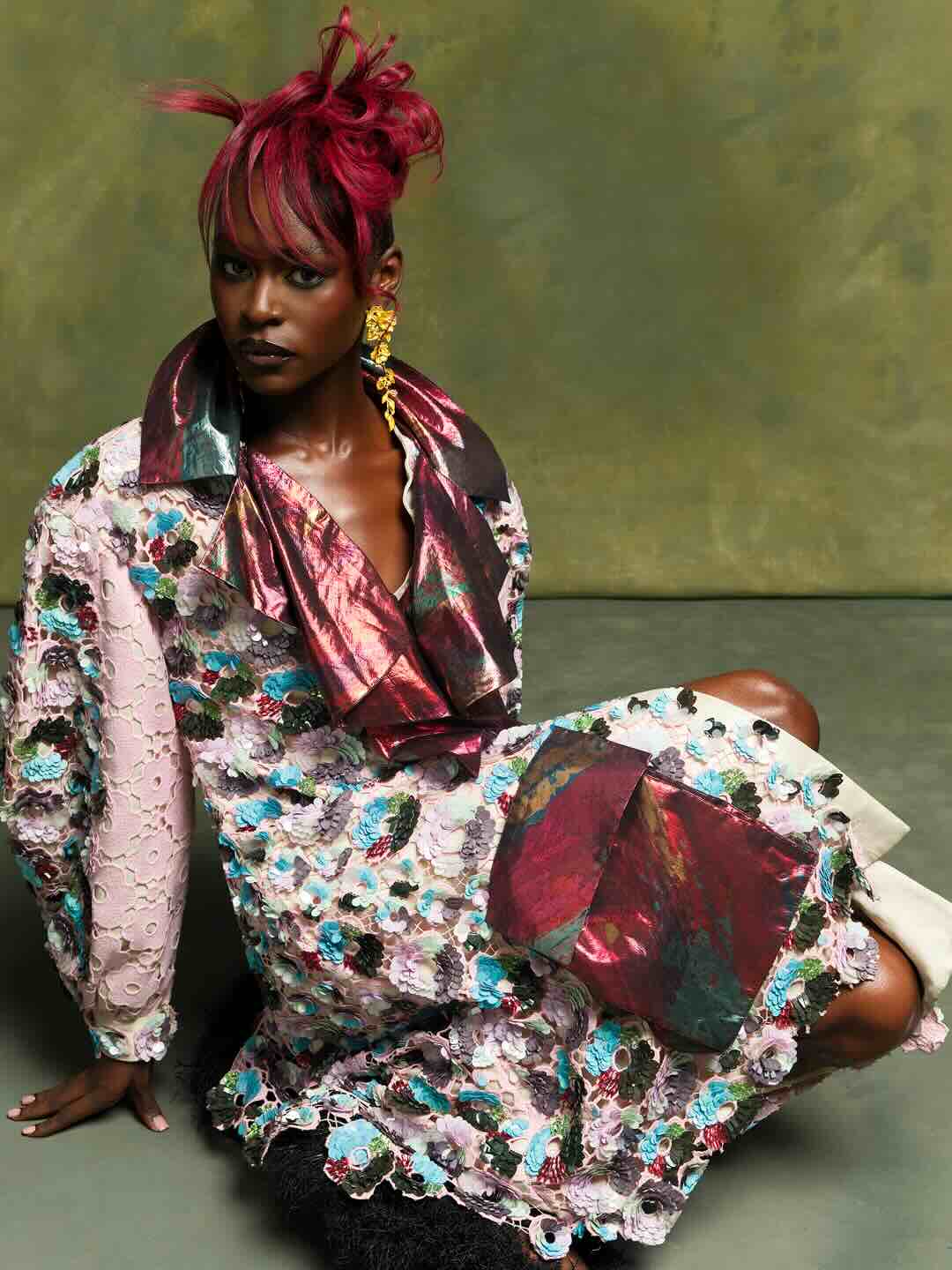
When Odio Mimonet unveiled it’s new brand identity in Lagos on the 19th of August, 2026, the logomark it introduced, signaled a declaration, rather than a departure from the brand’s heritage. Drawn from the arched colonnades of Obafemi Awolowo University, one of the defining architectural achievements of post-independence Nigeria and a landmark of Tropical Modernism, the new visual system reads as an inverted crown, embedding the interlocking letterforms M-I-M from the brand name itself. The choice of architecture as language was deliberate. After thirty years, the house needed something that could carry the weight of what had been built, while keep the door open to what comes next.
“After thirty years, you have enough history to understand where you’ve come from, but you also realize there is still so much ahead of you”.
Odio Oseni, the founder and creative director who has helmed the house since its founding in 1996, tell us” I don’t feel like we have arrived anywhere. I feel like we are still on the way.”

That framing, still on the way after thirty years, is not simply modesty. It is a philosophy that has governed the house from the beginning. The rebrand, developed with Juan Carlos and STUDIUM, was never meant to close one chapter and open another. “We didn’t want. to lose the past,” she says. “It was about giving the house something new while still standing within the halls and echoes of what came before.” The architecture of Obafemi Awolowo University gave them a language for exactly that” modernity and environment existing together, the new growing from the same ground as everything that preceded it.

Thirty years ago, the terrain Odi Oseni was building on had no paths through it. “When we started, there were no structures, no roads, no thoroughfares for us to follow,” she says. “We had a vision, but we had to make our way towards it step by step.”
What that required, she says, was patience and a certain stubbornness. When there is no road, you cannot always see where you are going. You only know you have somewhere you want to get to, and you keep moving. The house began with made-to-measure, couture, and bridal work, responding to individual clients and the realities of a market that was still finding its shape. Ready-to-wear came later, not as a strategic pivot, but as a response to what customers were asking for. They wanted to come into the house and find something they could have immediately. So the house listened.
That willingness to listen without abandoning the vision is part of what has kept the house standing. “I think you need a vision, but you also have to be willing to listen,” she says. “Sometimes the path you imagined is not exactly the path you end up taking.” What she did not expect was how much work it would demand beyond design. The house taught her about numbers and commercialization, about the cost of labour and the value of time. It taught her to push back against the idea that because something is African, it should somehow cost less. “There is a lot of skill, time and craftsmanship in what we make, and those things have value.”
The environment has changed considerably since 1996. The creative sector is more recognized, fashion is being treated as a proper industry, and there is a much larger community around it. But she is careful not to let thirty years of survival become its own endpoint. “I feel like we are still on the way,” she says. The house that had to invent its own path is now thinking about what else the path can become.
The name Mimonet carries three things at once: There is her nickname. There is her love for Claude Monet, the French Impressionist painter whose relationship to light and colour has never left her. And there is the French phrase “moi et moi,”, meaning me and myself, the idea of a deeply personal conversation with one’s own identity. When she chose it, the name was an act of self-definition. A house built from the inside out.
“I think there has always been something quite personal about the name,” she says. “Mimonet carries different parts of me, and I suppose that’s why it has stayed with the house for so long.” But the name has done something she did not entirely anticipate. It has grown beyond her. Over the years, Mimonet has come to represent a community, a way of seeing beauty, and a belief that what exists here can stand alongside what exists anywhere else in the world. “Perhaps it has even grown into something I couldn’t have fully imagined when we started,” she says.
That movement, from the intensely personal to the broadly communal, is one of the defining arcs of the house. What began as one woman’s vision of what fashion could be for Nigerian women has become, over three decades, something that other people have grown into and made their own. The house did not expand by abandoning it’s origin. It expanded by staying close enough to them that others could find their way in.
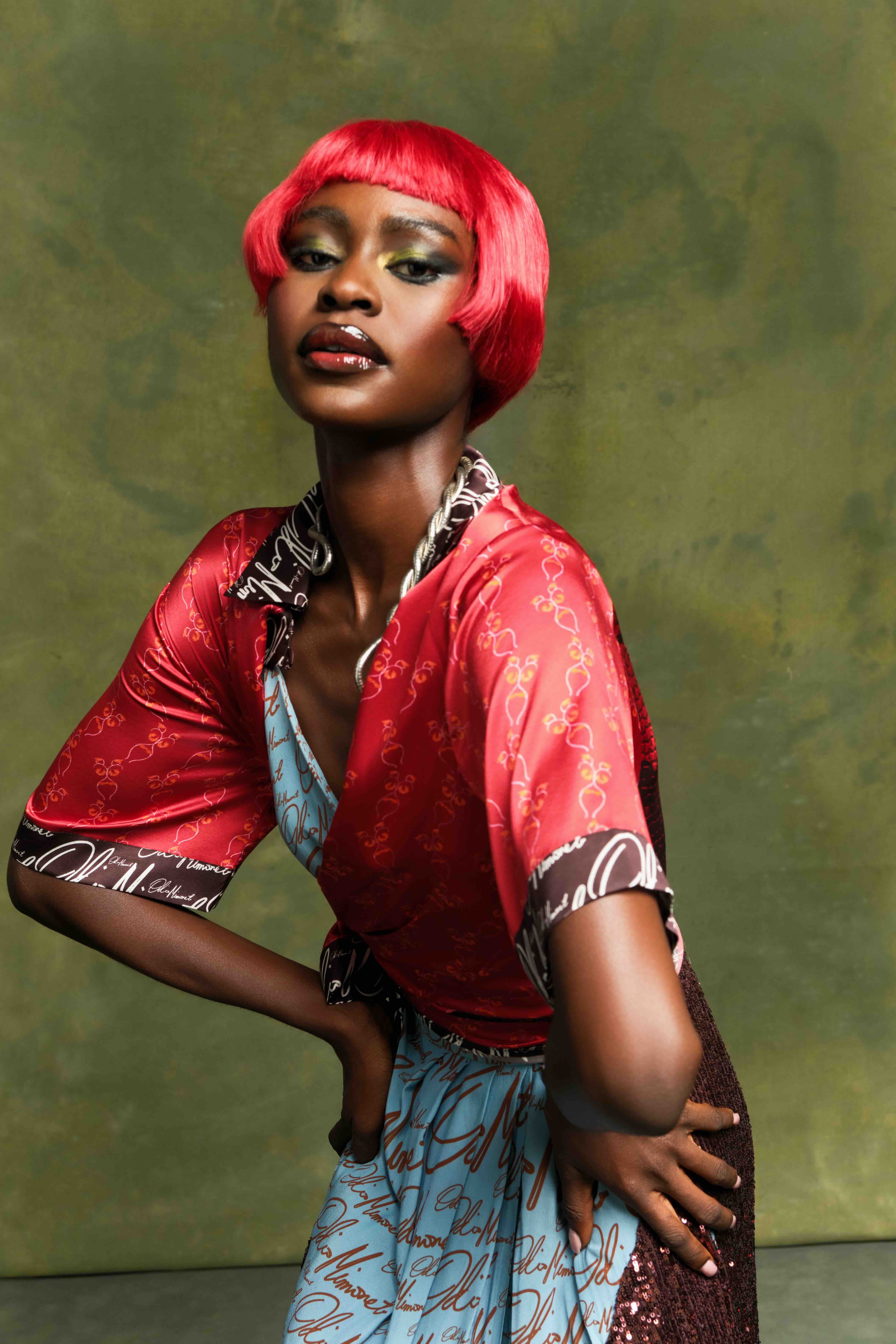
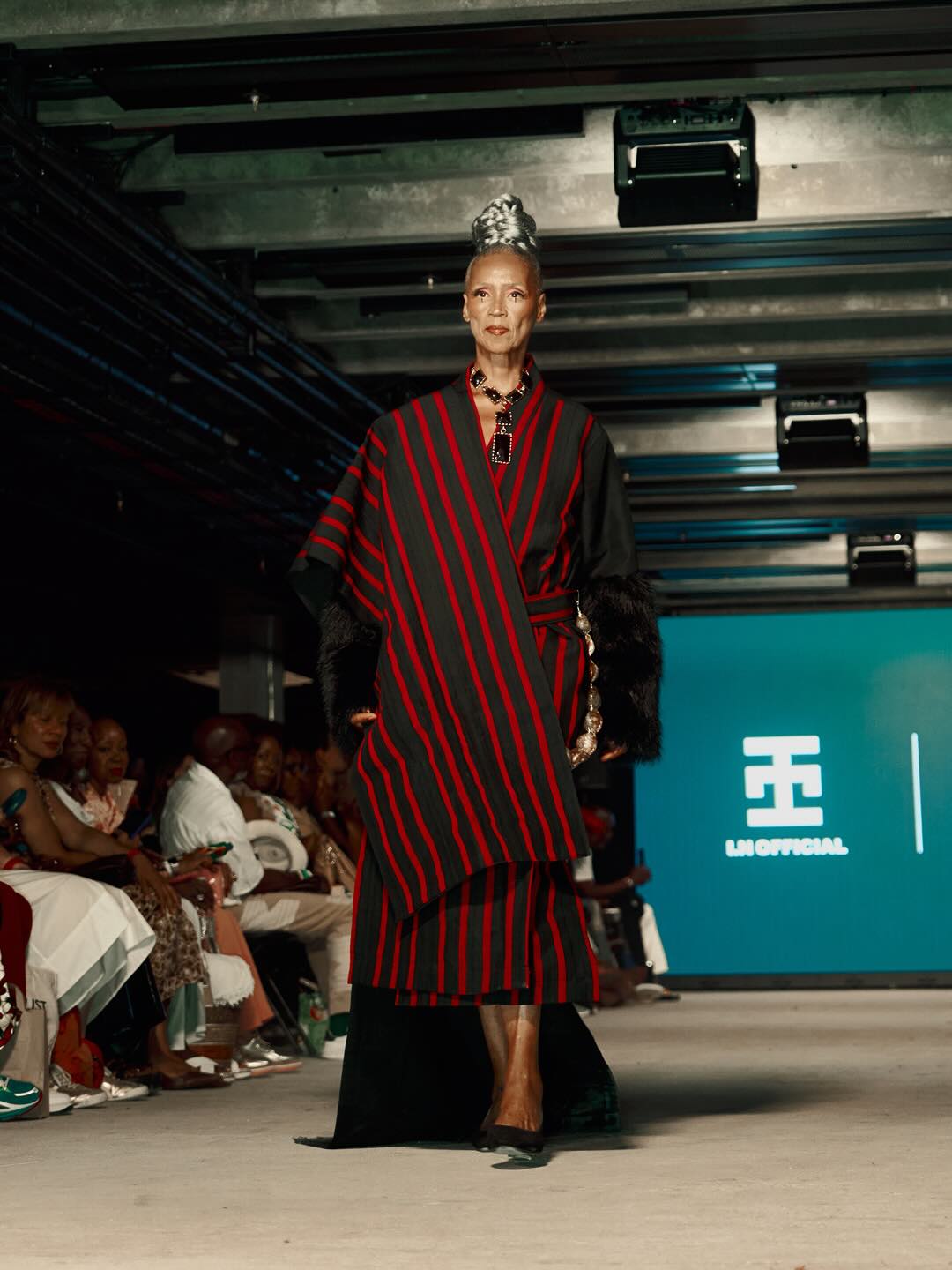
Among the things Odio Mimonet is best known for is a reinterpretation that arrived as an instinct before it became a signature. The Agbada, a garment historically associated with male authority and ceremonial power in Yoruba and broader West African dress traditions, was not made for women. Odio Oseni made it for them anyway.
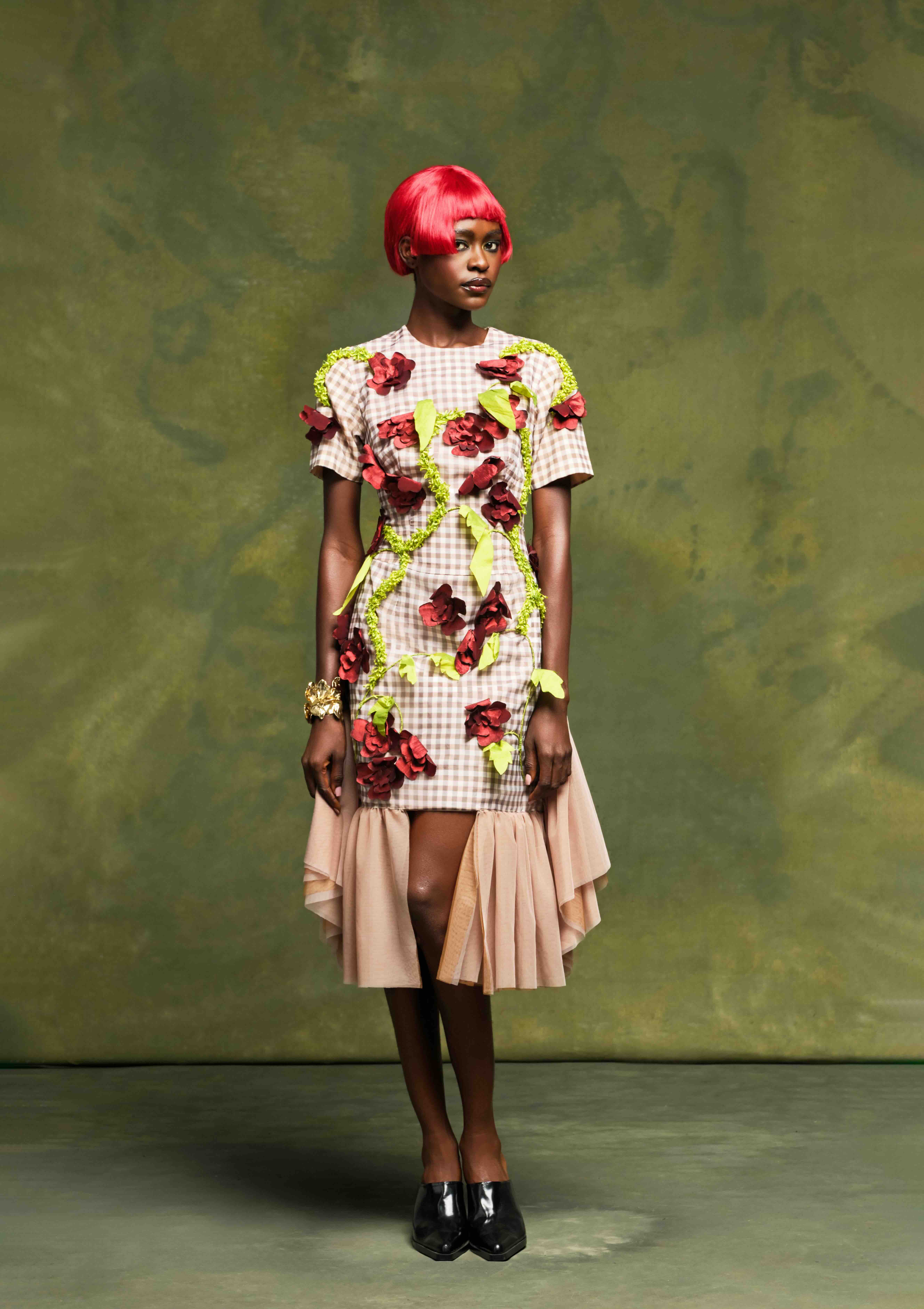
“I was trying to give the woman the balance, the power that already lies within her,” she says. “I’ve always believed women are strong. It’s a different kind of strength, but it can be very deep.” The Agbada already carried a feeling of authority. Her question was why a woman couldn’t have some of that too, with her own femininity still present. So she changed the necklines, made embroidery and fabrication more colorful, introduced checks that carried something nostalgic from childhood but enlarged to something more playful. She worked with lighter fabrics like organza, which brought purity and a certain ease. The result, became one of the most recognizable silhouettes in Nigerian fashion, a reinterpretation that drew the Agbada and the Bubu into a closer conversation, bringing two traditions together through her own design language.
“I wasn’t trying to make the woman become a man, I was interested in the balance between the two”
That same instinct, that fashion is not a finished object but a living negotiation between the maker and the person wearing it, runs through the house’s approach to knowledge and community. The Mimonet Threads initiative has trained many hundreds, and perhaps a few thousand, people across communities in the skills that sustain the craft. Pattern cutting, construction, finishing, fabric handling, the kind of knowledge that lives in hands and takes years to develop. “There is so much knowledge in the making of a garment that can disappear if we don’t pass it on,” she says. “People sometimes see fashion as the finished piece, the photography, the runway, the beautiful garment. But behind that is skill.”
The argument underneath this is the same one. “One personal cannot build an industry alone. It takes a community.” She has also learned, over thirty years, that independence can be a little misleading. The house may have its own vision, but it needs customers, artisans, young people entering the industry, other designers, and the community it serves. “it really does take an ecosystem,” she says. Without it, you may have beautiful brands, but you don’t have the foundation underneath them.
Thirty years of dressing women has taught Odio Oseni that the clothes are not the point, the woman is. “They’ve taught me that clothes can become part of how a woman understands herself,” she says. “Sometimes you put something on because you’re going somewhere important. Sometimes you simply want to feel good. Sometimes it gives you a little more confidence when you walk into a room.” She has dressed First Ladies, titans of industry, and women across generations, and what she has found consistent across all of them is not a preference for a particular silhouette or fabric, but a desire to be seen. To feel beautiful, confident, and comfortable in their own skin. “I’ve never wanted the clothes to overpower the woman wearing then,” she says. “I want her to see herself in them.”
There is a moment she describes as the joy of the work. When a woman finds a piece and you can see that she recognizes herself in it. That recognition, she says, is what the house has always been reaching for, across couture and ready-to-wear, across thirty years and whatever comes next.
What comes next, by her own account, is ambitious. She wants the house of Odio Mimonet to be known on every content, to step into Asia, into Europe, to see the house on the backs and shoulders of men and women around the world. But the ambition is not only geographical. She wants the house to become multigenerational. “I want somebody who discovers Odio Mimonet today ton be able to pass it on to somebody else tomorrow,” she says. “I would like the house to continue beyond me, beyond one generation, and to become something that people can grow with and return to over time.”
It’s the same instinct that built the Mimonet Threads initiative, that trained hands across communities, that insisted knowledge must be passed on rather than hoarded. The house was built without a map. What she is building now is something she hopes will outlast the need for one.