Stay In This World
The stories, the culture, the conversations. Every week.
No spam. No third parties. Just Unruly.
On building a Nigerian maison from the inside out, and why Igbo cosmology needs no translation.
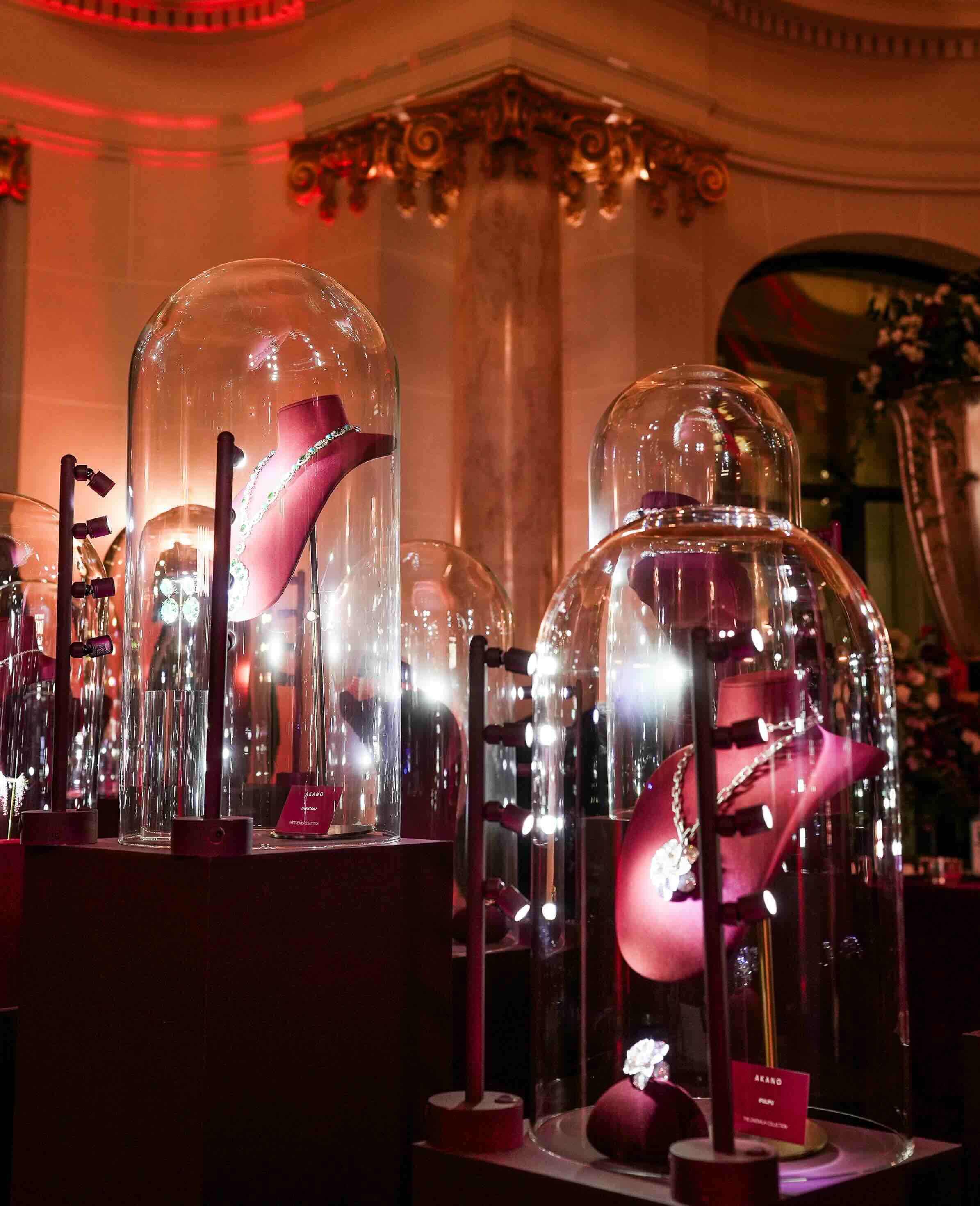
If you live in Nigeria and someone mentions fine jewelry, the names that come to mind are almost certainly European. Cartier. Van Cleef. Bulgari. The vocabulary of haute joaillerie, its houses, its codes, its sense of what luxury means in precious metals and stones, was built in Paris, in Geneva, in Rome. It has been exported globally with such confidence, and for so long, that it can feel like the only framework that exists.
What that obscures is this: West Africa has one of the oldest and most sophisticated jewelry traditions on earth. Among the Igbo, coral beads have carried the weight of royalty, spiritual protection, and social identity for centuries. Bronze and copper were not merely decorative but functional, worn as markers of status and used as currency. Shields and armour carried meaning about protection and strength that went far beyond the physical. The symbolism was dense, intentional, and complete. It did not need outside validation to be considered luxury. It simply was.
AKANO, the haute joaillerie house founded by Akunna Nwala-Akano, begins from that truth.
When Akunna decided to build a high jewelry house rooted in Igbo cosmology and West African symbolism, she was not making a stylistic choice. She was making a claim.
"Haute joaillerie has its own established language, much of it rooted in European history," she says, "but I didn't see why that should be the only framework defining what high jewelry is." The symbolism, philosophy, and sense of meaning within Igbo culture, she argues, are already rich and complete. They do not need to be adapted to feel valid.
What she is describing is the difference between two very different approaches to building a brand in this space. One approach adds African references into an existing system, folding them into a European framework as embellishment or influence. The other builds from its own centre and declares: this is also luxury, this is also heritage, and it deserves to exist at this level. AKANO is the second approach. "It's really about ownership," she says. "Defining our own codes and presenting them confidently, without explanation."
That last phrase is worth sitting with. Without explanation. It is a deliberate refusal to translate the work for an audience that might not already understand its references. The pieces do not come with footnotes. They simply exist, fully formed, on their own terms.
The debut collection is called Omenala, an Igbo word meaning heritage. But Akunna is careful about what that word means in the context of the work.
"I think a lot of the time, when people hear heritage, they think of something fixed, almost like history that's been paused and put on display," she says. "But for me, it's much more fluid than that." Heritage, in her framing, is not a museum. It is something that continuously shapes how we see and create. The shift in question, from heritage as archive to heritage as continuity, changes everything about the design process.
"You're not designing from a place of nostalgia," she says.
"You're designing from a place of continuity, allowing those ideas to evolve and exist in a way that feels current, without losing where they come from."
In practice, the process begins instinctively. For Omenala, the Ziora pieces came from thinking about traditional shields and armour: protection and strength rendered physical. Akunna starts with hand sketches, getting the idea out before the technical work begins. From there, it becomes collaborative: refining form, considering how a piece sits on the body, working closely with artisans to arrive at the right finish. "The aim is always to end up with something that still carries that original idea," she says, "just expressed at the highest level."
The vision is clear. The execution is a different conversation.
Operating as a Nigerian maison within the global high jewelry landscape means confronting a set of practical realities that have nothing to do with aesthetics. Customs and duties. Shipping delays. Moving pieces across borders. Fluctuating exchange rates that affect sourcing and payments at every stage. "A lot of the infrastructure that supports high jewelry globally isn't based here," Akunna says, "so you're constantly figuring things out in real time and building your own systems to make it work."
It is not glamorous. But it is the texture of what independence actually looks like, building the scaffolding yourself because no one built it for you.
High jewelry rooted in African symbolism faces a specific risk when it enters global markets: the meaning gets stripped out. What was built from a specific philosophy and cultural context becomes, in the hands of a different editorial or commercial lens, something visual and trend-led. The why disappears.
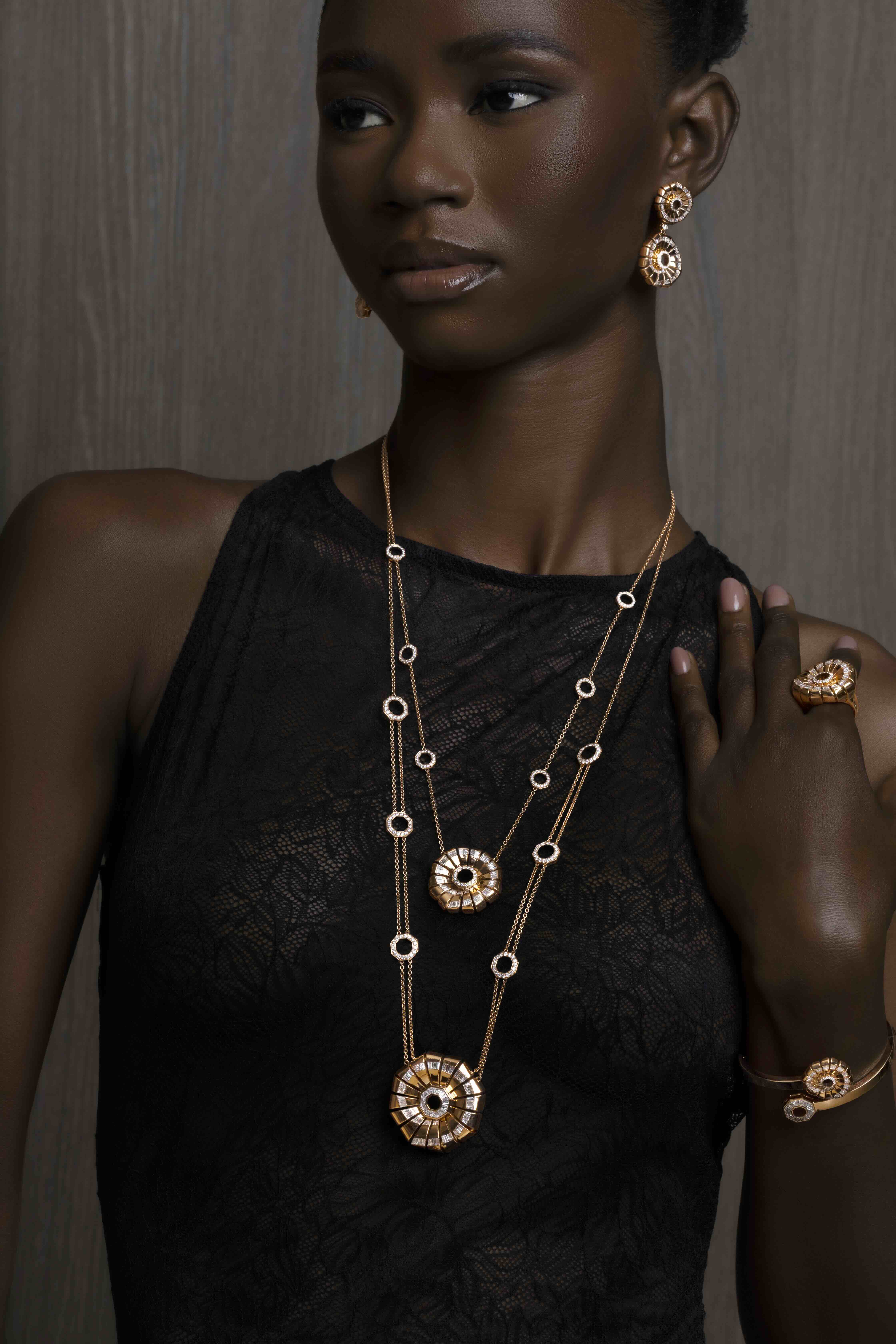
Akunna is precise about how AKANO guards against this. "Protecting against that is really about control," she says, "being intentional about how we tell the story, where we show up, and how much we explain versus what we allow to just exist." The nuance has to be held. The line between meaning and dilution has to be maintained, because once a piece becomes disconnected from its source, something essential is lost.
It connects back to the founding instinct: presenting the work without explanation is not arrogance. It is protection. If the work has to be translated into someone else's framework to be legible, it has already started to lose itself.
"It's for the woman that appreciates a story behind every piece," Akunna says. "Someone who connects with how each piece brings an emotion to life and reflects her roots. She's looking for groundedness in what she wears, but at the same time she's elegant, sophisticated, and bold at heart."
And then:
"The pieces are extravagant, in a way that feels very natural to us as Africans."
That last line is the quietest and most confident thing she says. Not extravagant despite being African. Extravagant in a way that is entirely, naturally, African. The distinction is the whole point of AKANO.