Stay In This World
The stories, the culture, the conversations. Every week.
No spam. No third parties. Just Unruly.
On the subconscious, the mirror, and what it means to carry the same emotional compass into every room.

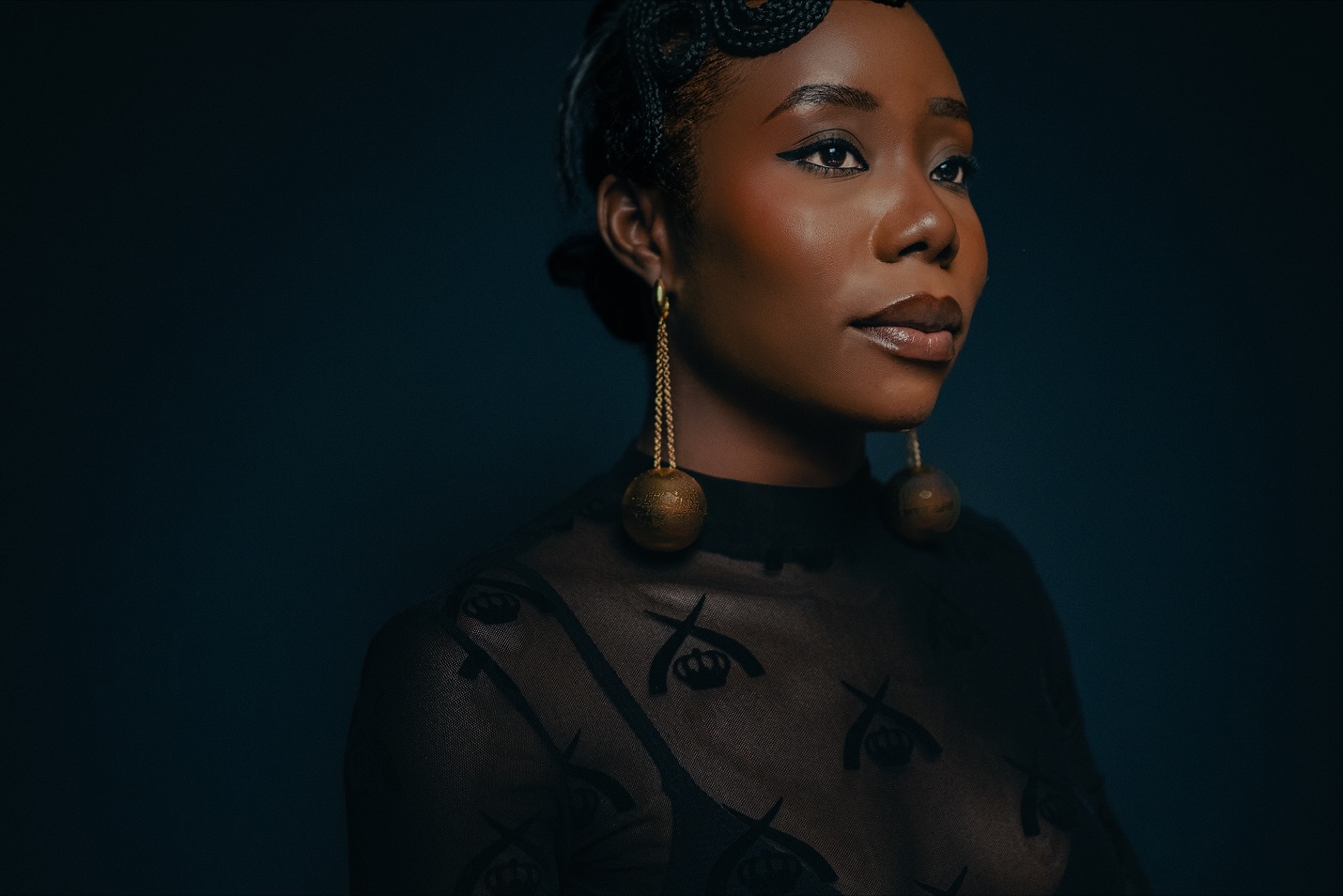
Ruby Okoro does not go into a shoot with a rigid shot list. He goes in looking for a frequency. There is a distinction there that matters, because it tells you something essential about how he understands his own practice. Photography, for him, is not the act of constructing an image. It is the act of allowing one to surface.
"To let the subconscious overflow, is to stop trying to make a picture and start allowing the world to reveal itself through you."
In practice, this looks like a state of surrender. A kind of drifting. He is not thinking about technical perfection when he is creating. He is looking for the moment where the physical world starts to blur into something more spiritual, where the image stops being an object and becomes, as he puts it, a mirror.
He knows when an image has done what it needs to do by the internal shift it produces in him. "When an image brings me to that emotional place, I know it will do the same for someone else." It has tapped into something his conscious mind could not put into words. The subconscious, finally, speaking back.

Okoro was born in Enugu State and raised between Rome and Lagos, an upbringing that planted the seed of what would become his central preoccupation: the idea that a story rooted in a specific place can speak to something far beyond it. He came to photography through painting first, drawn initially by colour and composition before finding that the camera gave him something the canvas could not. He is entirely self-taught, which perhaps explains the absence of inherited rules in how he works. There was no formal framework to internalise, so he built his own, one grounded in intuition, emotion, and the specific weight of what a colour does to a viewer before they have registered anything else in the frame.
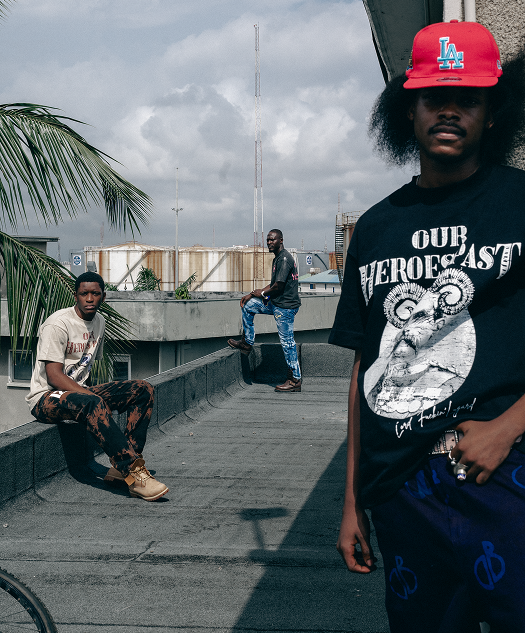
That instinct has taken him far. He served as lead photographer and creative director on the Coke Studio campaign featuring Asake, Ayra Starr, and Rema, a project that set a new standard for how African music culture is represented visually. In early 2025, he took his work to Europe, exhibiting "Circular Heroes" at Maison Shift in Zurich, a project developed in collaboration with Swiss designer Rafael Kouto exploring sustainability, identity, and circular fashion, before showing in Milan in the same month. His Nneoma series found its way into the Gothenburg Museum of Art's "Body. Ideal, Gaze, Freedom" exhibition. The arc of the last two years alone tells you something about the pace at which his practice is moving.
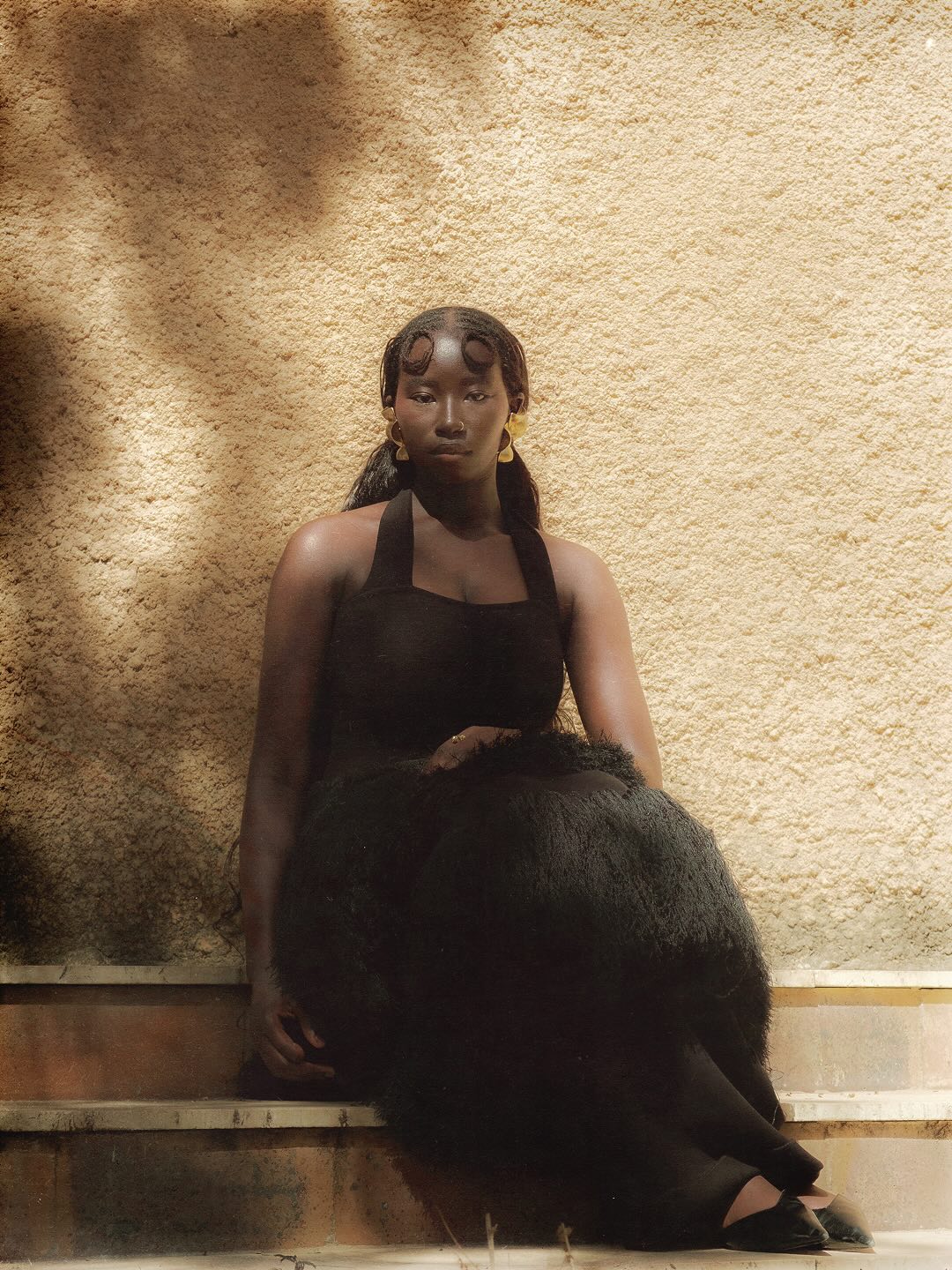
Okoro's fine art practice is most legibly expressed through Nneoma, a personal project that approaches the body not as a political subject but as a vessel for transcendental and surreal storytelling. When conversations about the body and representation are raised, they tend to stay grounded in the real or the political. Nneoma operates somewhere else.
"It's about the subconscious and the identity we find in our dreams."
To have that work validated within an exhibition framing questions of ideal, gaze, and freedom is, for him, a confirmation that the internal and the surreal are as legitimate a contribution to the global conversation as the external and the documentary. What he is doing with the work in that specific institutional space is redirecting the gaze, demonstrating through image and colour and emotional weight what it looks like when the artist decides the terms.
That the work is rooted in Lagos and hanging in Sweden is not, for him, a contradiction. It is the point. He grew up moving between two cultures, and the distance between them taught him early that specificity of origin does not limit the reach of a story. It deepens it. "The stories I'm telling of human emotion, of identity through a transcendental lens, are universal. It doesn't matter where the viewer is from. When they stand in front of those images, they are seeing a version of a human story that is rooted in my home but speaks to a global soul."
When asked what he wants people to feel when they leave the world he builds in an image, Okoro's answer is precise. "I want people to feel like they've just woken up from a dream that they aren't quite ready to leave."
He wants expanded possibility. A sense of being pulled out of the ordinary and dropped into something that feels both familiar and otherworldly. If an image makes you pause and wonder about your own identity, then the world he built has done its job. It should feel like a mirror showing you a part of yourself you have not yet met.
The language of heaven appears in his work and in his thinking, not as a religious frame exactly, but as an aspiration: to use imagery to create a lightness in the world, to make it feel more magical, more vibrant, more connected than it seemed before you arrived. "I want you to know that the line between what is real and what is imagined is beautifully thin." That thinness is not a limitation of his practice. It is the whole territory he is working in.
The assumption that a brand brief requires the artist to switch off and the technician to switch on is one Okoro actively resists. When he worked on the Coke Studio campaign, he approached it as a visual symphony. The story was about energy, movement, and the vibrancy of the music. His job was still to find the soul within that energy, still to locate the specific weight of colour, still to produce something that makes the viewer feel the music before they hear it.
"For me, the line between commercial and fine art isn't a wall, it's a rhythm."
The personal projects are more meditative, more internal. They are the raw subconscious overflow. But the emotional compass he carries into the studio is the same whether the brief comes from a brand or from himself. "If a commercial image doesn't make me emotional when I look at it, then I haven't done my job." When he is directing the visual identity for artists like Rema or Ayra Starr, he is using the same surrealist lens. The scale of the conversation changes. The language does not.
The most technically specific thing Okoro says across the entire conversation is also the most emotionally direct. "Before the eye even registers the shape of a face, it feels the weight of the color."
Colour is not decoration in his work. It is the first handshake between the image and the viewer. By the time you notice the fine details, the colour has already done the heavy lifting of making you feel what he intended. Where light creates form and composition provides structure, colour provides the soul. It is the element that allows him to drive the narrative, because colours carry an inherent emotional gravity. His style sits in the balance between the surreal and the tangible, and colour is what bridges that gap. It is the atmosphere that allows the story to breathe before a single word or detail is spoken.
This is where his thinking about the subconscious and his thinking about craft finally meet. The overflow he is trying to produce is not accidental. It is carefully constructed through palette, through the weight and saturation of specific tones, through decisions made before the shutter opens. The surrender he describes is not a surrender of skill. It is a surrender of ego. The skill remains, precisely applied, in service of something the image needs to say that language cannot.