Stay In This World
The stories, the culture, the conversations. Every week.
No spam. No third parties. Just Unruly.
On painting, pioneering, and what comes after you.
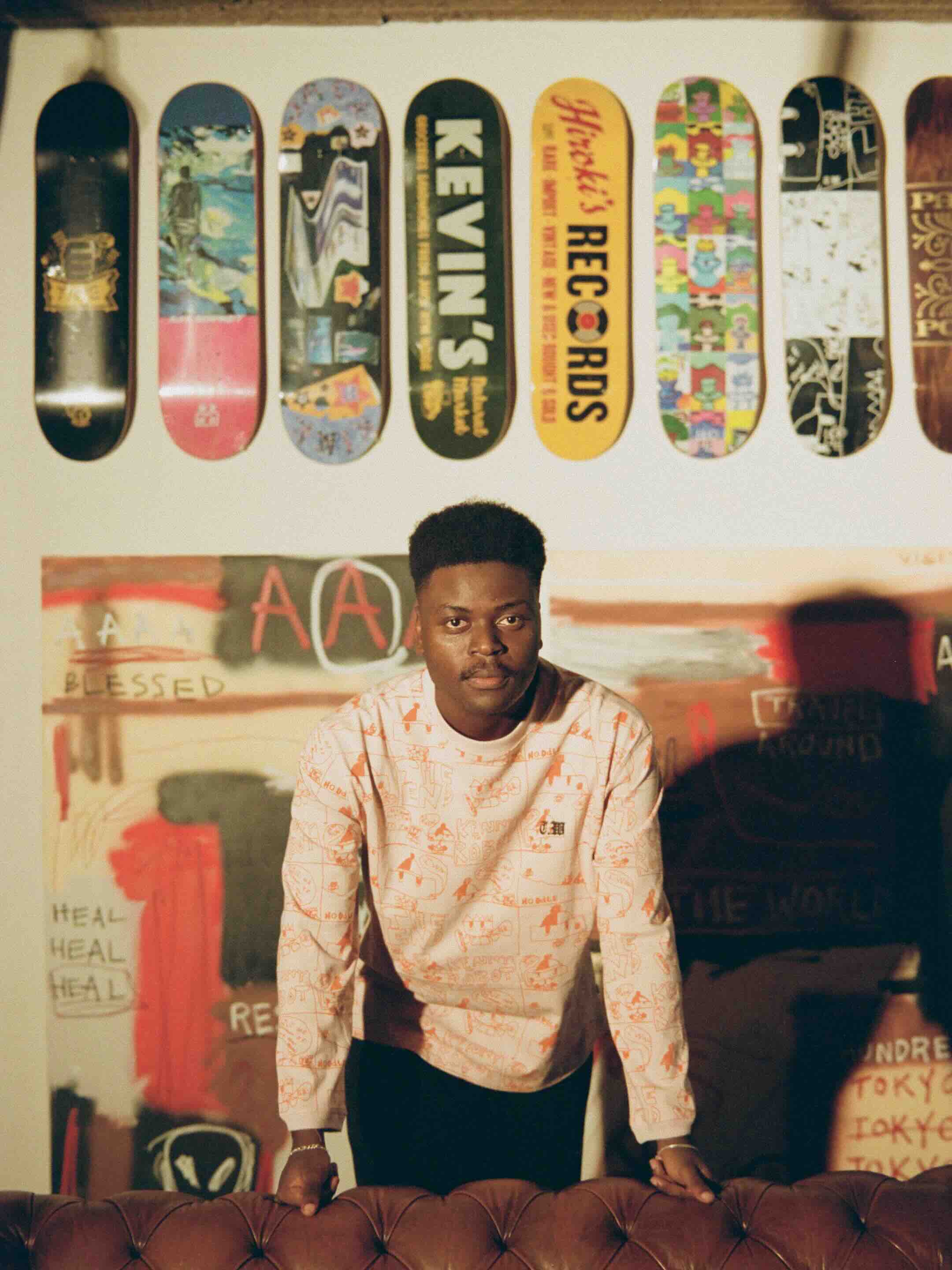
Musonga Mbogo's current exhibition is called Awake Before the Porsches. The title alone does a lot of work. It tells you something about timing, about the gap between where a person starts and where they are trying to get to, about what it means to be moving before the world has noticed you are moving. It is a show built around three car logos: a Ford, a Mercedes, a Porsche. His family's first car in Australia. His grandfather's Mercedes that drove him and his siblings through his mother's hometown in Zimbabwe. And the Porsche was the car belonging to an artist he met in London who had built a life entirely from his work, which is to say, proof that such a life was possible.
Mbogo grew up in Canberra as the child of Tanzanian and Zimbabwean parents, in a city where almost nobody in the art world looked like him. He taught himself to paint, through music festivals, through museums, and through time spent with work that moved him. And then, quietly, he became the first artist of African heritage to achieve commercial gallery representation in Australia's history. He was twenty-six.
The question of what makes something feel possible is one Mbogo has been sitting with for a long time.
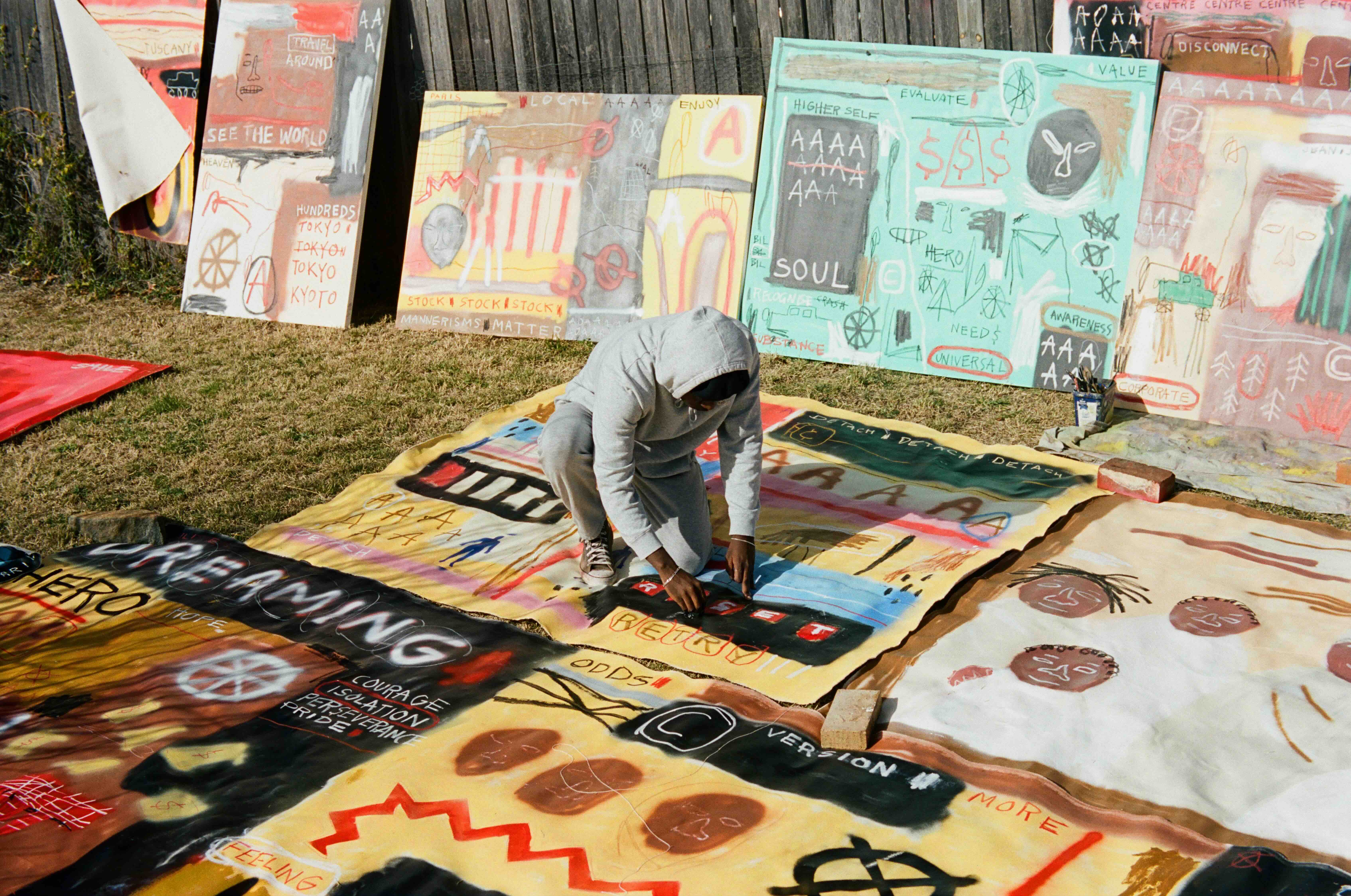
He was fourteen when a friend introduced him to Jean-Michel Basquiat. Not the legend, not the auction record, not the retrospective — just the work, and the fact of the man behind it. Unapologetic, Black, successful, and operating across every surface the art world said he shouldn't. Album covers. Runways. Gallery walls. At the time, Mbogo had already started dreaming that he wanted to make art. What he hadn't decided was whether that was a real path or just a fantasy. Basquiat settled it. "It just clicked," he says. "It made sense."
What Basquiat gave him was not inspiration in the vague sense the word. It was evidence. Proof that the category existed, that someone who looked like him had already walked into it and refused to leave. Growing up in Canberra, that kind of evidence was scarce. The galleries were not built with him in mind. The curriculum did not offer him many mirrors. He knew what he wanted; he just needed to know it was allowed.
Mbogo studied Economics at university. He will tell you, if you ask, that the two things work together better than you might expect. Economics gave him the technical side — long-term planning, understanding systems, thinking several steps ahead. Art gave him something else: a way of understanding himself, of registering how he was feeling at a given moment, of speaking on behalf of people whose experience he recognised.
"I think creativity is liberation," he says, "but education is where lasting impacts are made.”
He started painting properly around the same time he started university, when he had stopped playing sports and suddenly had more free time than he knew what to do with. His mother had been the first person to show him how. As a child he would sit beside her while she painted — swans, sunflowers, landscapes — watching a blank canvas become something. That early image of transformation stayed with him. What he makes now is very different from what she made, but the underlying logic is the same: you begin with nothing, and with time and attention, it becomes something.
Being self-taught meant following his interests wherever they led. In the early days that meant painting at music festivals, which had the practical benefit of getting him and his friends into shows. Later it meant spending extended time in Europe, learning directly from artists, galleries and museums. The freedom, as he describes it, is getting to be a student of whatever genuinely interests him. There is no curriculum to finish, no credential to satisfy. Just the work and what the work requires.
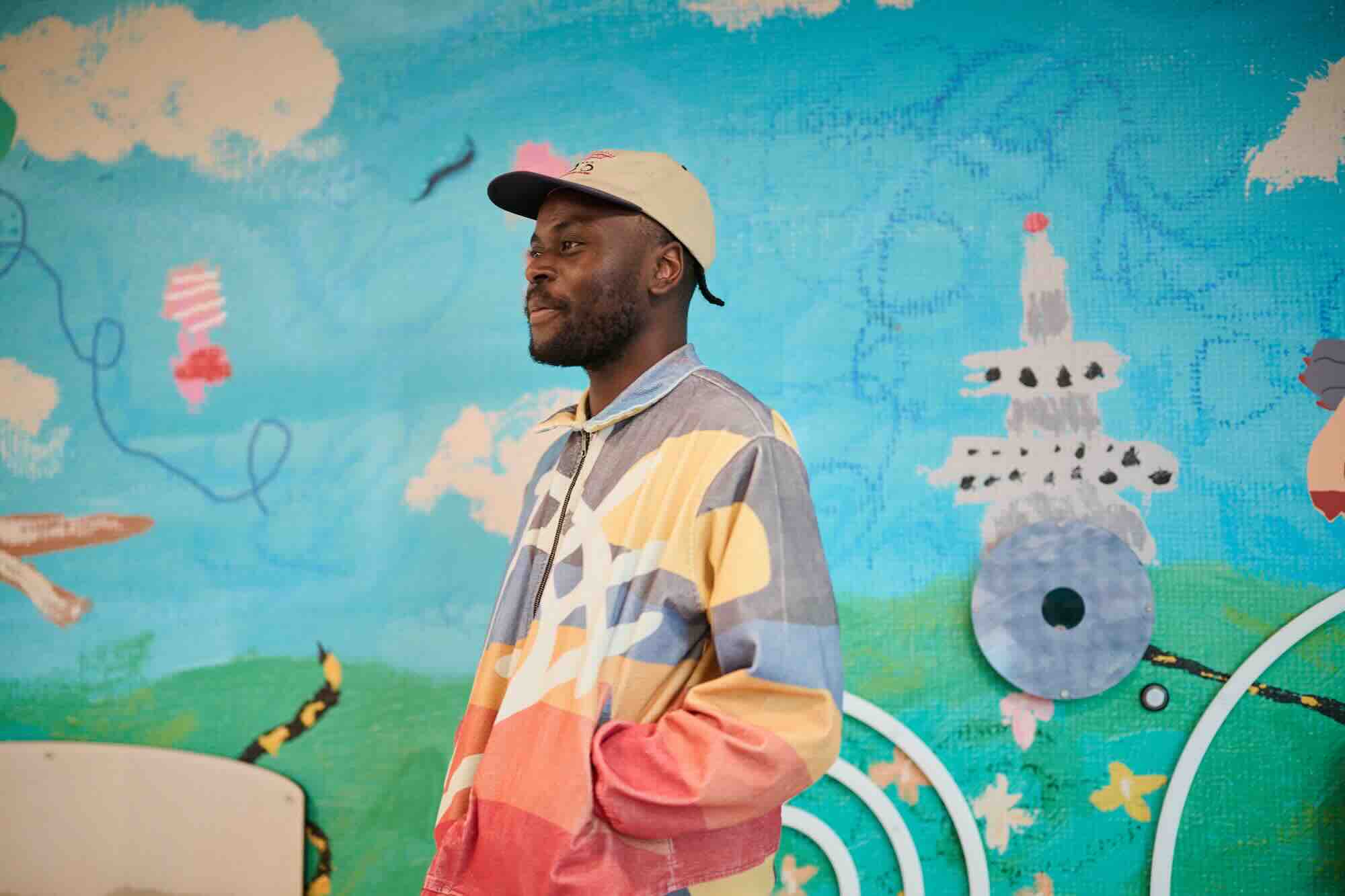
In 2024, Mbogo was commissioned to create fifty metres of work for a children's ward. The brief was about healing — creating an environment that felt safe, warm and inclusive for children arriving in a place that can be frightening. The commission required a different kind of thinking. What does it mean to make work for an audience that is not seeking you out? What does warmth look like at scale, stretched across an entire ward, present in the peripheral vision of a child who is trying not to think about why they are there? Mbogo describes wanting the work to contribute to a sense of healing, safety and inclusivity — to bring something into that environment that felt genuinely welcoming rather than decorative. Hospitals are institutional spaces. They communicate, whether they intend to or not. He wanted his fifty metres to communicate something specific: that you are seen, that this space was made with you in mind, that someone thought carefully about what you might need.
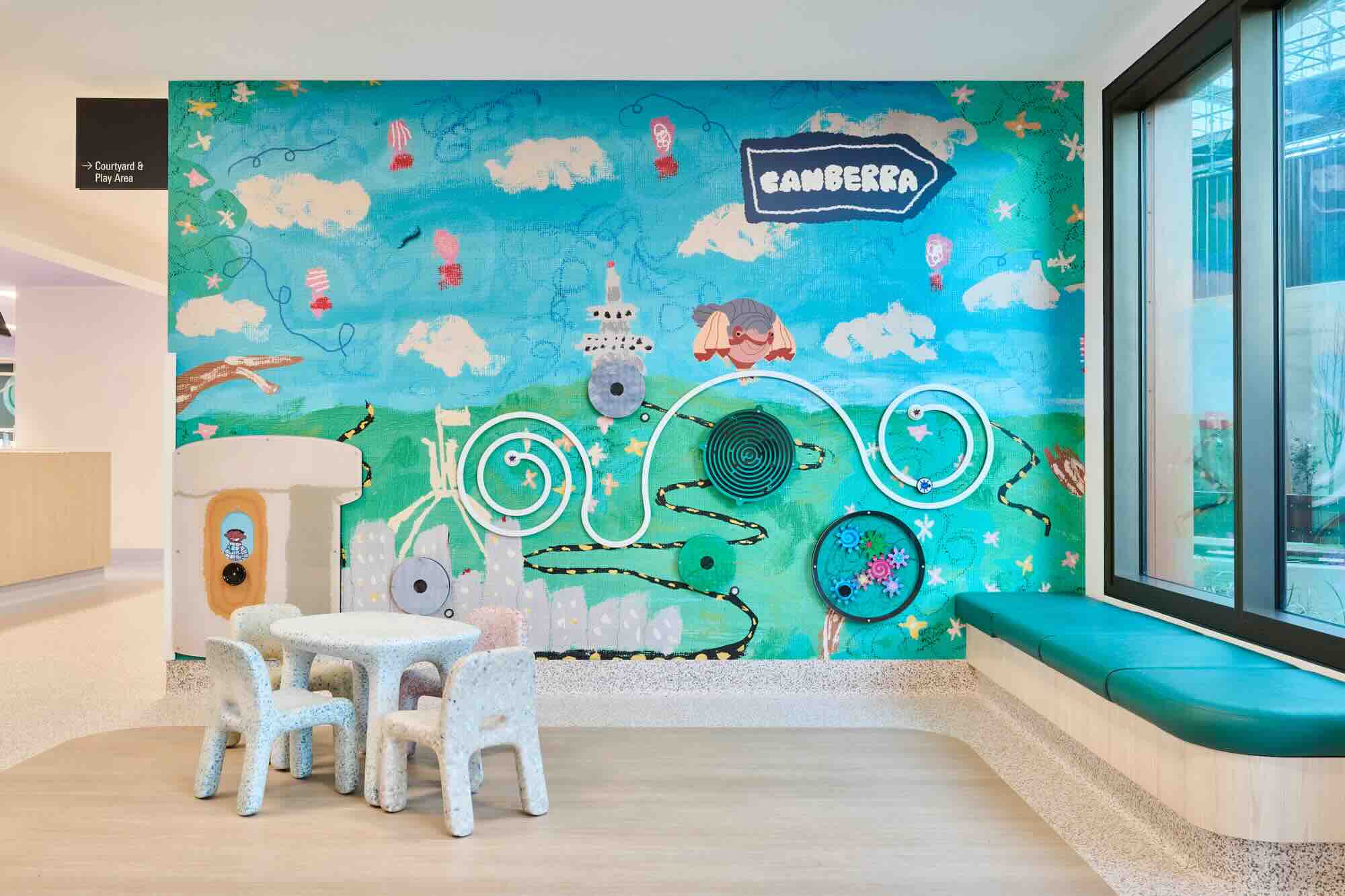
It is the largest and most permanent thing he has made. It will be there long after the current conversation about his practice has moved on. In some ways it is the clearest statement he has made about what he thinks art is actually for.
London confirmed something for him that Canberra couldn't quite offer at the time. Not because the work was different there, but because the community was. He found himself among multicultural artists who held the same conviction he did — that the dream was far-fetched and worth attempting anyway — and who happened, by any measure, to be among the best working artists he had encountered. Being welcomed into that circle was not just personally affirming. It was instructive. It showed him what a creative ecosystem looks like when it has been built to include people like him, and it sharpened his sense of what was still missing at home.
That gap is what Awake Before the Porsches is quietly about. The Ford is where his family started. The Mercedes is where they came from. The Porsche belongs to an artist he met in London who had built an entire life from his practice — which is to say, it represents not just success but a particular kind of freedom. The freedom to keep going on your own terms.
Mbogo is still in the early chapters of what his practice will become. He says he sees a future where he is considered one of the great Australian artists. What strikes you, speaking to him, is that the ambition is not really about recognition. It is about proof. The same thing Basquiat gave him at fourteen — evidence that the category exists, that it can be entered, that someone who looks like you has already walked through the door. He is building that evidence now, for whoever comes next.