Stay In This World
The stories, the culture, the conversations. Every week.
No spam. No third parties. Just Unruly.
Nganji Mutiri, Germain Ngandu, and the making of Ekosimba, the first contemporary Congolese anthology of its kind.
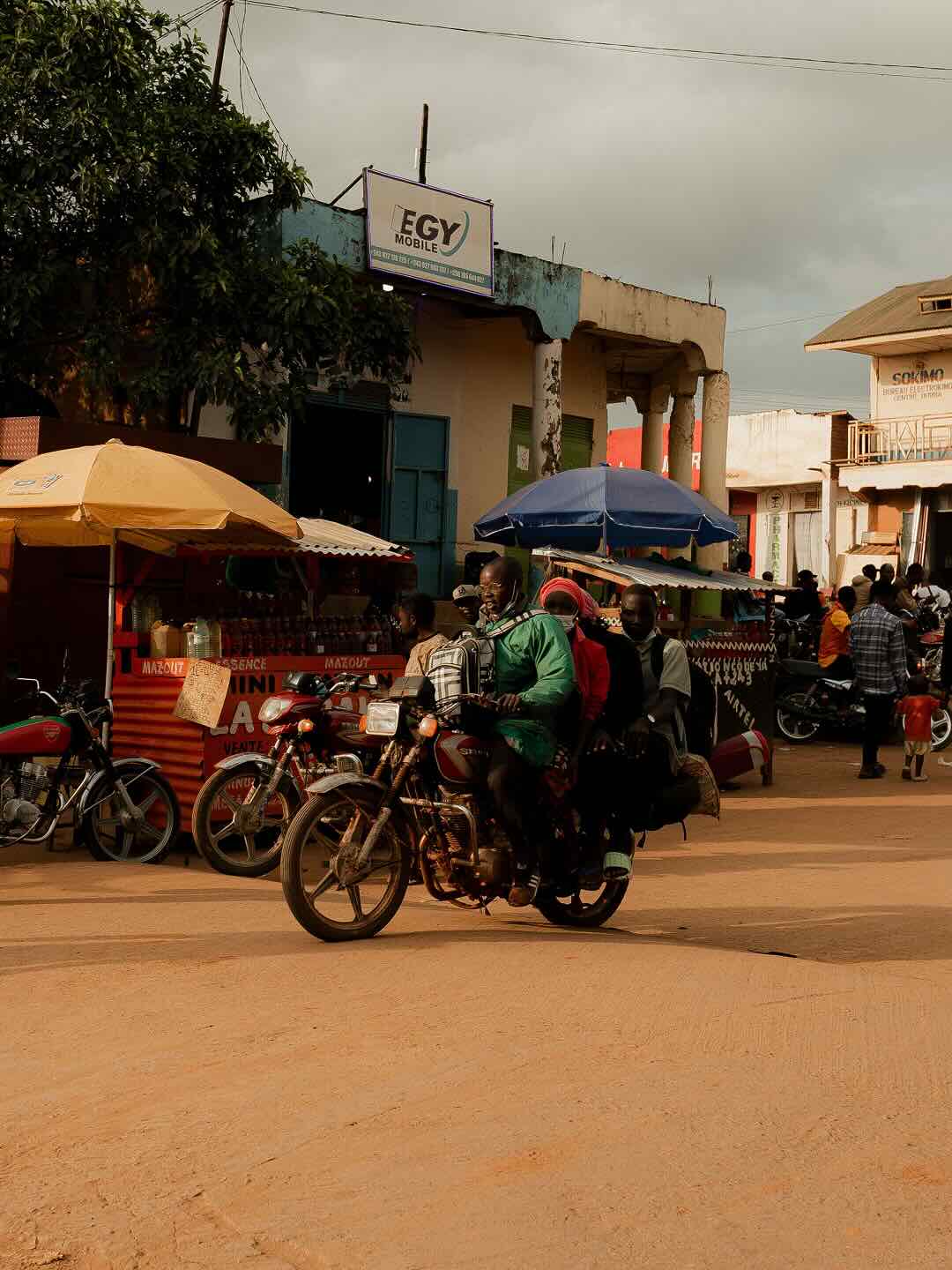
Sixty-three poems. One message. That is the premise of Ekosimba, the first contemporary Congolese anthology of its kind, released this October during Congo Week. Built across languages, geographies and generations, it brings together writers, artists and cultural advocates from the African continent and its global diaspora, among them Petite Noir, Pierre Kwenders, Sarah Lubala, and many more, in a single literary act. Its proceeds go entirely to grassroots charities supporting communities affected by the ongoing humanitarian crisis in the Democratic Republic of the Congo.
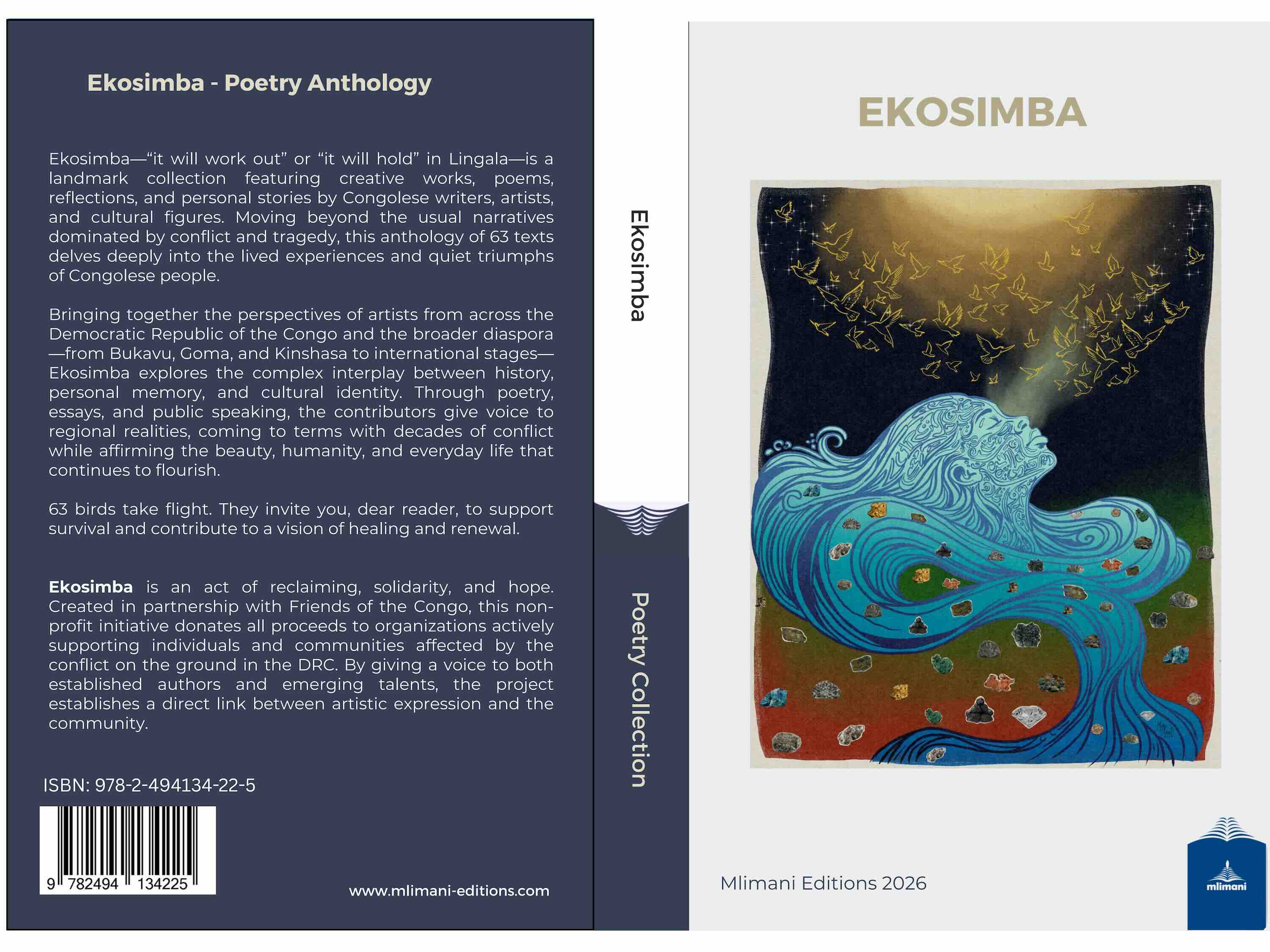
But Ekosimba is not a crisis document. That distinction is important, and the anthology insists on that firmly. The DRC has been covered, analysed and mourned in international media for decades, almost always through the same narrow aperture: conflict, displacement, loss. What has rarely been given space is everything else — the memory, the identity, the intellectual and cultural life that has continued to grow despite and alongside that reality. Ekosimba is an argument that those things deserve their own literature. That the people of Congo are not only what has been done to them, they are more. To understand what the anthology is reaching for, it helps to hear from the people inside it.
Nganji Mutiri is a Belgian-Congolese filmmaker, writer and theatre-maker whose work moves between Brussels and the broader world his heritage connects him to. His debut feature film, JUWAA (2022), explored family, trauma and the complexity of return. His next, STATION 243, is described as a geopolitical thriller — intimate in scale, but rooted in the larger forces that have shaped Central Africa's modern history.
.jpg)
He is also, by his own account, a man who has learned to hold contradictions around him without necessarily having to resolve them. When asked what distance from Congo has done to his practice, he says "I think it makes me more vulnerable, angrier, but also more privileged," he says. The vulnerability comes from the gaps — the Congolese provinces he cannot feel from Brussels, the physical contact with ancestral land that diaspora life makes difficult to maintain. The anger comes from watching political failures accumulate across generations, seeing leaders fail to educate, unite, heal or empower the majority of the population decade after decade. The privilege is geographic: he is far from Eastern Congo, where what he calls the Genocost — a term he uses intentionally, refusing the euphemism that the word genocide tends to become in international discourse — continues to claim lives daily. It is out of that tangle that he approaches Ekosimba.
"I am committed to discovering, loving and celebrating the diversity of us," he says, "the Congolese human, our languages, our place in world history, our ancestral spiritualities, and also our growing intellectual and cultural confidence."
The anthology, for him, is not supplementary to that commitment. It is an expression of it. "The Ekosimba anthology is a gift to ourselves and to the literary world.”
He also asks, in conversation, one of the more quietly destabilising questions his practice keeps returning to: what would the world look like today if the world's main religion had billions of followers who believed in a God depicted as a dark-skinned Black woman? To this, he does not offer an answer. The point is that the question itself does the work — that imagining it reshapes something about how you understand who has been permitted to matter, and why.
Germain Ngandu works from a different coordinate entirely. He is based in Kindu, in the Maniema province — not Kinshasa, not Brussels, not any of the cities that tend to anchor conversations about African literary culture. He is a slam poet and a teacher of Kasala, an ancient central African oral form rooted in praise, memory and communal identity. Where slam is spontaneous and confrontational, Kasala is ceremonial and accumulated — the two traditions sit differently in the body, but Ngandu holds both, and in his hands they point toward the same thing.
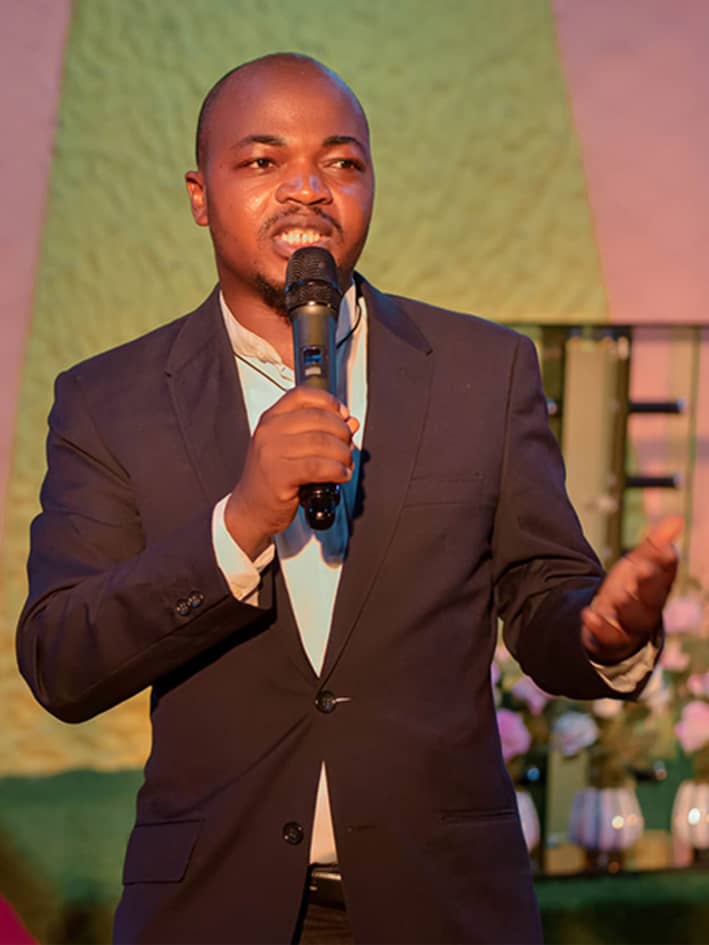
His practice is not theoretical. He goes around the country and slams for peace. That is not a metaphor for something else — it is the description of what he actually does. His very first slam was about peace in Congo, and that impulse has not changed since. "The young people must be conscious," he says, when asked what it has meant to build a literary practice from Kindu.
What Ngandu offers the Ekosimba anthology is something that cannot be imported or approximated from outside: the voice of someone doing the work from inside the geography. Where Nganji thinks across the distance between Brussels and Eastern Congo, Ngandu closes that distance by not leaving. His presence in the anthology is not symbolic. It is a reminder that Congolese cultural life does not exist only where it is most visible to the outside world. When asked what poetry gives a community that other forms cannot, he is direct. "Free speech," he says.
"Poetry gives the community the chance to speak for everything that doesn't go well."
And when asked what mastery means in the context of his practice, he offers something that functions almost like a definition of the poetic act itself: "To know or find what is not known.”
What Ekosimba understands, and what both Mutiri and Ngandu articulate from their different positions, is that culture is not a response to crisis. It is not something a people produce after the hard things have passed. It runs alongside everything, the violence and the joy, the displacement and the rootedness, the grief and the intellectual confidence that refuses to be diminished by it. The anthology does not ask the reader to forget what Congo has lived through. It asks them to hold that alongside something larger: sixty-three writers insisting, in multiple languages, that there is more to say.
Nganji Mutiri describes Ekosimba as a gift — to the Congolese people and to the literary world. A gift is not a plea. It is not a document produced for the benefit of an outside audience. It is something offered from a position of abundance, of having something worth giving. That is the register the anthology is working in, and it is a deliberate choice.
Germain Ngandu is already on his way to the next town. There is another audience of young people who need to hear something that journalism cannot tell them, that a headline cannot carry, that only a poem — spoken aloud, in a room, by someone who came specifically to be there — can deliver. The anthology will travel further and last longer. But the work, as he understands it, happens in person.
Sixty-three poems. One message. The message is not about what has been done to Congo. It is about Congo speaking for itself.