Stay In This World
The stories, the culture, the conversations. Every week.
No spam. No third parties. Just Unruly.
The Ghanaian artist who built a career by refusing to care whether it worked
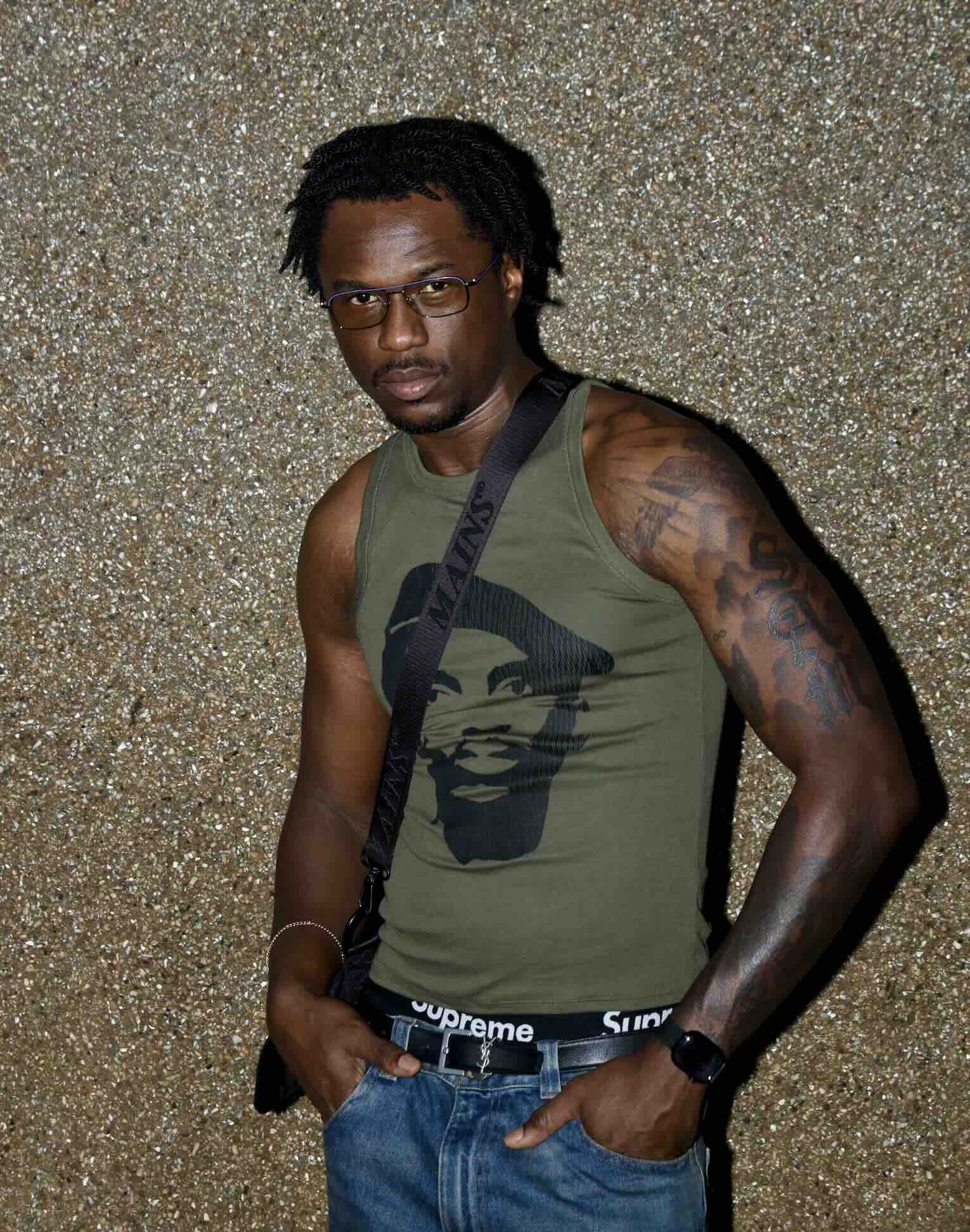
There is a version of the Joey B story that reads as a comeback. Fifteen years in, new album, Apple Music feature, Odunsi on the tracklist. The critical reception building. The Ghanaian music press paying attention again. That version is easy to write, and it misses the point entirely.
Joey B, born Darryl Paa Kwesi Bannerman-Martin in Accra, has not come back to anything. He never left. What he has done, with Sexy Highlife, his third studio album and first full-length release since 2020's Lava Feels, is exactly what he has always done: followed a sound to wherever it wanted to go and let everyone else figure out whether they were coming with him.
The album sits at the intersection of Ghanaian Highlife and New York's Sexy Drill movement, a sound Joey B encountered during time spent in the city in 2024. It samples Daddy Lumba, Ghana's most revered highlife legend, on two tracks. It features Odunsi (The Engine) on Exopa, a song built from zouk and kompa rhythms that Joey B's father used to play at home when he was four or five years old. The project is nine tracks and eighteen minutes long. It does not overstay. None of his projects do. When we spoke with Joey B, Sexy Highlife had been out for a matter of days. The Apple Music feature was live. The conversation was unhurried.
The connection to his father is not incidental. When Joey B describes where his relationship with sound comes from, he does not start with a record he heard or a moment of creative revelation. He starts with his dad. "My dad is a musical head," he says. "He used to play drums. He still plays drums at church. He just turned seventy and he's still very active." His father was also a DJ during his school years in Ghana. His grandmother ran a drinking spot where highlife played all day. Sound was not something Joey B discovered. It was what the house he grew up in was built out of. Even now, he sends his father every song before it is finished. His father has old Yamaha speakers and knows exactly where the mix is wrong. "He tells me exactly where it's loud. Turn this down, let the saxophone come down. Then he sends it back and I mix, then master." It is the first audience that matters most. The charts are secondary.
The gap between that internal compass and the external noise is something Joey B has had to learn to protect. When he split from Black Avenue Muzik, the label run by D-Black that had helped launch him into the Ghanaian mainstream with singles like Strawberry Ginger and Tonga, the independence that followed was harder than it looked.
"I really salute independent artists," he says, "because I realised how difficult it is to just be doing things on your own. You need a machine."
What he learned was not to build a machine of his own, but to stay humble enough to keep moving without one. Fifteen years into his career, he still describes himself as an up-and-coming artist. Not as a performance of humility, but as a survival strategy. "If you don't view it that way, you will fumble it.”
The clearest proof of that logic is Stables. At some point in the years after Black Avenue, Joey B released a cowboy-themed EP. The response in Ghana was immediate and unkind. People literally called it trash. They did not understand it, did not want to understand it, and said so loudly. He kept going anyway, dropping singles in the same direction until one of them, Stables, became what he describes as one of the biggest Ghanaian hip-hop songs the country has produced. "I had to concentrate forces to make sure I get what I want from that sound," he says. "Just being stubborn and rebellious." The people who called it trash are now calling it a classic. He was never surprised.
It is the argument he makes about the Ghanaian music industry as a whole. When he looks at how Nigerian music reached the scale it has, he does not see a story about talent or infrastructure. He sees a story about willingness to experiment and absorb failure. "They experimented so much before getting to wherever they are now," he says. "At the point when they started, they even sounded Ghanaian. And they ran with it, and continued experimenting" What he thinks Ghana is still missing is exactly that permission: to make something nobody asked for, let the world reject it, and come back and make it again.
"Experiment and be ready to fail. That's how we will be placed on the world stage.”
The thing is, Joey B is not making a case for failure in the abstract. Every project in his catalogue is already the evidence. Exopa is the clearest example on Sexy Highlife. The song exists because of a memory Joey B has carried since he was four or five years old: his father at home in Ghana, playing kompa and francophone records, the kind of music that does not have a natural home in the Ghanaian sound. "Whenever I hear that, it just takes you back to when you were little," he says. "I wanted to go back to that sound." He called Odunsi, who he ranks among the best producers he’s worked with, and told him what he needed. Odunsi connected him to a producer based in Paris. The producer sent two beats. The first one Joey B fell in love with was Monte Carlo, because it felt like a challenge. "I wake up and it's like, I want to challenge myself to do something, even if people don't like initially it. As long as I love it, I'm fine." The other beat became Exopa, and the two tracks became the spine of the album's most adventurous stretch. A zouk record, on a Ghanaian rap album, built from a childhood memory and a phone call to Lagos.
What comes next is more of the same, by design. He wants to go deeper into highlife, all the way to Borga Highlife, the older, rawer version of the genre. He wants to try orchestra. He wants to try zouk properly, not just as a feature but as a full project. The list is long and deliberately ambitious. He is not making it to impress anyone. He is making it because the alternative, making music to land on radio, to hit charts, to please a listener who has not yet been taught to love what he is doing, has never interested him.
"The only way to excel is to fail," he says. "I want more failure, because that's where the win is."
He is not being provocative. He means it literally. Every project is a bet placed on a sound before the world has decided whether it wants it. Joey B has been making those bets for fifteen years. Till date, he’s not lost that bet.