Stay In This World
The stories, the culture, the conversations. Every week.
No spam. No third parties. Just Unruly.
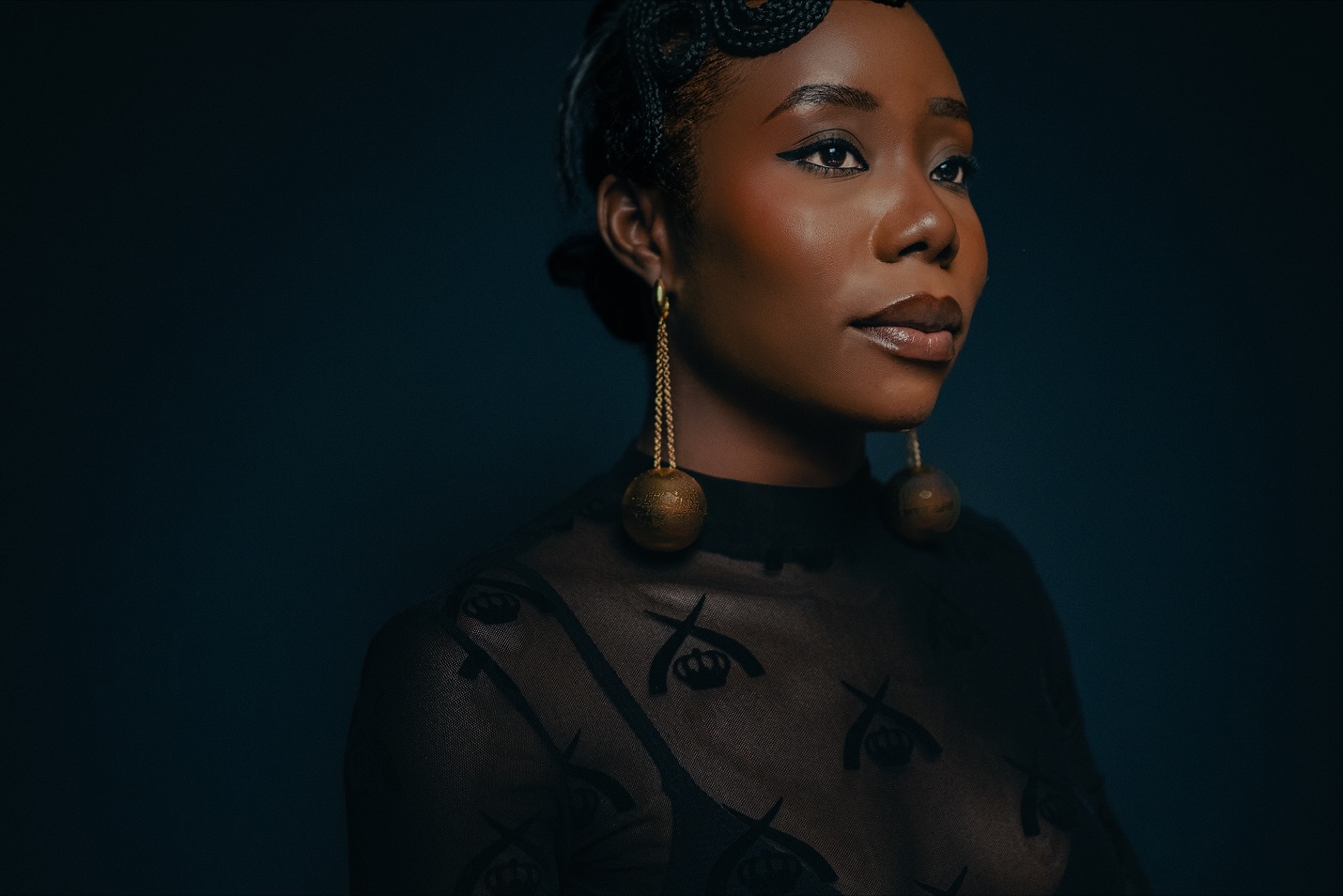
Anabel Rose on growing up between two cultures, writing songs that reveal her to herself, and what it means to build something outside the mainstream in Accra.

Anabel Rose grew up in Accra being asked where she was from. Her mother is Filipino, her father Ghanaian. She didn't speak Kasem. She didn't speak Tagalog either. She existed in the space between two cultures without belonging fully to either, and she has spent her music career building something out of that space rather than trying to resolve it.
That refusal to resolve is audible. Her debut EP, Something About A Rose, released in November 2024, blended alt-pop, R&B, funk, house, rock, and bossa nova across six tracks, each one a different character inside a world she had built from her own contradictions. DND went viral before the EP even existed, accumulating over 300,000 streams as an independent artist making music that sits deliberately outside Ghana's Hiplife and Afrobeats mainstream. The Great Escape in Brighton and Reeperbahn in Germany followed. Now her sophomore EP, How Do The Flowers Bloom?, is here, and where the first project introduced her, this one is meant to say something more specific.
"We are laying down the foundations right now on who I am and what I want to say," she says.
She discovered she could sing at eight years old, standing in front of a karaoke machine. The song was Shania Twain's "You're Still The One." She had never experienced the kind of love the song was describing, but that wasn't the point. "By imbibing the music, I was able to feel things and release things through my voice that I couldn't do as an everyday thing," she says. She was a child who felt deeply and communicated poorly, and the music gave her somewhere to put what she couldn't otherwise say.
The karaoke machine was not incidental. It is a distinctly Filipino pastime, and for a child growing up Ghanaian-Filipino in Accra, it was one of the clearest expressions of her mother's culture available to her. She didn't speak Tagalog. But she could learn lyrics, and she had a good memory, and through those songs she was absorbing something about how her Filipino heritage understood music, which was built around ballads, strong vocals, emotional directness. Whitney Houston. Celine Dion. Adele.
"Through karaoke, I was able to tune my voice into that kind of soulful, strong, belty quality," she says.
Growing up in Ghana gave her something different. Rhythm. Polyrhythms. The layered sonic texture of a country where music is everywhere and always has been. She didn't speak any of the local languages, but the music got in regardless. "When I started making music, I realized that side of my heritage was showing up through production and through rhythms," she says. Two musical educations, absorbed in the same household, within the same city, with neither of them fully conscious.
The questions started early and never really stopped. Growing up in Accra as the child of a Ghanaian father and a Filipino mother, Anabel moved through daily life with a particular kind of visibility. People wanted to know what she was. What she was eating. Where she was really from. "Always having curiosity thrown at me also kept me a curious child," she says, "specifically in terms of who I was and who I wanted to be and where I stood in this world."
Then she went to university in America, and the questions continued, but from a completely different framework. In Ghana, she was the mixed kid who didn't quite fit. In America, she was simply African, placed inside a racial category that flattened everything she had spent her whole life navigating. "The idea of race is completely different," she says. Two countries, two sets of questions, neither of them with clean answers.

What she did with that, instead of resolving it, was carry it into the music. The habit of questioning, the comfort with not fitting neatly into any available category, became the engine of her practice. It is why she has never been tempted to simply make Afrobeats because Afrobeats is what sells in Ghana. "I don't think I could naturally and happily pursue any lane that did not feel inherently right and true to me," she says. "This is art. It is so personal to me. It is part of myself." The questions she grew up being asked are the same questions her music keeps turning over, just in a different language.
Anabel Rose is, by her own description, bad at communicating in real time. Saying the right thing at the right moment, being in tune with herself in the middle of a conversation, that has never come easily. What comes easily is writing songs, and what she has learned is that the two things are connected in a way she did not expect.
"The things I was writing were reflections," she says, "whether in the present or maybe a few months later when I'm now processing." The songs arrive before the understanding does. She writes toward something she hasn't yet consciously named, and then the naming happens later, when she looks back at the lyrics and realizes what she was actually going through.
DND is the clearest example. She wrote it after a particularly bad day at work, needing a release. When she looked back at the lyrics, she says, "I was like, wow, I was really going through it." The song pushed her toward a decision she had been avoiding about who she wanted to be professionally. She had written her way to an answer before she knew there was a question.

Too Friendly followed the same logic. It started as a song about a relationship, and revealed itself later as something much broader, a document of her entire experience of navigating closeness with other people. "Almost all the time," she says, when asked how often a song reveals something about herself after the fact. The music gets there first. The rest of her catches up.
This is also why making music feels, to her, like a spiritual process. "Sometimes when you're writing music, you discover so much about who you are, what you want, the struggles you faced," she says. The act of committing to a music career means committing to that process being public, which she describes as trippy in a way that hasn't fully resolved itself. "You are seeing how people receive your music, how they receive you as a brand, not as a human being." The double-sided mirror of being an artist, presenting yourself and watching what comes back, is something she is still learning to live inside.
Staying outside the mainstream in Ghana has never felt like a sacrifice to Anabel. It has felt like the only honest option available. **She grew up absorbing too many different sounds to settle comfortably into any single one. When it came time to make music of her own, the idea of choosing a direction based on what was selling rather than what felt true was never seriously on the table. "I couldn't explore anything that didn't feel true to my journey," she says. The mixed heritage, the karaoke machine, the years of absorbing rhythms and ballads without fully belonging to either tradition, all of it is in the work, and all of it pointed somewhere specific.
The audiences finding her are finding her anyway. The Celeste Ojatula collaboration on Our Time In The Sun came about through a full circle moment she still talks about with something close to disbelief. She had found Celeste on YouTube a year before Celeste reached out to her. Saying yes to that collaboration opened her to Celeste's audience, brought her to Lagos for her first performance there, and extended her reach in ways she hadn't planned for. "From saying yes and being introduced to another artist and joining her musical world, I had also opened up mine even further," she says.
Reeperbahn in Germany and The Great Escape in Brighton have since taken her further. She speaks about those international stages and her Accra foundation in the same breath, not as competing priorities but as things that feed each other. The home base is what makes the international reach mean something. The international reach is what she hopes will eventually bring more attention back to the creative scene she came from.
What comes next, she says, is more craft. More time in the studio, more research, more living, because life feeds into the music and the music feeds back into life. How Do The Flowers Bloom? is the question she is currently asking. She doesn't yet know the full answer. That, for her, is always where it starts.