Stay In This World
The stories, the culture, the conversations. Every week.
No spam. No third parties. Just Unruly.
On traditional African music, the communities it belongs to, and the work of bringing them back together
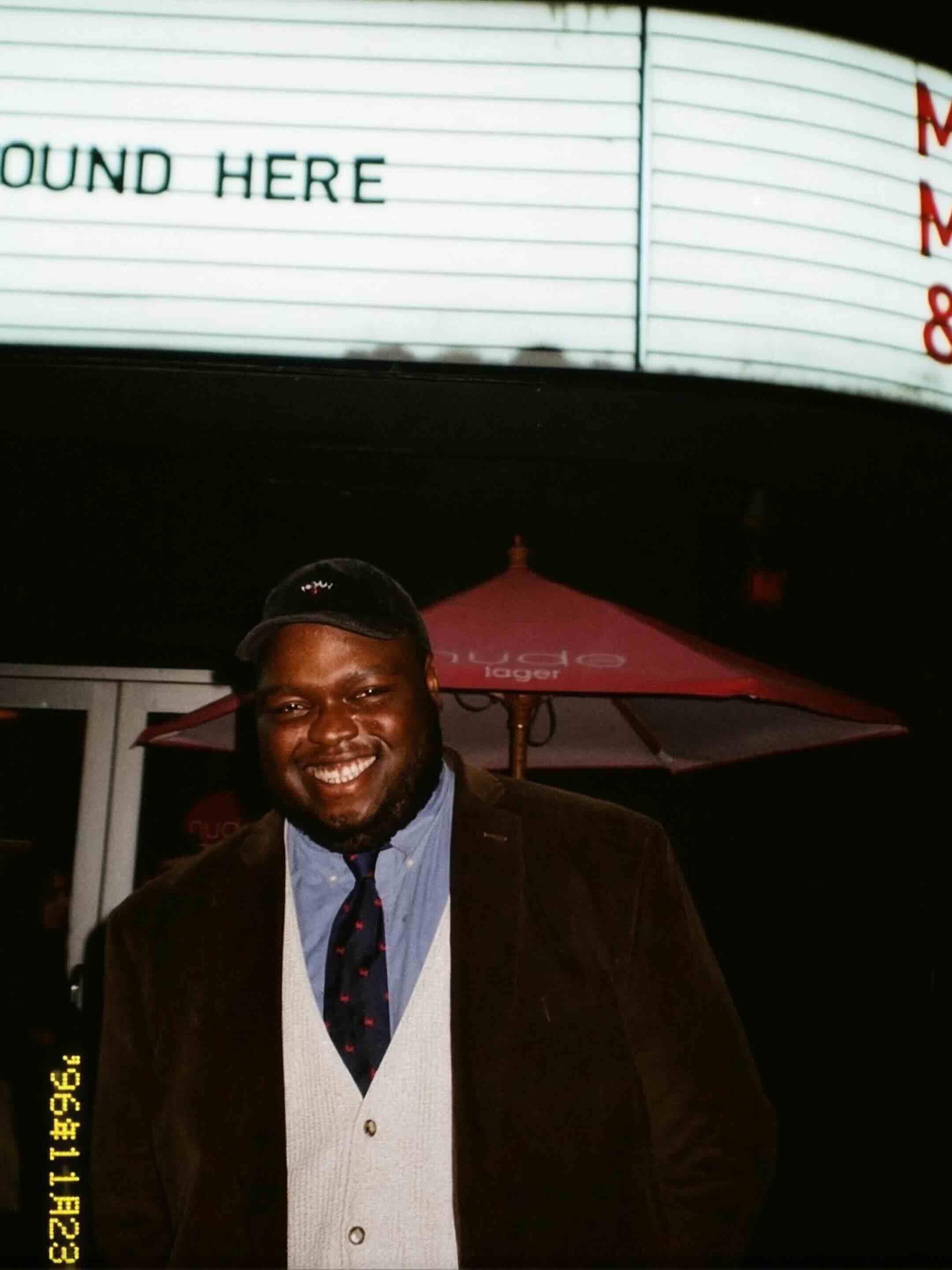
Dare Balogun is currently on tour, but tour is perhaps too simple a word for what he is actually doing. There are DJ sets, where the music gets to do what it was made to do, move people, make them feel. There are listening sessions, which he describes as his favorite thing right now, where a room slows down around a single record, he shares the story behind it, who made it, what label, what was happening in the country at the time, and people hear the music with full attention. There is an exhibition in the pipeline, thinking about how this music looks, the sleeves, the photography, the typography of records as archive in themselves. There is a culinary experience he recently launched with his friend and namesake Kingsley Dare, Nigerian food served family style, with music.
"Food and music are the two things Nigerians will never compromise on," he says, "and they carry culture in the same way, through the senses, through memory, through gathering around something together."
Then there is SUNBEAT, the program he just launched that takes traditional African music off the stage entirely, out of venues and onto the street, free, outside, on a proper sound system, in London neighbourhoods with strong West African communities. No ticket. No lineup announcement. Just the records, played loud and with love, where the people this music was actually made for live and shop and pass through.
All of it, every format, every project, every door he is building into the same music, is the work of a British-Nigerian DJ, selector, and archivist named Dare Balogun, who spent the better part of his twenties hiding the music he loved, and has spent the years since trying to make sure no one else has to.
He was born in London but grew up moving between Lagos and the UK, living and going to school in both places until he was sixteen. The movement meant he didn't have many friends, and so he spent a lot of time alone with music, particularly in Lagos, where long days without power became long hours with the radio. Wazobia FM and Lagos Traffic Radio were his education.
"Wazobia broadcast in Pidgin and played everything," he says, "Fuji into Gospel into R&B into Juju, all on one dial, nobody telling you these things don't belong together."
Beyond the radio, Lagos was simply loud with music everywhere, the danfos, the market speakers, the churches, the mosques, the generators humming underneath it all. You grew up inside music whether you chose it or not.
He also spent those years on music blogs, Hype Machine, Pigeons and Planes, Complex, downloading everything, reading everything. "Those blogs were my school honestly," he says. "I learnt how people describe a record, how they explain why something matters, how writing can carry feeling and information at the same time." It was a solitary education but a thorough one, and it gave him something most people in music never develop, patience, and the language to talk about what he heard.
When he moved to Truro in Cornwall at sixteen for boarding school, one of about seven Black students, the music split in two. There was the music he could share out loud, electronic music mostly, which he was falling in love with. And then there was everything else. The Juju. The Highlife. His parents' records. The sounds of Lagos. "All of that went quiet in public," he says. "It became headphone music, holiday music, kitchen music for when nobody from school was around. I was still listening, I never stopped listening, but I was listening in secret, and I don't think I understood at the time what that does to you, loving something and hiding it at the same time."
The electronic music world he was moving into didn't make it easier. He watched Boiler Room sets religiously, saw dancefloors and DJs that didn't look like him, felt as though his culture had no place in that scene, even as African records were being sampled and played all around him. House is Black music from Chicago. Techno is Black music from Detroit. But by the time those histories had travelled, the music had arrived without the story attached. "The music had travelled and the history hadn't," he says. It would take a record stall in a Nairobi market to finally change the direction he was facing.
The moment that reoriented everything happened in a market stall in Nairobi, and it began with a question he had spent years dreading. He was in Kenya for work, part of the Ballantine's x Boiler Room True Music platform, a project that had taken him around the world and quietly loosened the idea he had absorbed that everything important in music happens in London or Berlin. A friend recommended he visit the Real Vinyl Guru, Stall 570 in Kenyatta Market, a shop that had been there since 1989. He went. He started going through the shelves. And the owner's son asked him where he was from. He said London. His automatic answer. And the owner's son said no, where are you from?
"That question—no, where are you really from—that exact question used to be the thing that made me feel like an alien in Cornwall," he says. "And here was the same question, in a record stall in a Nairobi market, and it meant the complete opposite. It was an invitation. It was someone saying, I know there's more to you than that, show me."
He said Nigeria. And everything that happened next came through that answer. The owner's son began showing him music. They talked about King Sunny Ade, about Fela Kuti, about Ebenezer Obey. They talked about music Dare had only ever heard in Lagos, music he had carried privately his whole life, and for the first time someone was giving him vocabulary to describe it. Makossa. Soukous. Highlife. Juju. "I had lived inside these sounds my whole life and never once named them," he says. He spent over four hours in that stall, pulling out records, and the owner's son always had a story, this artist worked on this, this man actually lived in Nigeria, a whole library carried in one person's head, in a market, thousands of miles from where most of those records were pressed.
He left with records and with something harder to name, a shame he had not expected to feel. By his own account, he knew a great deal about dance music at the time. He could tell you how techno moved from Detroit to Berlin, could speak with authority about the roots of UK dubstep, about clubs he had never been to and scenes he had never touched. "But I knew next to nothing about the music of my own people," he says. "I couldn't tell you who played guitar for Ebenezer Obey. I couldn't name the labels my parents' records came out on." He had met his own ignorance face to face, and it had his culture's name on it.
He returned to London and shortly after closed down Vandelay, the radio station he had built and run for six years. He stopped DJing electronic music entirely. He turned to face the music he had spent years hiding. "It felt clean," he says. "It felt like finally facing the right direction after years of walking sideways."
The argument Dare makes about what happens when traditional African music is left out of the conversation is not sentimental. It is structural.
The first thing that gets lost, he says, is the lineage. Afrobeats has parents and grandparents. You can hear the Highlife guitar lines in it, the Fuji in the vocal runs, decades of history compressed into three minutes if you know what came before. Without that history, the music of now looks like a trend, and trends get dismissed, packaged, moved on from. "With the history," he says, "you're looking at a hundred years of unbroken invention, one of the great musical stories of the world, and you treat it with that seriousness."
The second thing that gets lost is the detail. People say Highlife like it is one sound. "Highlife is a whole world," he says. The Ghanaian dance bands are one thing. Igbo guitar highlife is another thing entirely. And within that there are regional styles most people have never heard named. He has spent significant time researching Ukwuani and Ndokwa highlife, from the Anioma communities in Delta State, music with its own language, its own rhythmic signature, its own artists who were giants at home and are unknown two states over. When the wider conversation drops these genres, that specificity is the first casualty. Whole towns, whole peoples, whole recording careers get rounded up into two words: African music.
The institutional failure behind all of this is, in his telling, a genuine emergency. Original Nigerian pressings are selling abroad for hundreds of pounds while master tapes rot in warehouses at home, where they have survived at all. Musicians from the foundational eras are passing away, most of them never properly interviewed, never documented. Session players who shaped the sound of a whole decade and were never credited by name. Regional styles that live in the memories of a handful of elders.
"Every single year we lose people we can never ask again," he says, "and it doesn't register as the emergency it is. I feel that clock ticking in everything I do."
What troubles him most is where the most careful work is being done. Reissue labels in London and Los Angeles are producing genuinely rigorous documentation of Nigerian music, beautiful liner notes, careful archival work. And he is grateful for it. "But sit with what it means," he says, "that foreigners are writing the liner notes of our own story. That collectors abroad hold our records more carefully than our own institutions do. That a kid in Berlin can learn more about Nigerian highlife from a reissue booklet than a kid in Asaba can learn anywhere in his own city." He includes himself fully in the indictment. He was that person. Nairobi was where he had to face it.
The thing Dare keeps noticing, and says is shaping everything about what comes next, is a gap. The rooms where he plays are full. The response is beautiful. But most of the people in those rooms don't share origins with the music. They're not from the countries. They don't carry the cultures. And meanwhile, the people who do, the elders who bought these records the first time around, the aunties and uncles who lived this music, the second-generation kids who grew up hearing it through the bedroom wall, are mostly outside those rooms. A bus ride from the venue and a world away from the door.
SUNBEAT is his answer to that gap. Free, outside, on a proper sound system, in the London neighbourhoods where West African communities actually live and shop and pass through. "The aunty on her way back from the market who stops because she hasn't heard that song since Surulere," he says. "The kids who only know these songs from weddings, hearing them claimed proudly, in public, in their own neighbourhood. That's the audience this music was made for, and that's the audience the club format was never going to reach."
Beyond SUNBEAT, the archive goes public. The scans, the notes, the digitised audio, everything he has spent years building in private, he wants to become a genuinely open resource, the kind of thing he wishes had existed when he was starting out and had nowhere to look. The formats keep multiplying, the exhibition, the listening sessions, the supper club, the radio, because every format is another door into the same music, and he has watched different people walk through different doors. Someone who would never come to a club will sit for a listening session. Someone who would never attend a talk will dance on a pavement. His job, as he describes it, is to keep building doors. And then there is something more personal. He produced and released music before any of this, in his electronic music years, and he can feel the archive beginning to pull him back toward making. All these years of listening, scanning, studying, sitting with records, at some point the research wants to become sound again.
"I want to take everything these records have taught me," he says, "the rhythms, the guitar languages, the patience, and answer them with music of my own."
He grew up not believing a career in music was possible for someone like him, partly the weight of Nigerian parents and conventional expectations, partly because there was no example, no map, nobody doing what he is now doing to show him the path existed. That has changed. He can see the life now, the one he couldn't imagine at sixteen in Cornwall, hiding his parents' records from his school friends, not yet knowing what he was carrying or why it mattered. He is walking toward it. "By God's grace," he says, "I'm just getting started."