Stay In This World
The stories, the culture, the conversations. Every week.
No spam. No third parties. Just Unruly.
From the ceremonial ground to the club floor, the thread has never broken
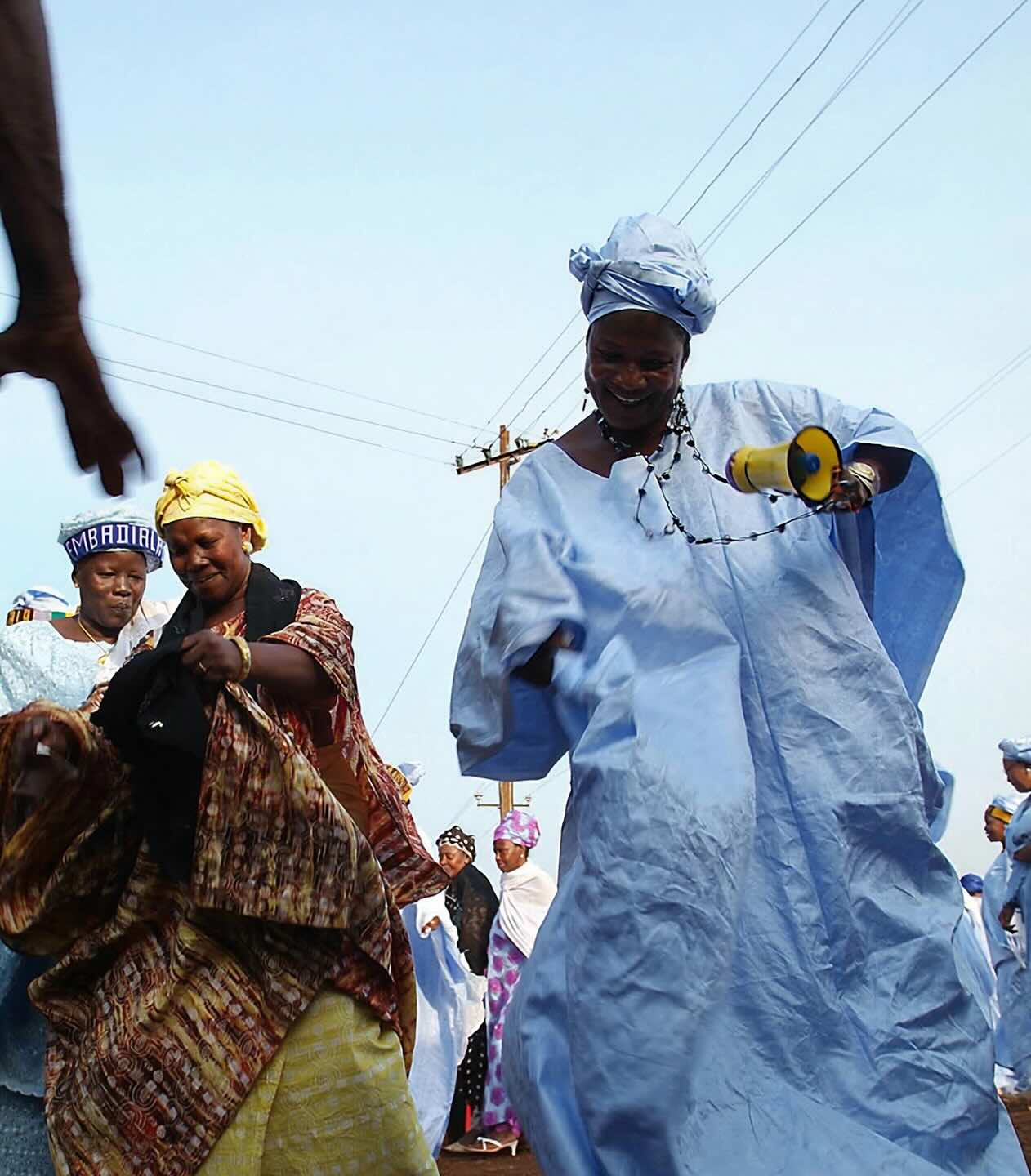
Picture any party on the continent tonight. Lagos, Accra, Johannesburg, Nairobi. A DJ is reading the room, choosing the next record carefully. The floor is packed. Someone finds the pocket of the rhythm and the people around them notice, creating space, forming a circle. The dancer doesn't perform for the crowd exactly. They perform with it, the boundary between audience and participant dissolving in the way it only does when music and movement are working together at full intensity.
This scene is ancient. The setting is contemporary, the clothes are different, the sound system would be unrecognisable to anyone who lived two centuries ago. But the fundamental structure: the circle, the communal participation, the body as the primary instrument of expression, the dancer in conversation with both the music and everyone watching, that is not new. It is one of the oldest recurring experiences in African life.
African dance did not begin as entertainment. It began as everything else.
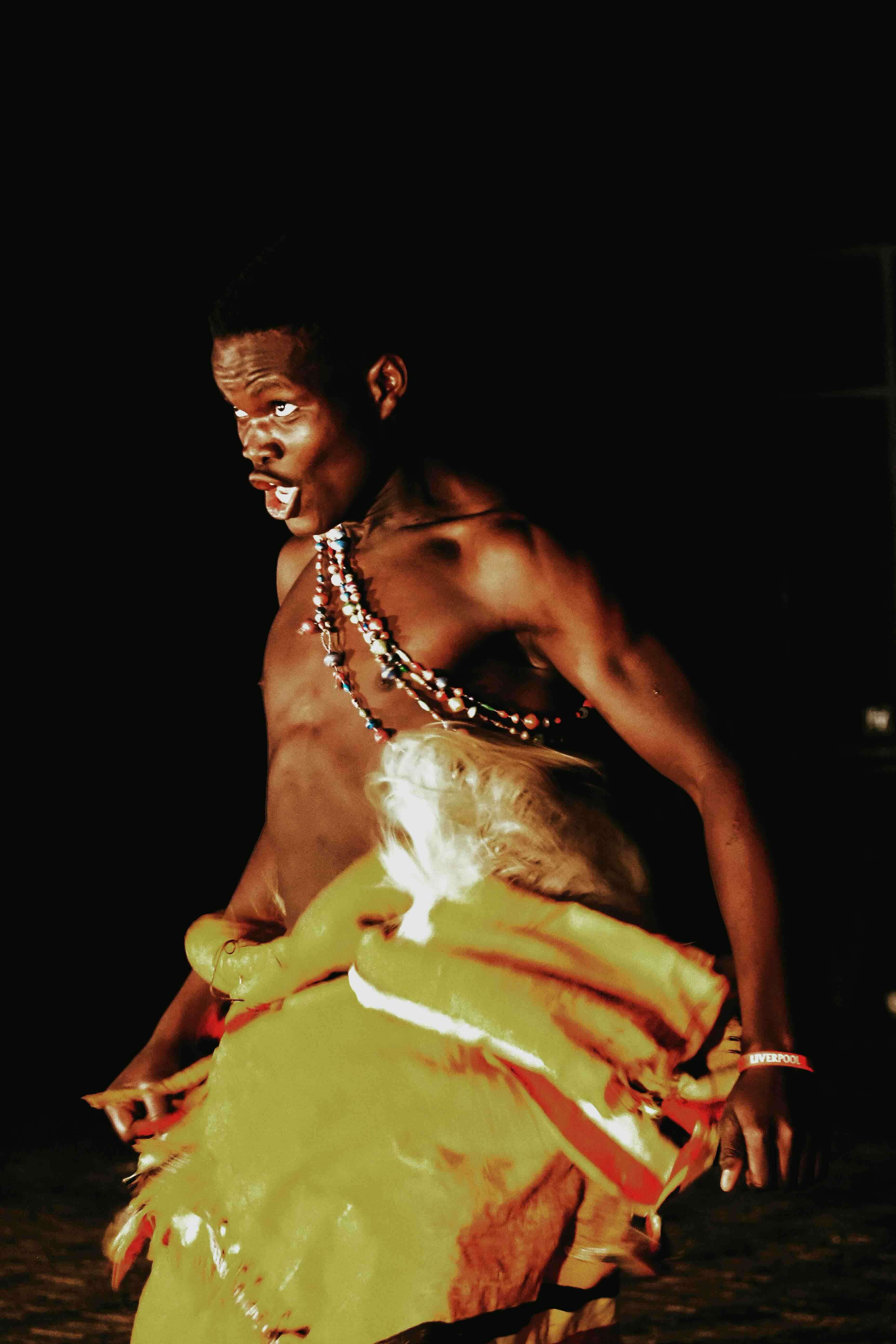
The oldest evidence of organised dance in Africa is a rock painting in the Tassili-n-Ajjer region of Algeria, attributed to Neolithic hunters between 6,000 and 4,000 BC. Long before written language arrived on the continent, before formal religious institutions, before much of what we consider civilisation, people were moving their bodies together in coordinated, purposeful ways. In many African cultures, dance was a fundamental part of daily life, whether through work songs, celebrations, or spiritual ceremonies. African societies often lacked written languages, so dance became one of the primary ways to communicate stories, values, and beliefs from one generation to the next.
The scope of what dance was asked to do is difficult to compress. In Africa, dance was a means of marking life experiences, encouraging abundant crops, honouring kings and queens, celebrating weddings, marking rites of passage, and other ceremonial occasions. It was also medicine. Hausa women found healing through dance and spirit possession in the Bori cult. Among the Jukun of Nigeria, a similar organisation called the Ajun used dance to deal with hysterical disorders, exorcising evil spirits in initiation ceremonies. Dance was used to prepare for war, to mourn the dead, to mark a boy's passage into manhood, to ask the sky for rain.
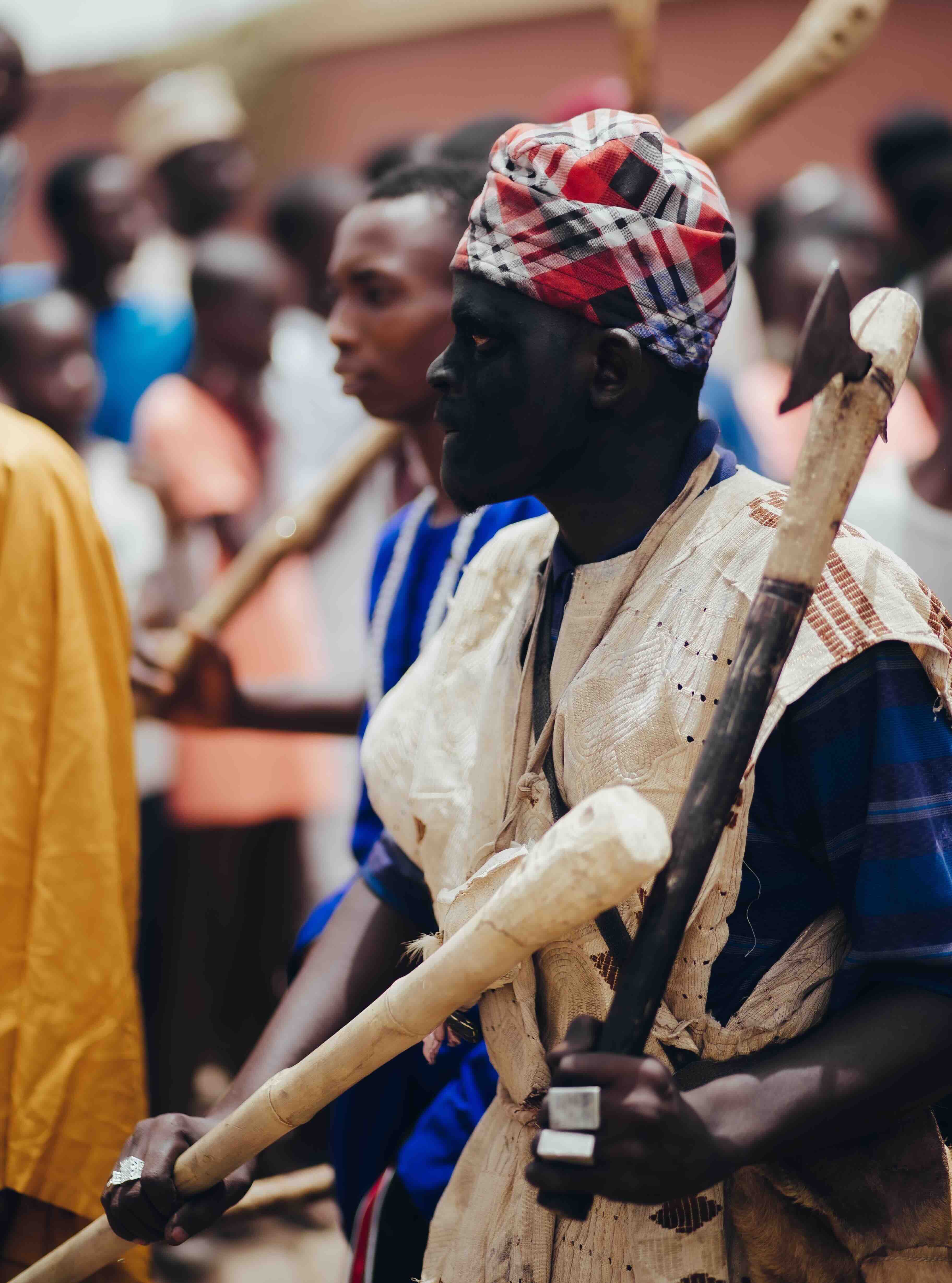
What this meant in practice was that dance was not separate from the serious business of life. It was how serious business was conducted. The priest of the Yoruba god Sango would dance into a state of deep trance at the annual festival, expressing the wrath of the god of thunder with the lightning speed of his arm gestures. The Maasai Adumu, the high-jumping dance still performed by young men in Kenya and Tanzania today, was a rite of passage: a declaration of physical readiness, a public announcement of transition from youth to warrior. The Gelede festival of the Ketu-Yoruba in Nigeria and Benin used masked dance to honour female ancestors and spiritual forces, the performance carrying the weight of both ritual and social instruction simultaneously.

The structure of the dance itself carried meaning. The most common form within indigenous African traditions was a team dance performed in a closed circle, with dancers facing the centre, or in a line following a circular path centred on the musicians. The circle was not incidental. It expressed something fundamental about how these societies understood themselves: not as collections of individuals performing for one another, but as communities whose members existed in relationship, facing each other, responsible to each other, making something together that none of them could make alone. Traditional African values lean toward a holistic view of the world, where no entity is entirely separate from another. The African dancer is considered an active member of the community they inhabit, not an entertainer isolated from it.
The continent is vast and its dance traditions are as varied as its peoples. No single form contains them all. But looking across regions, certain dances illuminate what was at stake.In Southern Africa, the Indlamu of the Nguni people, practised by the Zulu, Ndebele, and Swazi, was a warrior's dance. Warriors performed, with precision timing, large stomping motions with bare feet to demonstrate meticulous technical control, with stabbing motions toward imaginary enemies. Men wore ceremonial dress: headgear, loin cloth, ceremonial belts, shields, ankle rattles, weaponry of spears. The Indlamu was not decorative. It was functional, a display of readiness, a rehearsal for war conducted in public. The stomp that defines it, foot meeting earth with full force, has echoed forward into modern South African dance: you can hear it in gqom, feel its logic in the Gwara Gwara, recognise its insistence on the body as a site of power in the Vosho.
In West Africa, the Kpanlogo emerged among the Ga people of coastal Ghana in the 1960s as itself a hybrid: a deliberately youthful reconfiguration of older forms, blending traditional Ga rhythms with influences arriving from elsewhere on the continent. The Kpanlogo was already an act of cultural translation, already an argument that dance could hold the past and the present simultaneously. It would later become the direct ancestor of the Azonto. Among the Ewe people spread across Ghana, Togo, and Benin, the Agbadza dance was performed at important social gatherings such as marriage, naming, and funeral ceremonies. The fact that the same dance appeared across colonial borders that divided the Ewe from one another was itself a form of cultural insistence: borders drawn by outsiders in Berlin could not interrupt a people's shared memory of how to move.
In what is now South Africa, the Gumboot dance was developed by miners during apartheid, when music was not allowed. Instead, the miners used their boots to make rhythmic sounds. This is perhaps the most direct demonstration of what African dance, at its core, is capable of: stripped of instruments, stripped of freedom of movement, working people found a way to make percussion out of their own labour, to create communal expression from within the machinery of oppression. The dance is still performed today.
The continuity was not total. The colonial era and subsequent 20th century globalisation resulted in the disappearance of certain styles of African dance through colonial suppression or postcolonial cultural hybridisation. Missionaries suppressed ritual dances they considered immoral or idolatrous. Colonial administrations disrupted the community structures that sustained ceremonial life. Conversion to Christianity and Islam, which spread widely across the continent, meant that dances tied to traditional religious practice lost the context that gave them meaning.
What survived, survived because communities held it. Rural areas maintained traditional forms within ceremonies that continued regardless of what colonial law permitted or preferred. And as people moved from villages to cities across the 20th century, they carried what they knew. Modern African dance is, in a meaningful sense, urban African dance: when African dances were taken out of their original village context through migration into multi-ethnic towns, cultural blending produced new forms. The cities became laboratories. Old movements mixed with new influences, and something contemporary was made from something ancient.
The most significant development in this story over the last three decades is not the creation of new dance. It is the acceleration and global reach of a process that was already underway. The Azonto, which took Ghana and the African diaspora by storm from 2011, traces directly to the Kpanlogo, a traditional Ga dance from the coastal communities of Accra, including Jamestown, Teshie, and Nungua. The dance uses hand gestures and attitude to reference ordinary elements of daily life: grooming oneself, talking on the phone, praying. Whether miming an exchange of numbers with a potential love interest or holding one hand out as a mirror to admire your own style, Azonto is about maintaining a sense of cool and control. This mimicry of everyday life through dance is not new. It is how the traditional Apaa dance worked: the movements showed what a person did for a living, communicated their identity through gesture. The Azonto updated the vocabulary, not the logic.
For young Africans in the diaspora, the Azonto became a badge of honour, a modern cultural export that flipped the narrative, positioning African youth culture as forward-thinking. It was arguably the first African dance to popularise social media challenges, changing the way we appreciate music. Within a few months of amateur videos being posted from Accra high schools, the dance had reached diaspora communities in London, New York, and Berlin.
From Nigeria in the same period came a steady stream: Kukere, rooted in the traditional Efik dance Etighi, popularised by Iyanya in 2012. Shoki in 2014. Skelewu, which Davido attached a social media competition to. Shaku Shaku emerging from the streets of Agege in Lagos. Then, in 2018, the Zanku, or legwork: fast-paced movements of legs, hands, and chest creating rhythmic sequences, traceable to the same Agege streets, popularised by Zlatan, eventually danced by Beyoncé in the video for "Already.”
South Africa produced the Gwara Gwara, created by DJ Bongz and released in 2017. The dance took a well-documented tour through South African music before going global. Rihanna performed it at the 2018 Grammys. Childish Gambino used it in the video for "This is America.” The Vosho, born of gqom's dark energy, involves squatting down and kicking a foot outward emphatically: the Indlamu stomp, translated into a club move. The connection between the warrior's stamp and the Vosho kick is not literal. But the body knowledge is the same.
The Democratic Republic of Congo contributed Ndombolo, with its insistent waist and leg movements, which spread across Central and East Africa. Côte d'Ivoire gave the continent Coupé-Décalé, a dance and music style developed in the Parisian diaspora and carried back to Abidjan. Each of these forms carries a return address, a specific community, a specific moment, a specific set of conditions that produced it.
What changed with the rise of African music globally is not that African dance became important. It was always important. What changed is who is watching and where the circle now forms.
When amapiano became the sound defining clubs from Lagos to London, it brought with it the Vosho, the step, the specific ways South African bodies move to South African rhythms. When Afrobeats entered European and American mainstream consciousness, it brought Zanku tutorials to TikTok. When the Jerusalema challenge swept the world during the COVID-19 pandemic in 2020, people in Palestine, the Netherlands, Portugal, and dozens of other countries learned a South African line dance from their living rooms. The circle expanded globally without losing its shape.
This is the thread that connects the Gelede ceremony in a Yoruba village to a rave in Johannesburg, the Indlamu warrior's stomp to the Vosho on a club floor, the Azonto in a high school in Accra to Beyoncé's choreography in a music video. Contemporary African artists blend traditional dances with modern elements, showing how dance can be both a celebration of the past and a dynamic part of the present. The celebration and the ceremony were never as separate as they looked. The party was always also a ritual: a gathering of the community, a collective agreement to move together, a use of the body to say things that words cannot carry as precisely.