Stay In This World
The stories, the culture, the conversations. Every week.
No spam. No third parties. Just Unruly.
Nigerian print has a rich history, a punishing present, and a future that will only work if publishers stop pretending the old rules still apply.

Earlier this year, I opened Google Search to find somewhere in Lagos to buy print magazines. Not a specific title, or edition. Just a store, a dedicated space where magazines from around the world were stocked and available to browse and purchase, similar to the way MagCulture operates in London or Iconic Magazines in New York. I found nothing clear. A few retailers selling books and by extension a few prints which were mostly sold out. A fashion store or two with a limited foreign titles section. Nothing, so far that resembled a destination for print. I want to be precise about that: I searched and found nothing clear. That is not the same as saying nothing exists. Lagos is a city of 15 million people and I have not been everywhere in it. But the fact that a Google search returns no direct, clean result for a dedicated magazine retail store in the city tells you something real about where print sits in the local ecosystem. The infrastructure that would signal a healthy print culture, physical retail dedicated to the medium, is either absent or invisible enough to be functionally the same thing.
I was looking because I wanted to build a reference collection. Physical copies of print work I could keep, return to, and use as reference for what we do at Unruly. The search itself became the beginning of a question I have been sitting with since: is print dead in Nigeria, or did the conditions that might sustain it simply never fully develop? The honest answer is more complicated than a simple yes or no.
Nigeria had a print culture. There was Hints and there was Ovation, and then from about ten years, as Nigeria laboured under the dictatorship of General Sani Abacha, a number of them went dark. The only magazines that really thrived were those focused on politics: TELL, TheNEWS, Newswatch, and others ready to brave the prison cells to speak truth to power. TELL magazine, which published its first edition on April 8, 1991, was described by BBC News in 2007 as one of Nigeria's most respected business magazines. Its founding editors had left Newswatch over disagreements with management and built something they believed in. It was serious, it was brave, and it operated under genuine threat at the time.
After the military years, a different kind of magazine emerged. Genevieve Magazine, founded by Betty Irabor in 2003, recognized a void within the Nigerian publishing industry and set out to create a lifestyle publication for women, particularly African women. It became one of the most recognisable Nigerian publications of the 2000s. Ovation, True Love, Encomium: a ecosystem of print emerged in the early 2000s that spoke to different segments of a growing urban middle class. These were not small ventures. They had circulation, advertisers, and genuine cultural weight.

Then came the internet, and then came the smartphone, and then the collapse of the advertising model that had sustained print globally. In Nigeria, the collapse of the middle class that had been the primary print audience accelerated everything.
By 2017, at a colloquium marking Betty Irabor's 60th birthday, Dr. Doyin Abiola, the first Nigerian woman to serve as editor-in-chief of a national daily newspaper and former Managing Director of National Concord, stated plainly that no publication is making healthy profit in Nigeria. Irabor herself said that if she knew then what she knew now, she would not have become a publisher. These are not outsiders observing decline. They are the people who built Nigerian print, speaking from inside the wreckage of a model they had given their careers to.
Google Trends data for Nigeria, tracked across five years from 2021 to 2026, shows essentially zero sustained search interest in the terms "African magazine" or "Nigerian Magazine" within the country. The searches are not there. Across 260 weeks of data, the interest line is flat, interrupted only by isolated single-week spikes that are more likely individual searches than any real pattern. The only related queries with consistent volume are "African business magazine" and "African leadership magazine," professional publications rather than cultural ones.
This is not demoralizing data if you read it differently. It does not say simply “Nigerians do not want print”. It says “Nigerians are not looking for the kind of print that used to exist”. The monthly celebrity magazine, the newsstand periodical, the publication that competed with the internet on the internet's terms while being slower, more expensive, and less immediate: that relationship is over. But the absence of demand for the old model is not the same as the absence of demand for something better.
Globally, the broader magazine publishing market has declined at a CAGR of 2.4 percent over the past five years, reaching approximately $105 billion in 2024, while the print magazine segment specifically is projected to decline at an annual rate of 2.38 percent from 2025 to 2030, falling from $32.72 billion to $29 billion by 2030. This is a structural decline, not a cyclical one. The mass market print model is not recovering. But the broader physical media story is more interesting. The global vinyl record market reached $2.1 billion in 2025 and is projected to reach $3.6 billion by 2034. UK vinyl album sales notched their 17th consecutive year of growth in 2024. Physical books continue to outsell e-books in the UK, and globally print book sales remain dominant despite the growth of digital formats. The desire for physical media has not disappeared. It has become more intentional, more selective, and more willing to pay a premium for objects that justify being owned. Now we might ask, whether that shift applies to print magazines. The answer to that, in specific pockets, is yes.
There is a generation of readers in Nigeria who did not grow up buying magazines. For them, information arrives through a screen, is consumed quickly, and is replaced by more information within minutes. The question of why print deserves to exist is not a cynical one. It is a genuine one, worth answering directly.
Let’s start with what print does that digital cannot. The phrase most often attributed to Washington Post publisher Philip L. Graham captures it precisely: "the first rough draft of history." Once print media has been published, it cannot be changed, whereas its digital counterpart is fleeting, available one minute and gone the next. Every article published online exists at the mercy of a server, an editorial decision, an algorithm change, or a company going out of business. The internet has already lost enormous amounts of its own history. Websites disappear, platforms shut down, and links break. A Columbia Journalism Review investigation found that the majority of news outlets had not given any thought to even basic strategies for preserving their digital content, and not one was properly saving a holistic record of what it produces. The digital record is not the permanent record. It is the provisional one.
Print, when it exists, persists. Not because paper is indestructible, but because a physical object has a different relationship to time than a file on a server. It can be kept. It can be passed on. It can be found in a box decades later and read by someone who was not born when it was made. The most powerful example of this from the African context is Drum magazine. Founded in South Africa in 1951, Drum became an important platform for a new generation of writers and photographers who changed the way Black people were represented in society. Drum's heyday in the 1950s fell between the Defiance Campaign and the tragedy at Sharpeville. It was the decade of potential Black emergence, when the Freedom Charter was written, the decade of Sophiatown, of Black jazz, of the movement to the cities. Drum was described as "a record of naivety, optimism, frustration, defiance, courage, dancing, drink, jazz, gangsters, exile and death." It described the world of the urban Black: the culture, the color, the dreams, the ambitions, the hopes, and the struggles.
What we know about Black South African urban life in the 1950s, the way people dressed, the music they listened to, the political conversations happening in shebeens and on street corners, we know largely because Drum documented it in print. The apartheid government would have preferred that record did not exist. The print object made it harder to erase. The isiZulu edition of Drum captures Black South African urban life during apartheid, written in the language of the people who lived it, documenting events, protests, politics, and fashion through an isiZulu lens, offering a vivid record of culture and resistance. That record now lives in archives and has been digitized precisely because the physical object survived long enough to be worth digitizing.
This is what cultural print publication actually is, at its best: a decision that something is worth keeping.
Not just reading, not just scrolling past, but keeping. The editor who commissions the work, the designer who lays it out, the printer who manufactures it, the reader who buys it: everyone in that chain is making a collective assertion that this moment, this story, this conversation is worth the friction of production and the deliberate act of physical ownership.
There is also the question of trust. A Kantar study of 8,000 news consumers across the US, UK, France and Brazil found that printed news magazines are the most trusted news source, with 72 percent rating them positively. A World Economic Forum analysis of media trust data found that more than half of consumers worry about their ability to distinguish between what is real and fake online, reflecting a broader decline in trust in digital information sources. In a media environment where anyone can publish anything and algorithmic amplification rewards provocation over accuracy, the print object carries a built-in credibility signal: It required significant resources to produce, it required editorial decisions that could not be reversed after publication, and it required someone to commit, physically and financially, to a version of events.
The counterargument is that print can also be found online. That any article in a magazine can theoretically be found through a search engine. This is true as far as it goes. But it misunderstands what a cultural print publication is for. The goal is not simply to deliver text to a reader. It is to create an object that a reader chooses to own, to place in their home, to return to, to lend to someone.
For Nigerian cultural life specifically, the stakes are high. The stories of how Lagos changed in the last twenty years, how certain creative communities formed and dissolved, how specific aesthetic movements emerged and what they were responding to, these stories are being generated right now. Some will make it into digital archives. Many will not, or will survive only in forms that are difficult to find, easy to alter, and vulnerable to disappearance. The print magazines that documents these moments carefully, with rigor and with the intention that it should last, is not producing a luxury object. It is producing a record. The fact that it is also beautiful is not separate from that purpose. It is part of it.
The Republic, based in Lagos, describes itself as existing to deepen public understanding of Nigeria and Africa through reporting, analysis and storytelling that are historically grounded, intellectually rigorous and globally aware. In a media environment increasingly shaped by speed, outrage and algorithmic noise, they have chosen depth. They have published about 20 print issues since 2017. They have a physical pickup address in Victoria Island. They ship worldwide. They were recognized by Al Jazeera, Reuters, and The Economist. They received $500,000 in grants from the Mellon Foundation and Open Society Foundations.
These details matter and are worth looking at. Serious independent print in Nigeria, at the level of depth The Republic operates, is partly grant-funded. That is not a failure. It is an honest acknowledgement that the commercial conditions do not yet fully support the kind of publishing the country actually needs. The Republic found a structural solution to a structural problem.
DADA Magazine and Gida Journal occupy different registers of the same space: culture-focused, intentional, designed to last rather than to circulate. Unruly, our magazine, has followed a similar logic. We sold out our first edition and moved 60 to 70 percent of a larger second edition. Those are not readers who found us through a Google search for "Nigerian magazine." They are readers who encountered the work directly and decided it was worth owning as an object.
That distinction is the most important thing about the current moment in print: the difference between someone searching for a magazine and someone choosing to own one. The first relationship describes the old model. The second describes the only model that works now.
The infrastructure problem is real. At the point of writing this, I still have not found a dedicated magazine retail store in Lagos. No equivalent of the spaces where print culture is browsed and discovered in cities where it is thriving. Distribution beyond a publisher's own network is almost non-existent locally.
Manufacturing costs are punishing. Unit costs are high at small print runs and only reduce meaningfully at volumes that create their own distribution problem: manufacture enough to lower the unit cost and you face the challenge of moving that volume through a retail infrastructure that barely exists. Manufacture just enough for your audience and price accordingly, and your magazine is immediately perceived as too expensive for the average Nigerian consumer, whose purchasing power has been gutted by inflation and a collapsing Naira.
Try to distribute internationally and you face the rising cost of logistics, which can make the economics of a single copy sold abroad barely worth the shipping it required. The math is difficult in every direction.
This is not a reason to stop. It is a reason to be honest about what print requires of the people making it in this context. It requires either external funding, a grant or institutional partnership, or a reader base that is partly international and willing to pay prices that reflect the actual cost of production. It requires a release model that abandons the monthly calendar entirely and publishes when the work is ready and the economics make sense. It requires subject matter deep enough that the reader understands they are buying something that will still matter in five and even ten years.
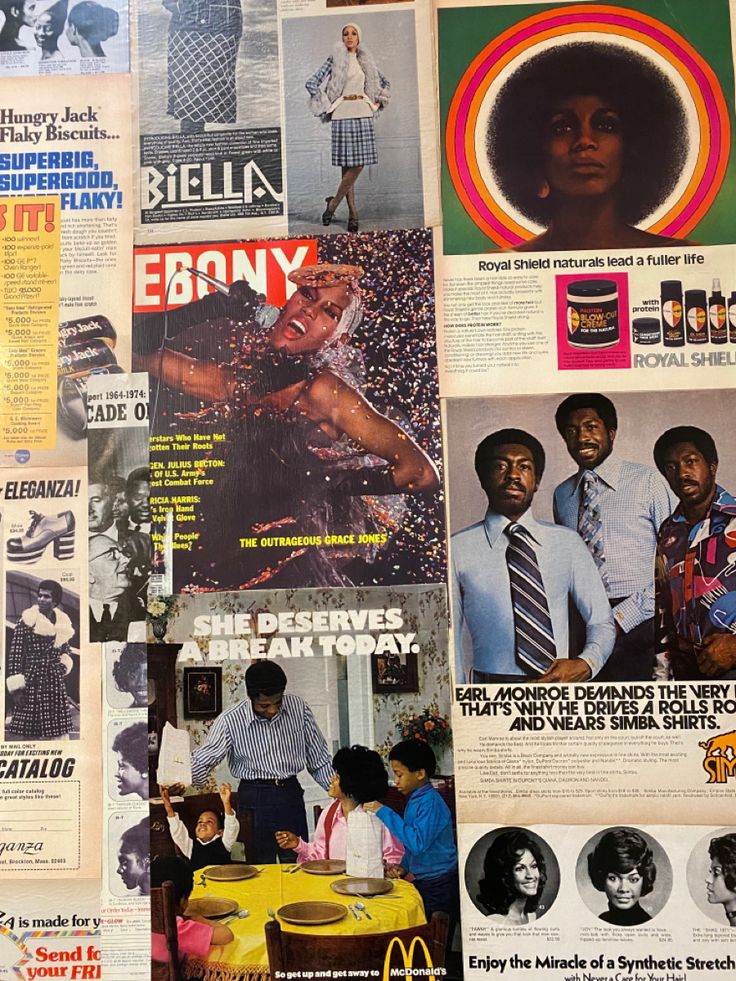
The model that sustained Nigerian print for decades: advertising revenue, newsstand circulation, mass market celebrity coverage on a monthly schedule, is not coming back. The conditions that killed it, digital advertising, social media, streaming, the smartphone, are not reversing. Anyone still trying to operate that model is fighting a concluded argument. But print as a form of documentation, as an object that carries serious ideas and serious images in a way that a screen cannot replicate, as something worth keeping and returning to and eventually passing on, that is not a concluded argument. It is a beginning.
The publications doing it well in Nigeria right now are all operating from the same understanding: print is no longer a distribution medium. It is a commitment. The reader who buys it is not buying convenience. They are buying permanence. They are buying the editor's assertion that this work is worth the friction of production, the expense of manufacture, and the deliberate act of physical ownership.
That is a smaller audience than the one that used to buy Genevieve at a newsstand. But it is a real one, and it is not going away. In a media environment defined by disposability, the physical object that insists on lasting is not fighting the current, but offering an alternative to it. I still haven't found a magazine store in Lagos. But I know the work being made here is worth one.