
Stay In This World
The stories, the culture, the conversations. Every week.
No spam. No third parties. Just Unruly.
Somewhere between independence and now, Nigeria forgot how to build for the climate it lives in.
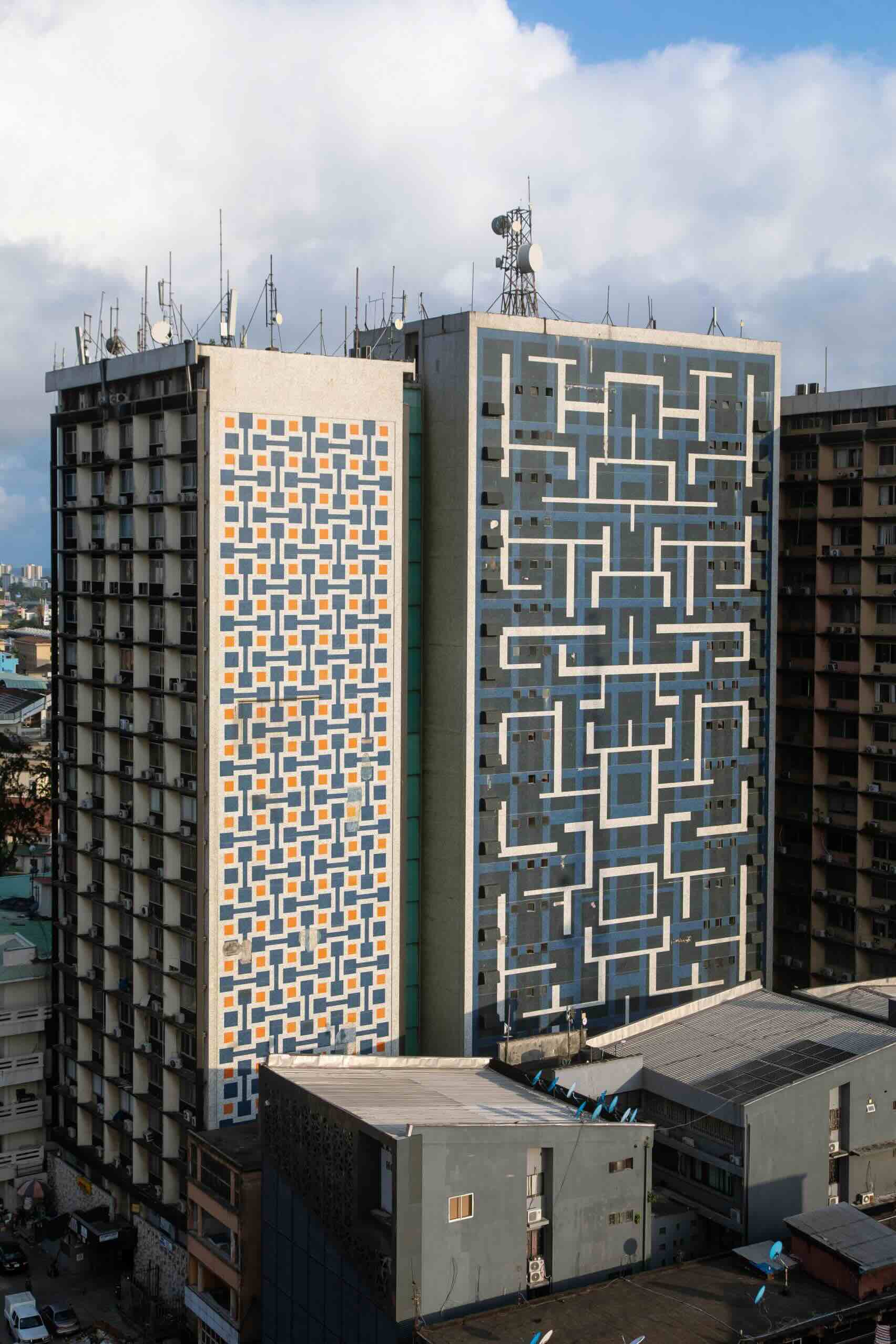
Step outside in Lagos at midday and the heat is not simply weather. It is structural. It rises from the road, bounces off the concrete wall in front of you, funnels down the narrow gap between two buildings with no shade and no green, and settles on the skin as something close to pressure. This is not an inevitable consequence of being a tropical city. It is, to a significant degree, a consequence of how the city has been built.
Lagos has been losing its vegetation to concrete for decades. Between 1990 and 2020, the city's built-up area grew from 496 square kilometres to over 1,256 square kilometres. Over the same period, vegetation cover decreased by approximately 398 square kilometres. The trees that once lined streets, filled compounds, and interrupted the concrete with shade and evaporative cooling have been replaced, systematically, by more building. The result is a city that absorbs heat through the day and releases it through the night, offering its residents no thermal relief in either direction.
This is not how Lagos was supposed to be built. The knowledge of how to build differently was here. It was abandoned.
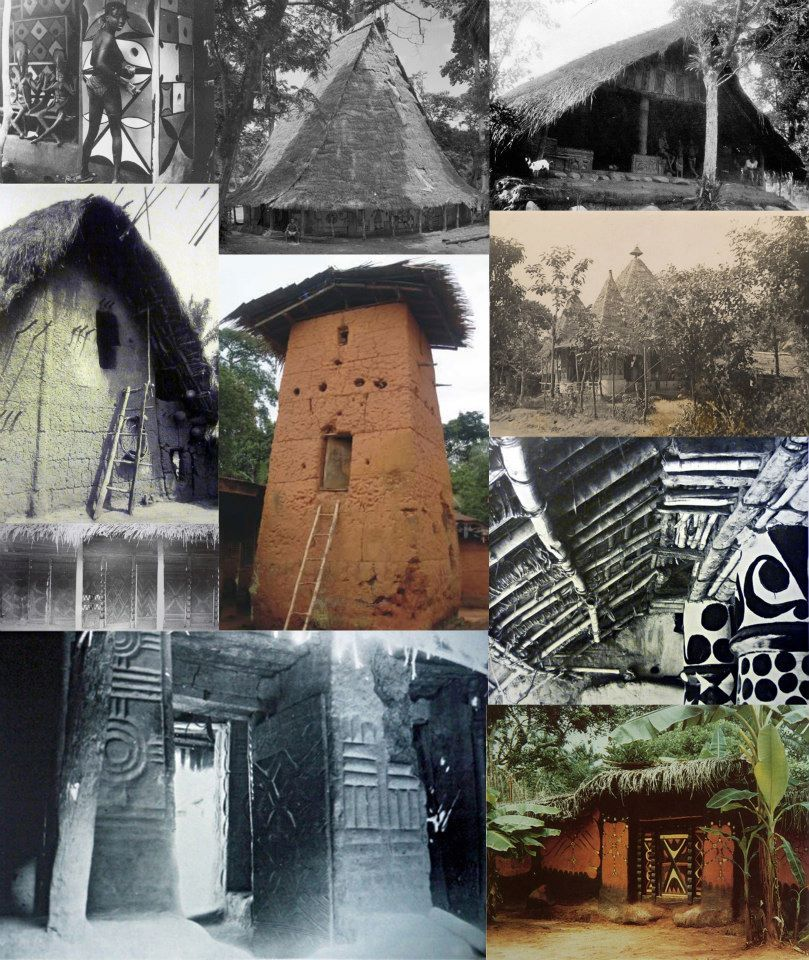
Pre-colonial Nigerian architecture was built by people who understood the climate they were living in because they had no choice but to understand it. Igbo compounds in the southeast used thick mud walls and high-pitched thatched roofs that kept interiors cool through insulation and ventilation. Hausa architecture in the north, operating in a drier climate, used courtyard layouts that created shaded outdoor space while thick earthen walls moderated the dramatic temperature swings between day and night. Yoruba compounds in the southwest were organised around open central spaces that allowed air to move through the structure. In each case, the building was a response to the specific conditions of its location.
Post-independence, there was still intentionality in design: grand entrances, patterned doors, ornate pillars, decorative railings, and unique window bars. Buildings carried a sense of identity, blending local traditions with foreign influences in a way that was still uniquely Nigerian. The verandah, the high ceiling, the generous window opening: these were not decorative choices. They were climate technology, built from centuries of understanding how air and shade work in a tropical environment.
The advent of colonialism in the 1800s was one of the key factors in the drastic alteration of indigenous Lagosian architecture. The desire of the English Crown for inexpensive colonialism in humid, tropical West Africa coupled with the mass importation of cheap building materials, in particular cement and corrugated iron sheeting, set the precedent that continues to dominate the building industry to the present day.
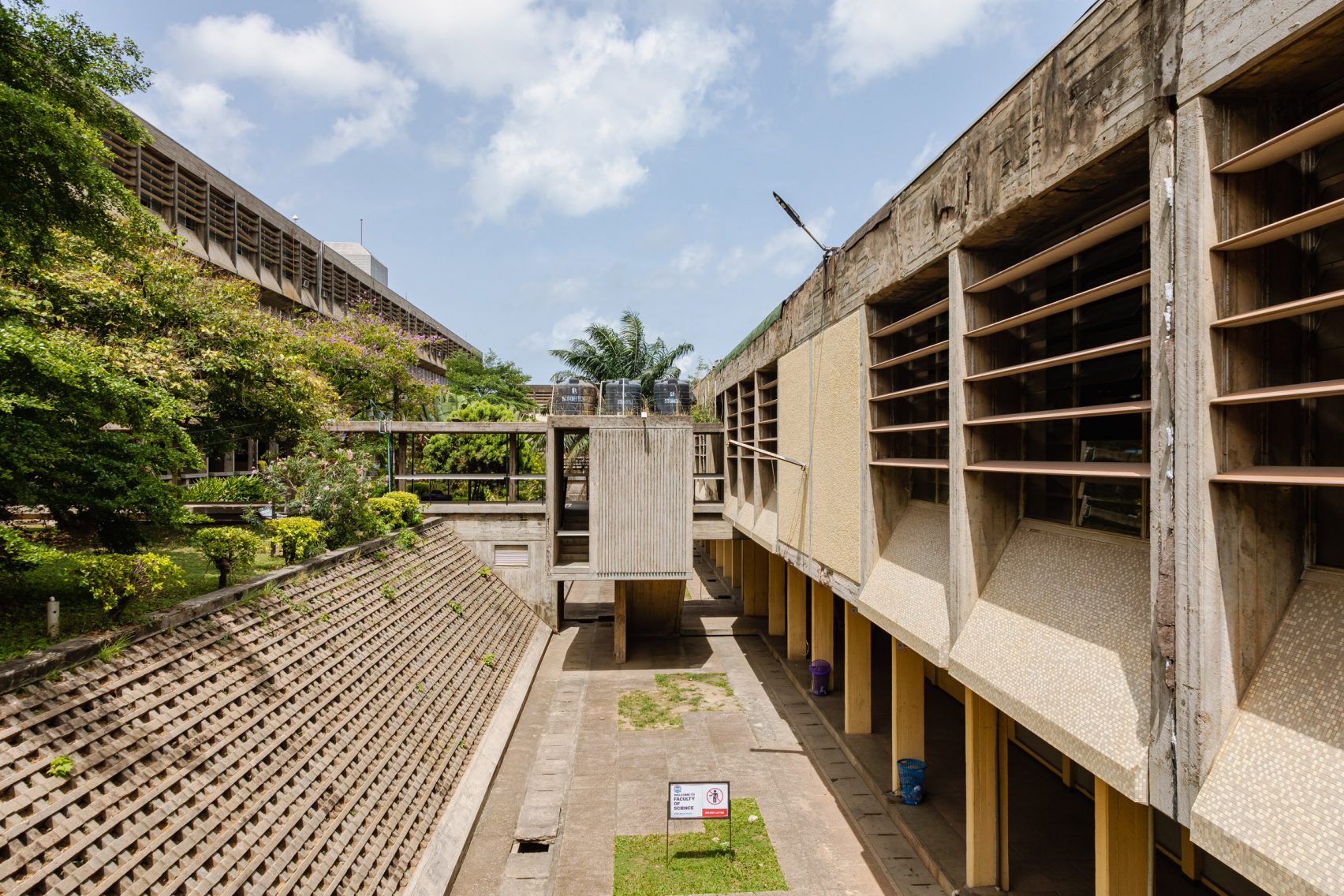
The colonial building that replaced indigenous forms was not entirely without climate logic. The standard colonial tropical house, with its deep verandahs and overhanging eaves, was designed to manage shade and airflow in the humid tropics. Later, in the postwar period, European architects working in West Africa developed what became known as Tropical Modernism, a design language that took modernism's structural vocabulary and adapted it to local climate conditions. This style enjoyed socioeconomic success, instrumental to developmental infrastructure in the region, and evinced a form of environmentally responsive design through its use of strategic orientation, double-skin facades, breeze blocks, fair-faced concrete finishes, and brise soleil, among other architectural features.
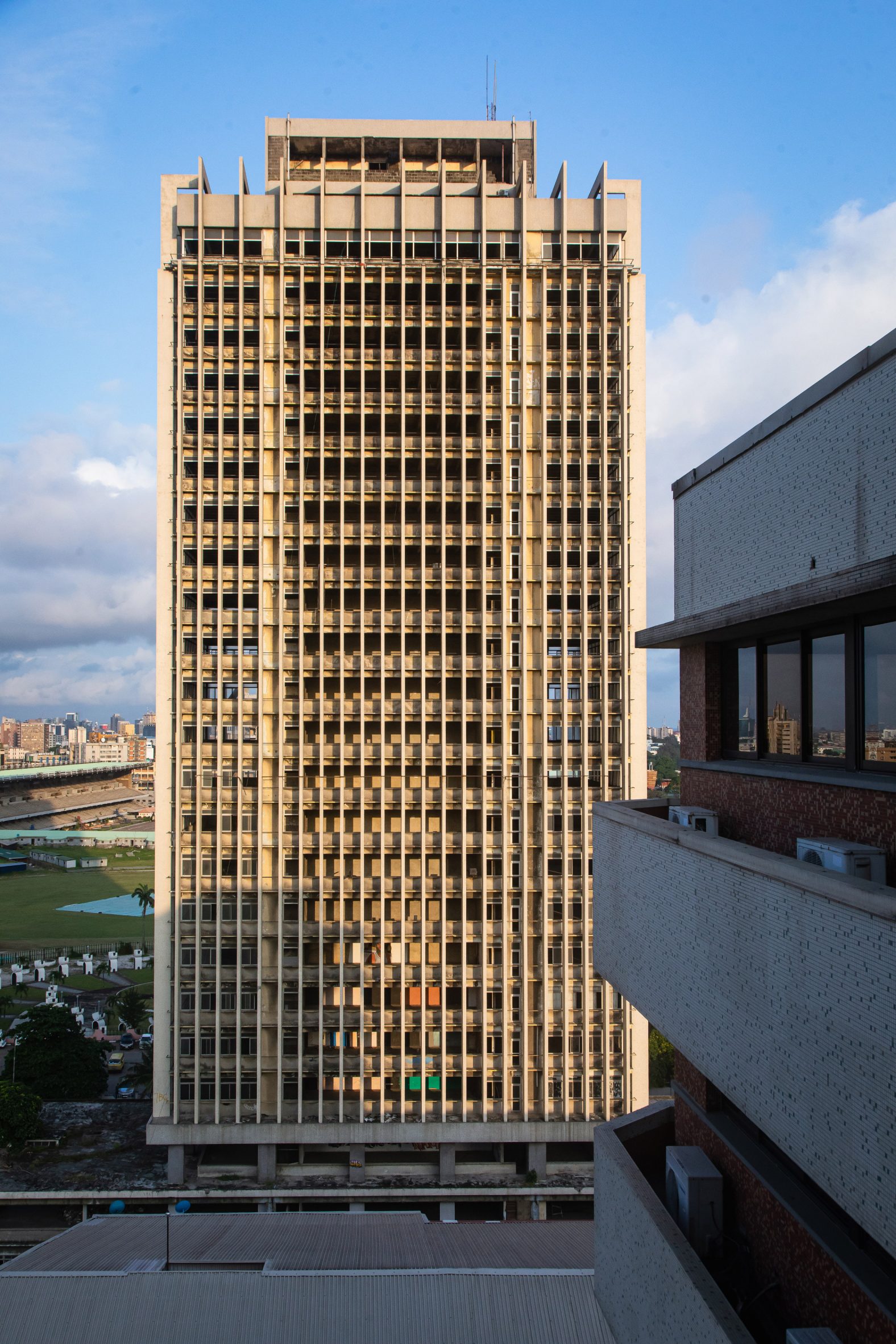
The breeze block is the most visible remnant of this moment. Those perforated concrete panels, still visible on older buildings across Lagos and other Nigerian cities, were designed precisely to allow air to move through a wall while blocking direct sunlight. They were a sophisticated climate solution, cheap to produce, effective in the tropics, and rooted in a real understanding of how buildings and heat interact. The first Nigerian-trained architect, Charles Oladapo Olumuyiwa, who qualified in 1961, pioneered Modern Tropical Architecture, an attempt to merge international modernism with climate-responsive design, with key features including brise-soleil replacing curtains.
Then the knowledge stopped being applied.
By the late 1970s, political instability, the Nigerian civil war, and the economic consequences of the oil boom all contributed to the decline of Tropical Modernism in West Africa. With cheap fuel costs in an oil-financed economy, the pragmatic functionality of tropical modernism lost status to high-energy alternatives. Building priorities shifted toward speed and cost. The climate-responsive features that had defined the best architecture of the previous three decades became optional, then rare, then largely forgotten.
The climate-responsive features, the strategic orientation, the double-skin facade, the carefully positioned breeze block, these required architectural thought and higher upfront investment. What replaced them was simpler and cheaper: solid concrete block walls, small windows, flat roofs, and no shade.
Modern residential designs are now dominated by uniform concrete walls, small generic windows, and uninspired block structures. The architectural character that once defined Nigerian buildings is being erased. The small window is the most symptomatic detail. In a climate that requires cross-ventilation to keep interiors liveable without mechanical cooling, the small window is a design decision that guarantees discomfort. It lets in minimal light, allows minimal airflow, and turns the interior of the building into a heat trap. The thick concrete wall absorbs heat through the day and radiates it inward through the night. The flat roof, with no insulating air gap, transfers heat directly into the top floor. Post-independence adaptation of climate-responsive design models in Nigeria has often been diluted by poor execution and material substitution, reducing their efficacy.
The consequence is an arms race between the building and the weather that only the air conditioning unit can resolve. Families who can afford it run generators to power air conditioning that compensates for the thermal failures of the building they live in. Families who cannot afford it live in buildings that are hotter than the outside air, with windows too small to allow the breeze to do the work the building should be doing for free.
The building is only part of the problem. The street it sits on has its own thermal logic, and that logic is equally hostile.
A study of street trees across all 16 local government areas of Lagos found only 4,017 street trees in the areas surveyed. The wealthiest neighbourhoods, Ikeja and Eti-Osa, have the highest tree abundance and species richness. The Gini coefficient for street tree distribution is 0.81, indicating deeply unequal distribution across the metropolis. A Gini coefficient of 0.81 is extraordinarily high. It means that street trees in Lagos are concentrated in the areas that need them least, the low-density, high-income neighbourhoods where compounds are larger and buildings are set further back from the road. The dense, high-traffic residential areas where most Lagosians actually live have almost none.
Trees reduce local temperatures by providing shade and increasing evapotranspiration. As trees release water into the atmosphere from their leaves, the surrounding air is cooled. Evapotranspiration from green spaces can lower local air temperatures by up to 2 to 4 degrees Celsius. In a city already operating at the edge of thermal comfort, 2 to 4 degrees is the difference between a street that is bearable and one that is not. The absence of trees is not an aesthetic failure. It is a public health one.
Research studying the urban heat island effect in Kosofe, a rapidly urbanising area in Lagos, found that land surface temperatures varied between 28 and 38 degrees Celsius, with built-up areas, particularly commercial and industrial zones, exhibiting significantly higher temperatures than vegetated areas. A ten-degree gap between the hottest and coolest parts of the city, determined almost entirely by whether the ground beneath you is concrete or vegetation.
The argument for building differently is not primarily aesthetic. It is economic and physiological.
A building that manages its own temperature through design rather than mechanical cooling costs less to live in. A street lined with trees is cooler, quieter, and more walkable than one without them. A city that uses its natural environment as a climate resource rather than replacing it entirely is more resilient to the intensifying heat that climate change is already delivering. A 1.5-fold gap exists in green space cooling adaptation between cities in the Global South and North. Lagos is on the wrong side of that gap, and the gap is widening.
The knowledge of how to close it has not disappeared. Architects are calling for a return to large verandahs, high ceilings, and well-ventilated designs suited to the tropical climate, celebrating local craftsmanship, and blending tradition with modernity. The breeze block, dismissed as old-fashioned, is being reconsidered by architects who understand what it was actually doing. The courtyard, the verandah, the generous window, the tree planted close enough to a building to shade its wall through the afternoon: these are not nostalgia. They are solutions that predate the problem they are now needed to solve.
Lagos was built on knowledge about how to live in this climate. That knowledge was interrupted by cost, by speed, by the assumption that mechanical systems could substitute for design intelligence. The concrete wall and the small window are the physical record of that interruption. The heat pressing down on the city every afternoon is its consequence.