Stay In This World
The stories, the culture, the conversations. Every week.
No spam. No third parties. Just Unruly.
From the gold regalia of the Akan chiefs to the beaded love letters of the Zulu, African adornment was governance, communication, and cosmology before it was ever style.

When a British envoy named Thomas Bowdich entered the town of Kumasi in 1817, he was not prepared for what he saw. The Asante chieftain before him was covered, almost entirely, in gold. Rings stacked on multiple fingers. Gold ornaments at the neck, the wrists, the ankles. Gold-leafed sandals on his feet. The weight of the gold was so considerable that the chief required attendants to help support his arms during ceremony.
Bowdich was stunned. He had no framework for what he was looking at, and so he described it as spectacle. What he had actually walked into was a system of governance expressed through adornment, as sophisticated and legible to those who knew how to read it as any written document. The gold was not jewellery in the way Bowdich understood jewellery. It was a visual language of authority, cosmology, and political order. Every piece communicated something specific. Every material choice carried meaning. The chief was not dressed. He was articulated.
Across the continent, cultures developed elaborate systems of adornment that encoded power, identity, spiritual status, social position, love, grief, and community belonging into the objects worn on the body. The body was a text. The accessories were the words.
The Akan people of Ghana and Côte d'Ivoire developed one of the most elaborate systems of gold adornment in human history. Gold held a significant socio-political role in the highly structured Akan society, used as a display of power and a way to legitimise authority.
Gold in Akan society carried specific constitutional weight. Each piece communicated something precise about lineage, spiritual standing, and political authority. Royal finger rings, known as kawa, were worn together on several fingers, their size and expressive design deliberate. When dressed in state, chiefs and their entourages decorated themselves heavily with gold. The sandals Bowdich had noticed on the chief's feet were not ceremonial flourish. In most Akan states, gold-ornamented sandals identify a ruler, and it is taboo for a chief to walk barefoot because direct contact between a chief's bare foot and the earth was believed to invite disaster upon the kingdom. The sandal was a boundary between the mortal and the sacred, maintained at all times.
The objects were not generic symbols of wealth. Each piece carried particular meaning, drawn from a deep visual vocabulary. The Asante developed a wide array of traditional proverbs and imagery that formed a verbal-visual nexus, developed alongside Akan hierarchies so that royal regalia could help visibly demonstrate the grandeur of kingship. A sword ornament in the shape of a spider was a specific proverb made visible. A cannon motif referenced military history. The chief's gold was, in the most precise sense, a speech. Those who could read it understood exactly what was being said about lineage, cosmological position, and political authority. The physical burden of so much gold, the very fact that attendants were required to help carry it, was itself part of the statement. Governance is not light. Power is carried.
In the kingdoms of southern Nigeria, the equivalent system was built not from gold but from coral.
In the Kingdom of Benin, coral beads are synonymous with royalty. The Oba of Benin is often depicted wearing elaborate coral bead regalia, including crowns, necklaces, bracelets, and anklets. These beads symbolise the Oba's divine right to rule and his connection to the gods. During periodic festivals, the Oba would recite: "Oh corals, when I adorn myself with you, endow me with wisdom and keep me apart from evil spirits."
When the Oba sends beads to a person, that individual is being made a chief. Refusing the palace's beads is viewed as an unpardonable sin. The coral can also signify punishment: chiefs are banned from wearing them for their disloyalty. Coral was therefore not only a symbol of power. It was the instrument through which power was distributed, recognised, revoked, and enforced. The bead was the decree.

The Yoruba beaded crown operates on a similarly intricate logic. The Yoruba believe that an Oba is invested with earthly status and spiritual power. The beaded crown suggests both aspects of the Oba's identity as well as his ability to mediate between the worlds of the seen and the unseen. The beaded veil that hangs from the crown is meant to focus attention on the office of the Oba, rather than on his individual person, and to protect onlookers from the supernatural powers radiating from the semi-divine ruler.
This is a profound design decision. The crown obscures the face. The individual disappears behind the office. What remains is the institution, made visible through the beadwork. The accessory is doing constitutional work.
Move east, to Kenya and Tanzania, and the system shifts from governance to communication of a different kind.
Maasai beadwork is a complete language. It encodes who you are, where you stand in your community, and what you have passed through. Every colour is a word. Every pattern is a sentence. The women who make it are not craftspeople. They are authors.
Red symbolises bravery and strength. Blue represents energy and the sky, while green reflects fertility and the land. When these beads are arranged into patterns, they create messages that only those familiar with Maasai traditions can fully understand. A collar worn at marriage carries a different pattern density than one worn during adolescence. A warrior's beadwork communicates his stage of initiation. The body, at any given moment in Maasai life, is broadcasting specific, legible information to everyone around it.
The Zulu system in South Africa extended this logic into intimate communication. In Zulu tradition, jewelry is a coded language carrying messages of love, status, and social dynamics. The ucu, or love letter, was a beaded message created by young women for their suitors, selecting specific colours and patterns to convey emotions. Zulu men would interpret these beadwork messages and respond with beaded gifts of their own. The bead was correspondence. The accessory was a letter that could be worn.
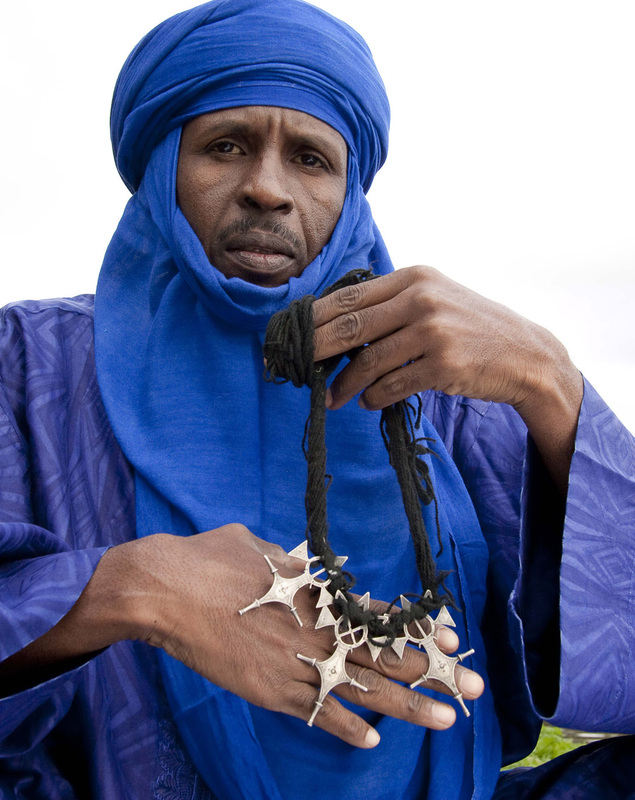
Further north, the Tuareg of the Sahara built their system around silver rather than gold or coral. The Tuareg are known for their silver jewelry featuring bold geometric patterns, believed to provide protection against misfortune. Amulets are carefully crafted to combine beauty with spiritual safeguarding, with symmetrical patterns thought to confuse evil spirits. Silver was chosen deliberately: in Tuareg tradition, it carries associations of purity that gold does not. The material itself carries the meaning before the object is even made.
These systems did not disappear. They adapted.
The logic that governed how a Yoruba Oba wore coral to constitute his authority over a kingdom is the same logic that governs how a Nigerian woman layers beads at a traditional wedding today. She is situating herself within a lineage of meaning, communicating her status, her family's standing, her cultural belonging, to everyone in the room who can read it. The weight, quality, and arrangement of coral beads communicate social status, personal wealth, and cultural belonging in ways that transcend mere decoration. The grammar is ancient. The sentence is contemporary.
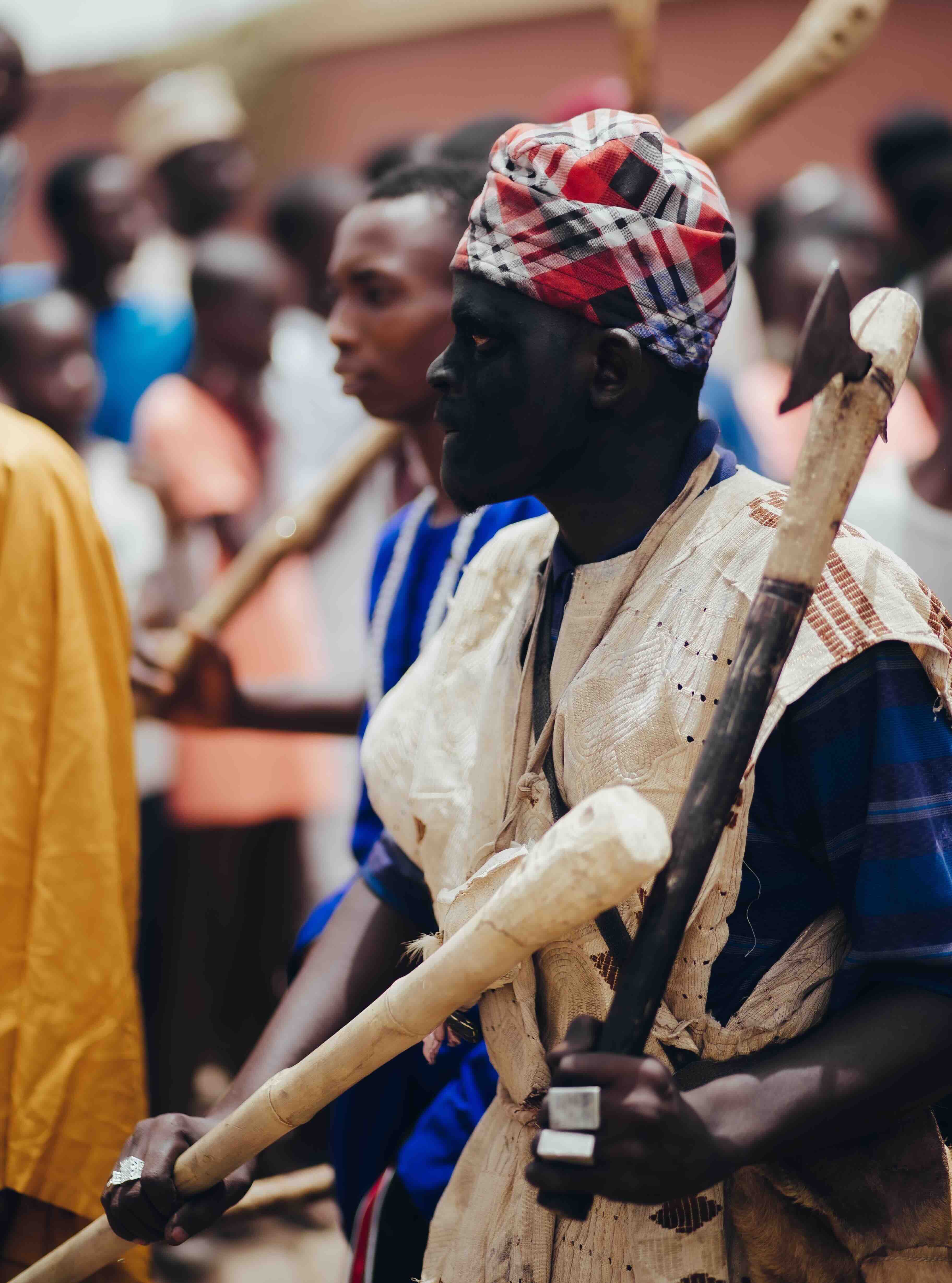
The same is true of the Akan chief photographed at a durbar in Kumasi today, his gold rings stacked on multiple fingers, his regalia as carefully assembled as any document of state, because it is a document of state. The tradition has not been preserved as a museum piece. It is alive and operational.
What changes across the centuries is the context, not the underlying logic. African cultures understood, long before fashion became an industry, that the body is a primary surface for meaning-making. That what you choose to put on your body, and where on the body you put it, and what material you use, is one of the most direct forms of communication available. The accessory was never appended to an otherwise neutral body. It was the statement. The body was the medium.
Contemporary African designers working with these traditions are not nostalgists. They are practitioners of a design intelligence that has been operating with sophistication and intentionality for centuries. When a Lagos jeweller works with coral forms that reference Benin royal regalia, they are working within a system that has its own grammar, its own history, its own precise understanding of what these materials mean and why they matter.
The world is currently fascinated by African accessories in a way that sometimes mistakes the surface for the substance. The forms are striking: the stacked gold of the Akan chief, the layered collars of the Maasai elder, the coral regalia of the Benin Oba. But the form is the least of it. What makes these traditions extraordinary is the depth of the system behind the form. The thought that went into what each material means. The precision with which colour and pattern were assigned meaning. The understanding that the body is always communicating, and that this communication can be made deliberate, legible, and profound.
Africa did not wait for anyone to teach it that accessories matter. It built entire civilisations on the knowledge that they do.