Stay In This World
The stories, the culture, the conversations. Every week.
No spam. No third parties. Just Unruly.
A people can be stripped of their language long before they notice what has been taken.
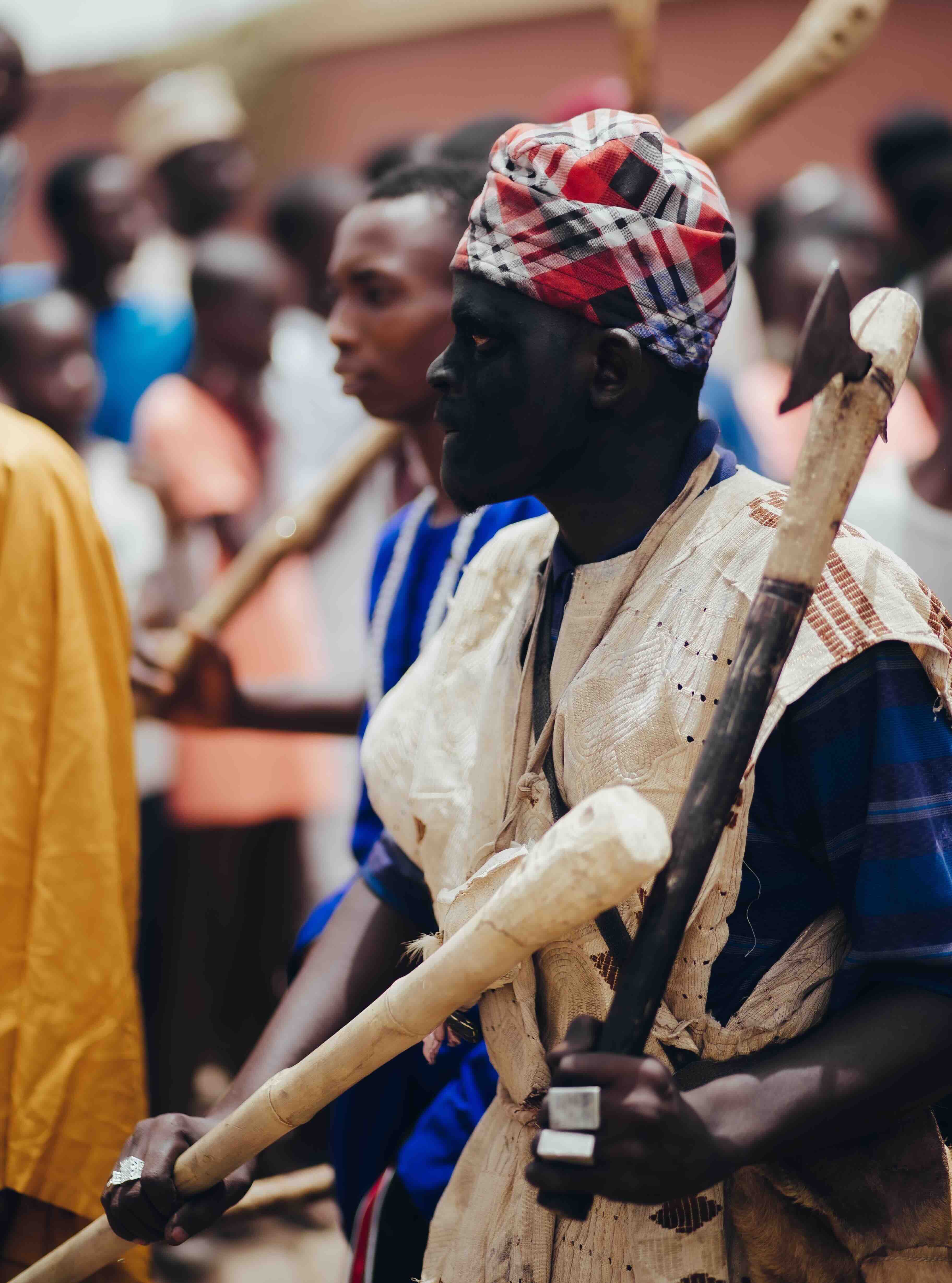
In June 1962, during the Conference of African Writers of English Expression, a landmark gathering of African writers and critics held at Makerere University in Kampala, Uganda, witnessed the debate that revolved around the effects of colonialism and its influence on the choice of language in African writing.
Many of Africa’s finest literary minds sat in a room discussing the progression of art and culture across the continent, posing questions and answering them as contemporaries who held deep respect for one another. Their conversation carried insight until it reached a bridge they all seemed unwilling to cross together. The bridge presented itself in a question: What language do you write in?
Of these writers, Chinua Achebe, who had published Things Fall Apart in 1958—widely regarded as one of the first African novels to achieve major international recognition—committed himself to writing in English. The novel revealed the experiences and struggles of the Ị̀gbò people during the colonial era. Achebe believed that English could be reshaped to carry the weight of African experience and storytelling. In his words, “I was given this language, and I intend to use it, bend and reshape it and make it carry the weight of Ị̀gbò life and storytelling.”
His counterpart and countryman, Wole Soyinka, the Nobel Prize laureate, also leaned towards the use of English. For the entirety of his literary career, Soyinka has written predominantly in English, using the language as his medium of artistic expression.
However, Kenyan novelist and postcolonial theorist Ngũgĩ wa Thiong’o, then still a student writer at Makerere, took a fundamentally different position. Believing that neocolonialism continues to eat deeply into the fabric of African culture and erode the identity of its people, he rejected English as the primary language of his literary work. He also relinquished his baptismal name, James Ngugi, and adopted his traditional **name, Ngũgĩ wa Thiong’o. He subsequently chose to write and publish in his native language, Gikuyu.
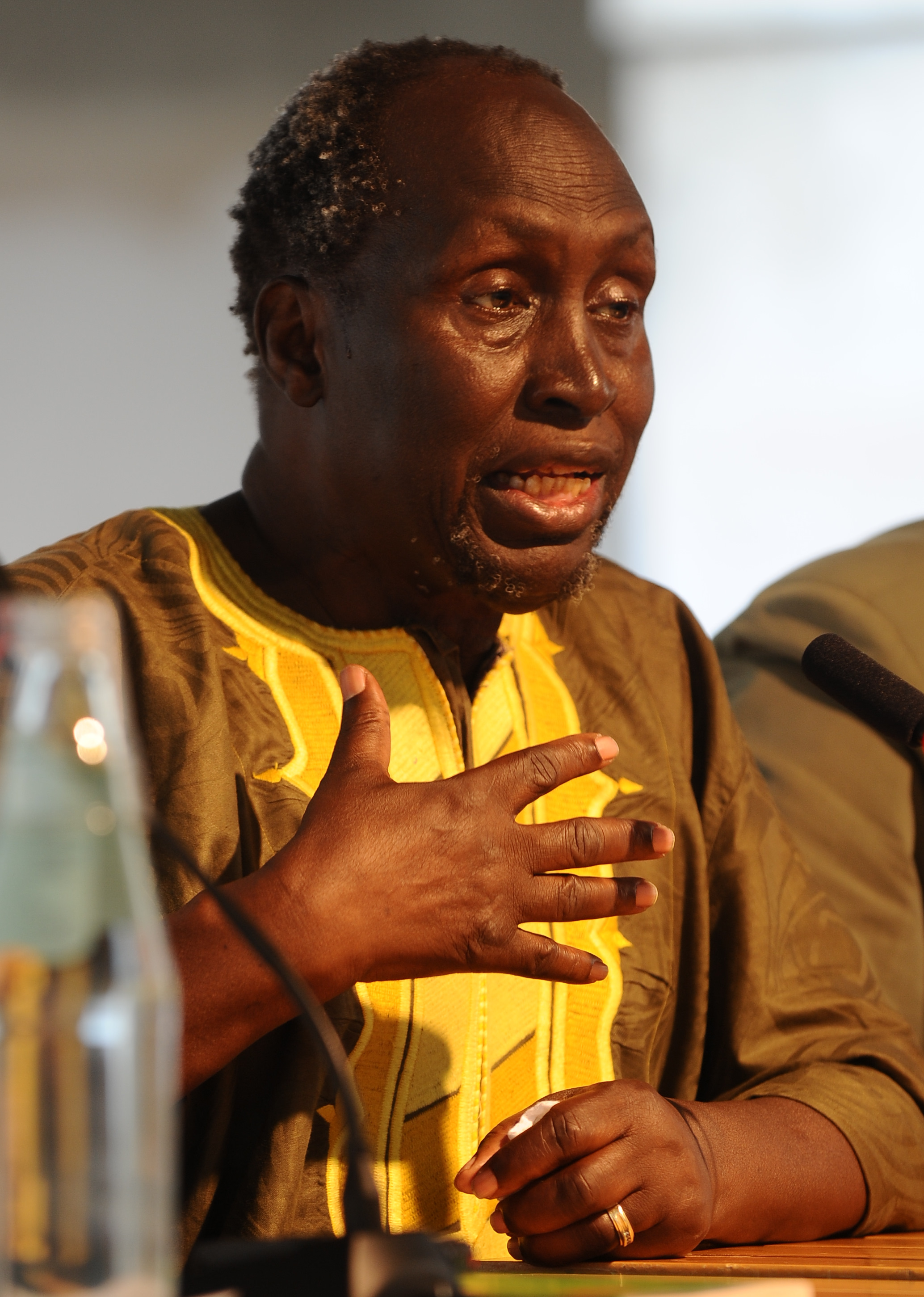
“If you know all the languages of the world but you do not know your mother tongue or the language of your culture, that is enslavement, but if you know the language of your culture and add all the other languages of the world—that is empowerment”
Beyond writing and storytelling, the question itself reveals more consequences for reality and culture that extend far beyond a simple choice of linguistic communication.
Language has always been a factor in the process of colonization, and this is true not only in Africa but in other European territories. The colonizer always suppresses the language of the colonized and elevates their own. A closer count would be in Ireland.
Long before the English conquest of Ireland was complete, the English poet Edmund Spenser wrote A View of the Present State of Ireland in 1596. The work takes the form of a conversation between an English lord visiting Ireland and an English settler, with their discussion centred on the perceived futility of English attempts to conquer and subdue the Irish.
Their conversation eventually arrives at two proposed solutions: first, the destruction of the Irish naming system, i.e., the ways in which the Irish named themselves, and second, the suppression of their language. The purpose of both was to produce what might be described as an effective forgetfulness of identity: to sever a people from the names and language through which they understood themselves.
Versions of this same practice were later imposed upon enslaved Africans, to the extent that African languages were prohibited on some plantations, with reports of violent punishment for those who violated such rules. The suppression of language was therefore not merely an attempt to regulate communication. It was a means of weakening the connection between people, their history, and the identities they carried with them.
Growing up in western Nigeria, it was taboo to speak any native dialect, particularly within institutions of learning. Primary and secondary schools heavily frowned upon and punished the use of local languages. The local language was dismissed as vernacular, and using it was punished with a fine or public reproval of the individuals who couldn’t use the “standard” language or speak with a fine accent.
While some saw this as a measure intended to encourage proficiency in English and promote its use, it also contributed to the further degradation of local languages. Indigenous languages taught as subjects were often regarded as inferior or of lower priority, partly because of the country's linguistic diversity, but also because of a system that, intentionally or otherwise, diminished their relevance.
This stands in stark contrast to parts of the world where indigenous languages are held with greater reverence and continue to serve as strong pillars of cultural identity. There, language is not merely treated as a subject to be learned, but as an essential part of the history, memory, and culture of the people who speak it.
Language represents more than a means of communication; it is our bridge to connectedness. It carries the weight that can only be translated with affection. Even religious individuals report more connectedness to their faith when it is done in their native language—a small example of how language represents more than just identity and culture.
Language is how we filter our perception of the world around us, interpreting the details of the things we experience. It isn’t just our literal identity; it is the identity that allows us to relate and create the world through our own instincts.
Highlighting religion, many Africans no longer relate to their ancestry; our names no longer reflect our origins or even ancestral culture. This is no affront to any religious practice but a true observation regarding how we have relegated even the honest and true aspects of our origins for an identity that isn’t inherently ours.
With a rapidly increasing number of young people losing the ability to even speak their indigenous language, so much of our essence is lost, and more damaging is that any conscious effort to reconnect with our ancestry is frowned upon both religiously and culturally. Forcing us to then share an identity that could never fully accept us.
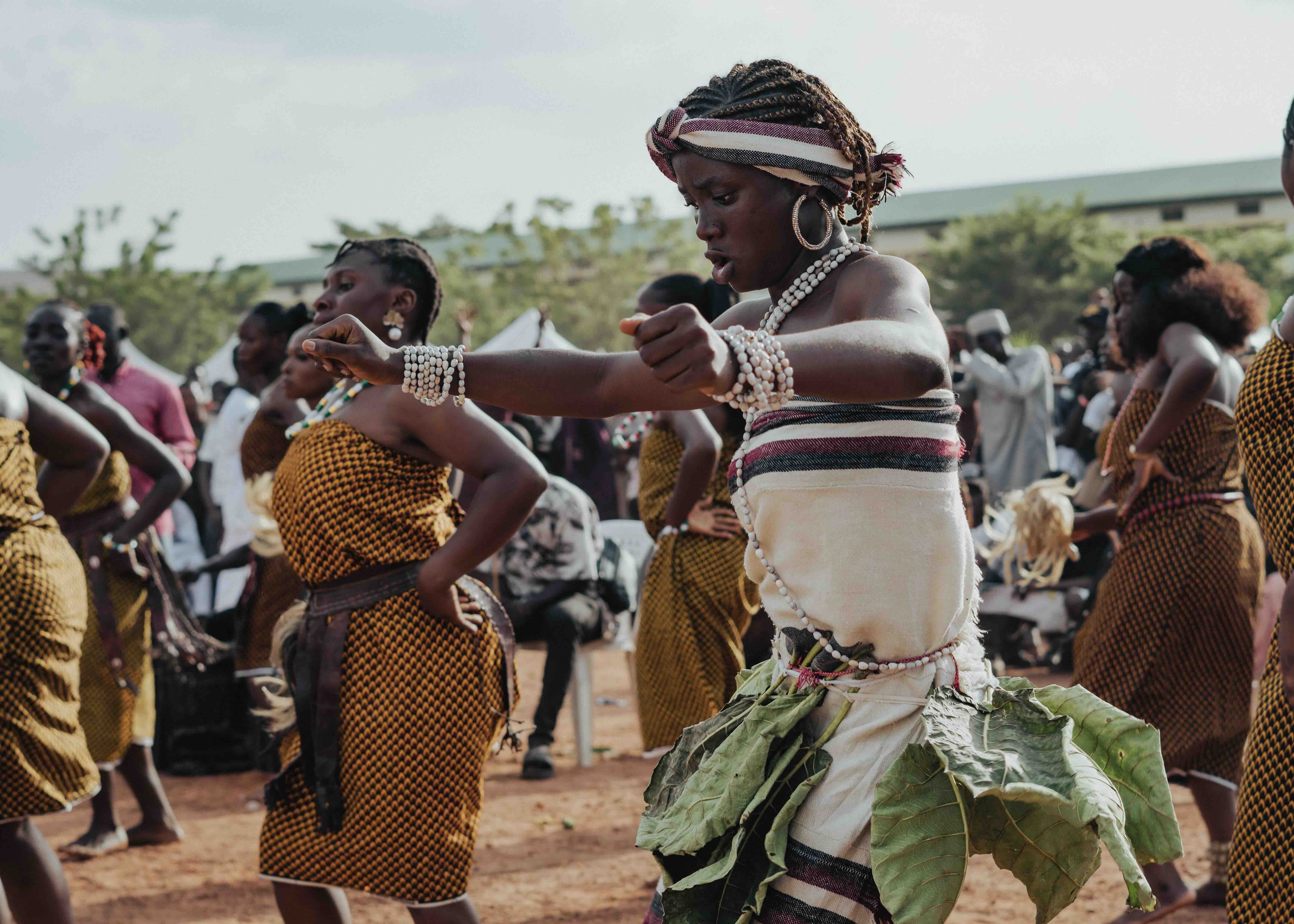
Passing refers to the practice of light-skinned Black individuals presenting themselves as white in order to escape racism and gain access to social or economic privilege. This could involve changing the way they spoke, walked, dressed, associated with others, or presented themselves in order to gain acceptance within the dominant social structure. The practice is explored in Nella Larsen’s novel Passing, which examines the complexities of racial identity, belonging, and the consequences of concealing one's origins in a society structured by racial hierarchy.
Although we no longer live under the immediate threat of slavery, we remain deeply affected by its legacies and by the forces of neocolonialism. In this sense, many Africans are, in their own way, passing. The danger we now face is one we have, in part, inherited and perpetuated ourselves: a growing mystery in which our origins are gradually erased, leaving future generations with little knowledge of or relationship to—the histories and cultures from which they emerged.
The most unsettling part is that this form of passing no longer necessarily requires someone to consciously pretend to be someone else. It can happen quietly, through the gradual abandonment of the things that once connected us to who we were.
We change the pronunciation of our indigenous names to fit a modern standard. Indigenous writers, when describing local foods such as akara, may refer to them as “bean cakes” or describe pap as “steamed corn pudding.” On the surface, these may seem like harmless attempts at explanation, but they can also reveal something deeper: a tendency to translate our culture into terms that make it more legible, acceptable, or familiar to an outside audience, as though its original form requires justification.
The same pattern appears in the knowledge we value. Some younger Africans can recount more European mythology than the mythology of their own people, recognise foreign cultural references more readily than their own, and associate these references with sophistication.
Meanwhile, Indigenous knowledge is often treated as primitive, superstitious, or irrelevant until it receives validation through Western institutions. We have learned, in many cases, to regard something as valuable only after someone else has told us that it is.
The problem was never that Africans learned another language. The problem is that we were taught to believe that our own was insufficient.
The colonial language can be a tool without becoming the measure of intelligence; Yoruba, Igbo, Hausa, Gikuyu, Wolof, Amharic, and all other African languages can be preserved without pretending Africa exists outside a multilingual modern world.
We do not have to choose between knowing the world and knowing ourselves. We can speak English and still think in Yoruba or read Shakespeare without abandoning Soyinka. We can study European history without becoming strangers to our own, and can participate in the modern world without believing that modernity requires us to leave ourselves behind.
Perhaps this is the question that the writers at Makerere were really approaching, even if they could not arrive at the same answer: what happens to a people when the language through which they are taught to understand the world is also the language through which they are taught to understand themselves?
There is nothing inherently wrong with borrowing. Cultures have always exchanged ideas, words, food, art and stories. Africa itself has never been a closed civilisation, nor should it become one. But there is a difference between cultural exchange and cultural replacement. There is a difference between choosing to speak another language and becoming ashamed of the one your grandparents speak. There is a difference between changing a name because you prefer another and changing it because your own sounds less acceptable.
Perhaps reclamation begins in these seemingly insignificant places. In saying the name correctly. In learning the language, we were once discouraged from speaking. In calling akara akara without feeling compelled to explain it as something else. In asking our grandparents questions while they are still able to answer them. In reading our histories not because they are ancient relics, but because they are part of the inheritance that made us.
The danger of passing is not simply that we become someone else. It is that, after enough generations, we may forget that we were ever pretending.
And perhaps this is why the question of language still matters. A language is not merely a collection of words; it is one of the places where memory survives. It contains the names we gave to things before anyone told us what they should be called. It carries metaphors that cannot always be translated without losing something in the process. It preserves the humour, fears, wisdom, contradictions, and imagination of people who existed before us. When a language disappears, we do not merely lose a method of communication. We lose one of the ways in which we, as Africans, can remember ourselves.
We should therefore not mistake reclamation for a return to some untouched African past. There is no such past to return to. We are already products of many encounters—African, European, Arab, Christian, Muslim, indigenous, modern, foreign. The task is not to separate these influences until some supposedly pure identity emerges. It is to become conscious enough of our inheritance to decide what we keep, what we change, and what we refuse.
Achebe chose to bend the colonial language until it could carry the weight of Igbo experience. Ngũgĩ chose to return to Gikuyu as an act of resistance. Their answers were different, but perhaps the question beneath both was the same: who has the right to determine the language, stories and symbols through which we understand ourselves?
The answer cannot continue to be someone else.
We can learn every language the world offers us. We can travel beyond the continent, study its histories, borrow its ideas, participate in its institutions, and contribute to its future. But there should never again be a price of admission that requires us to become strangers to ourselves.
Because perhaps the greatest form of decolonisation is not forgetting the language we were given. It is remembering that we were never without a language of our own.