Stay In This World
The stories, the culture, the conversations. Every week.
No spam. No third parties. Just Unruly.
African music has never been more global. So why are African fans watching from the outside?
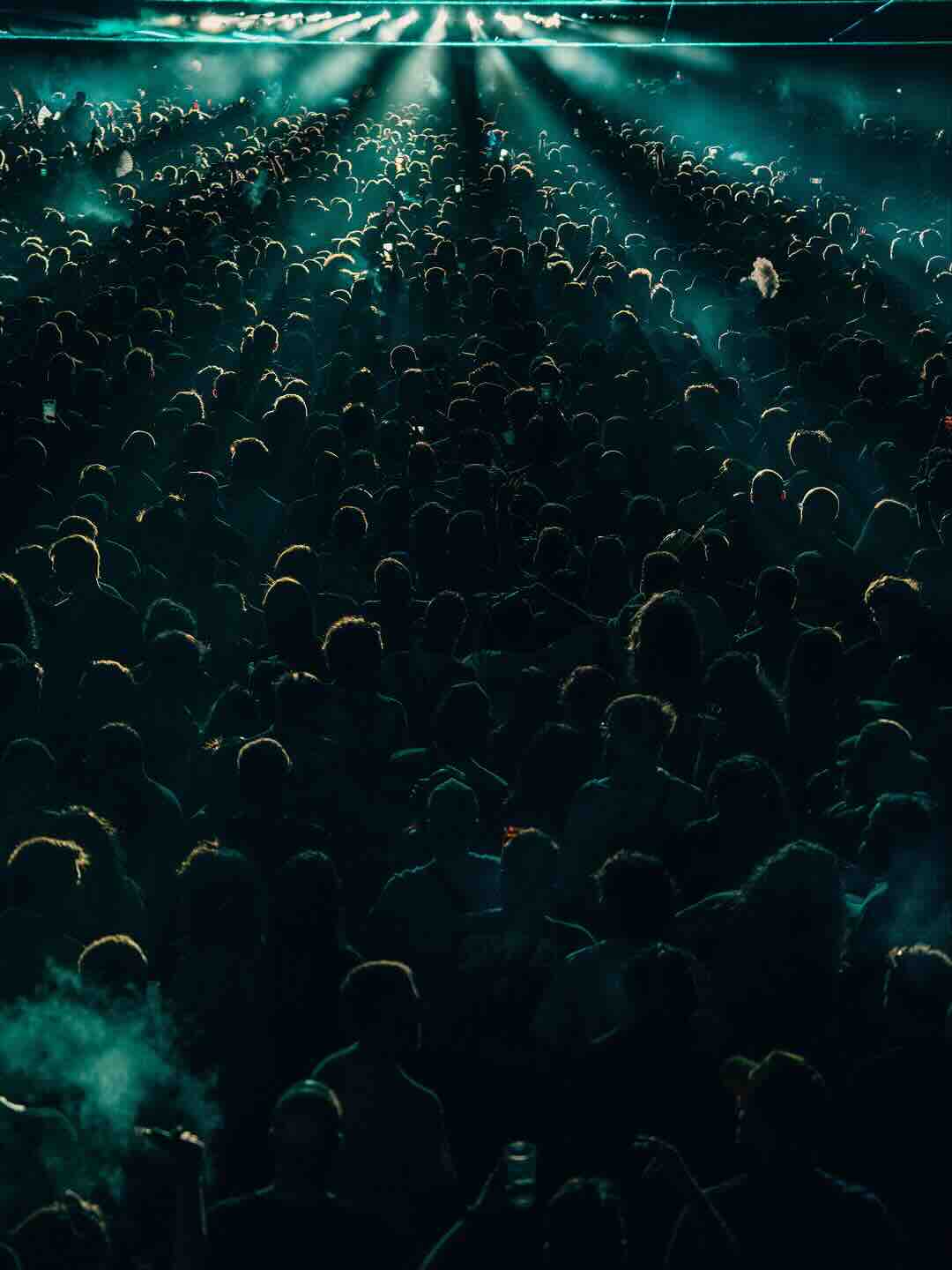
There's nothing quite like the festival season in the European summer. Under the blazing skies, at Praia da Rocha in Portimão, Portugal – for the 6th edition of Afro Nation – and Tyla’s hit Grammy Award winning single, “Push 2 Start” is blasting loudly. She shows up on stage with that ‘fro and neon body paint that glows in the dark. The night's only just begun. The SA star takes it there and over the next few days, so do Afrobeats heavyweights like Wizkid and Burna Boy who command the stage, with an energy that almost felt entirely spiritual. Pan across the crowd and there’s also tens of thousands of Nigerian, Ghanaian, South African and Kenyan flags waved in unison – all feeling the groove of the music when the heavy, syncopated log drummed of a peak Amapiano track rattled through the massive, state-of-the-art sound system.
For three days, Afro Nation feels like the ultimate victory lap for continental music, a glittering proof of how sounds born on the continent have come to dominate dance floors, festival stages and streaming charts around the world. It's also become one of the biggest annual meeting points for the African diaspora, drawing fans from London, Toronto, Atlanta, Paris and beyond.
Yet for many of the people who helped build this music into a global phenomenon, the moment remains one they'll only ever experience through Instagram Stories, TikToks and livestreams. It's an uncomfortable contradiction. African music has never been more global, yet participating in its biggest cultural moments increasingly depends on possessing something many fans living on the continent do not: a strong passport, a stronger currency and the financial freedom to spend hundreds – if not thousands of – dollars on a long weekend abroad.
The question, then, isn't whether Afro Nation should be hosted anywhere else but the continent. The festival has become an undeniable success story, introducing African music to new audiences while creating one of its most recognizable global stages. The more pressing question is what that success reveals about access. What happens when the biggest celebration of African music becomes easier to attend from London than Lagos, or from Toronto than Nairobi?
Consider Nigeria, the literal birthplace of some of this years headliners who give Afro Nation its commercial value. Following severe currency devaluations and relentless inflation, the country’s national minimum wage stands at ₦70,000 per month – roughly $45 USD. An entry-level ticket to the festival represents nearly nine months of labor for an ordinary Nigerian. Even for the emerging middle class in Nairobi, where a formal sector worker might average 75,000 KES (~$580 USD) at most a month, a single festival pass swallows almost an entire month’s income.
To understand that contradiction, it's worth looking beyond Afro Nation's promotional videos and into the economics of attending. A standard three-day general admission ticket for Afro Nation Portugal typically costs between €300 and €450, with VIP packages climbing well beyond €600. For festival goers earning and spending in pounds, euros or dollars, those prices are broadly in line with other major European summer festivals. But for many fans living on the continent, the ticket is only the beginning.
For Cydneii Lung'aho, a Kenyan living in the UK, attending Afro Nation had been years in the making. "As an Afrobeats lover and diaspora baby, it's been on my list since its foundation," she says. "My friends and I are big on traveling and we'd discussed Afro Nation before. This time we planned early enough to set money aside and go." Lung'aho and five friends treated the trip as both a graduation gift and a long-awaited bucket-list experience. Planning ahead, splitting accommodation costs and paying for festival tickets in instalments made the trip manageable. Even so, the group estimates spending roughly £1,400–£1,500 on flights, accommodation, transport and food over four days, excluding festival tickets. They also scrapped another planned holiday to Paris to make the numbers work.
"We started out paying the tickets in installments, which lightened the burden," she says. Her experience also illustrates how costs can vary dramatically depending on planning. While she found the approximately £360 general admission ticket worthwhile, she was struck by official accommodation packages priced between £1,000 and £1,400 per person for less than a week's stay. "My five friends and I spent around that for our entire weekend – flights, accommodation, food, the rental car and fuel included," she says.
A return flight to Portugal during peak summer, accommodation in the Algarve, local transport, meals, travel insurance and the mandatory Schengen visa application can easily push the cost of attending Afro Nation into the thousands of dollars. For someone traveling from Lagos or Nairobi, the total often exceeds what many young professionals earn over several months.
But even for those who can afford the trip, the barriers don't end there. For many African passport holders, mobility has become a second hurdle altogether. Unlike attendees traveling from the UK or much of Europe, they must navigate lengthy Schengen visa application processes, pay non-refundable application fees, secure appointments months in advance, and provide extensive financial documentation – all without any guarantee that their application will be approved. In other words, the ability to pay for Afro Nation does not necessarily mean the ability to attend it.
Lung'aho, who now lives in the UK, says that reality wasn't lost on her during the festival. "I got the sense that there was a large number of people from the continent, alongside a likely majority of people from the diaspora," she says. "I know the very real cost of getting a Schengen visa from Africa."
Her observation shifts the conversation beyond affordability. Fans from across the continent are making the journey, but doing so increasingly depends not only on income, but also on passport privilege, international mobility and circumstances that many simply do not have. The contradiction, then, is not one of absolute exclusion. It is one of unequal access.
An obvious counterargument is why not just host the festival in Africa? The organizers of Afro Nation have tried. In December 2019, the brand launched Afro Nation Ghana in Accra, capitalizing on the historic "Year of Return" initiative that drew hundreds of thousands of African Americans and Black Britons back to the continent. The event returned to Accra in 2022. Yet, these African iterations have historically functioned not as accessible local festivals, but as seasonal extensions of the diaspora economy. Held exclusively during late December – the infamous "Detty December" period – ticket pricing and marketing remained heavily geared toward visiting tourists spending foreign currency, leaving local Ghanaians largely on the outside looking in.
The systemic limits of this model were laid bare in late 2023, when organizers abruptly canceled the highly anticipated Afro Nation Nigeria in Lagos just weeks before its scheduled date. Lagos is the undisputed capital of Afrobeats, the geographic heartbeat of the entire movement. The official statement cited an inability to deliver an event of the ‘quality that Nigeria deserves.’ Afro Nation did not respond to requests for comment by the time of publication.
Behind that diplomatic phrasing, however, is the acute shortage of live-entertainment infrastructure on the continent. Staging a mega-festival requires massive, highly specialized resources – uninterrupted power grids, premium sound and staging equipment that often must be imported at immense cost, robust crowd-control systems, complex local security logistics, and a highly predictable regulatory environment. In many continental hubs, these elements are either absent or prohibitively expensive to string together independently. When promoters are forced to build an entire festival ecosystem from scratch without state-backed institutional support, the financial risk becomes significant.
Consequently, staging the festival in Portugal – or in cities such as Detroit, where infrastructure already exists, sponsorships are secured in hard currency and tourism ecosystems are well established – becomes a safer and more predictable proposition for promoters.
This structural displacement directly influences where the economic rewards of the Afrobeats boom land. When a festival takes place in Europe, the primary financial windfalls – outside of the performance fees paid to the A-list headliners – largely remain within the Western economy. It is the European airlines, Portuguese hotel owners, local transport systems, and Western beverage sponsors who reap the rewards of the tourism surge.
If the definitive showcase of African music operates primarily as a mechanism to boost Western hospitality sectors, it raises questions about how much of that economic activity flows back into local creative ecosystems. While the upper tier of African talent grows incredibly wealthy, the mid-tier artists, local stage technicians, continental vendors and grassroots promoters are cut out of the global value chain.
Alternative models already exist across the continent. Institutions like Uganda’s Nyege Nyege Festival or Nigeria’s annual Felabration offer blueprints for continent-first cultural spaces. Nyege Nyege, held on the banks of the River Nile, has become one of the continent's most influential homes for underground electronic, traditional and alternative African sounds. Rather than chasing the sterile high production of Western pop festivals, it prioritizes radical inclusivity, local vendor integration, and ticket pricing that remains accessible to ordinary East Africans. Similarly, Felabration – a week-long explosion of music in Lagos honoring the legacy of Fela Kuti – serves as a democratic, spiritually charged home for the masses, where the street and the star share the same air.
These homegrown festivals prove that a festival does not need to mimic the luxury blueprints of Glastonbury or Coachella to possess immense cultural power. They show that when an event is built for the local community first, it creates a sustainable, self-reinforcing ecosystem where the economic and social value remains exactly where the music was born.
Afro Nation has achieved something remarkable. It has helped demonstrate that African music belongs on the world's biggest stages and deserves the same scale, investment and spectacle afforded to any global genre.
But its success also exposes a difficult truth. African music has travelled the world faster than many of the people who nurtured it at home. If the industry's biggest celebrations continue to depend on stronger passports, stronger currencies and easier borders, then the benefits of African music's global rise will remain unevenly experienced. The question is no longer whether African music belongs on the world stage. It is whether the people who helped make it a global force can realistically share in its biggest moments.