Stay In This World
The stories, the culture, the conversations. Every week.
No spam. No third parties. Just Unruly.
African creative minds didn't abandon modernism. They corrected it.
In 1908, the Austrian architect Adolf Loos published an essay called "Ornament and Crime." His argument was direct: decoration was primitive. The civilised man, Loos wrote, was one who had evolved beyond the need to cover surfaces with pattern and symbol. The tattoo, the carving, the elaborately ornamented object: these were signs of arrested development, evidence of a mind that had not yet arrived at the clarity of the modern. Clean lines, pure form, function over flourish. That was the future.
Loos did not need to name Africa specifically. The implication was clear enough. A continent whose artistic traditions were built on pattern, texture, symbolism, and the deep integration of decoration into everyday objects and spaces was, by his logic, not yet modern. Not yet civilised. Not yet arrived.
What is now called Afro Modernist Chic is the answer to that argument, stated not through a counter-essay but through the accumulated body of work of architects, artists, designers, musicians, and filmmakers who refused the choice Loos presented. You do not have to shed cultural specificity to make something contemporary. You do not have to abandon texture and rootedness to achieve restraint. The two things Loos declared incompatible, modernism's discipline and African aesthetic intelligence, have been held together by a generation of creatives who understood that the incompatibility was never real. It was a political claim dressed as an aesthetic one.
Afromodernism was not simply an architectural style but an ideological shift. It asked a deceptively simple question: why should modernity look European?
Afro Modernist Chic is the contemporary expression of that question across every creative discipline. It is not maximalism, not Afrofuturism's science fiction register, not the exuberant decoration that western audiences sometimes expect from African-influenced work. It is something more precise and more interesting: the use of modernism's own vocabulary, its emphasis on structure, restraint, and intentionality, to carry African cultural memory. The result is work that feels simultaneously disciplined and warm, minimal and textured, contemporary and deeply rooted.
Spaces shaped by Afromodernist thinking rarely feel pristine or overly controlled. They feel warm, tactile, and alive. Natural light hits textured walls. Furniture combines sculptural shapes with materials that age and deepen over time. Colour palettes often draw from landscapes and natural pigments: rust, ochre, deep browns, olive greens, indigo. Modern design becomes a framework rather than a restriction.
The same logic extends beyond architecture into every discipline where the aesthetic has taken hold.
Barkley Hendricks did not set out to found a movement. He set out to correct an absence.
Touring Europe as a young painter in the mid-1960s, Hendricks fell in love with the portrait style of Van Dyck and Velázquez. In his visits to the museums and churches of Britain, Italy, Spain, and the Netherlands, he found his own race was absent from Western art, leaving a void that troubled him. His response was not to reject the European tradition but to occupy it on his own terms. Beginning in the 1960s and 1970s, Hendricks revolutionised portraiture through realist and post-modern oil paintings of Black Americans living in urban areas. His depictions of the Black figure exude attitude and style.
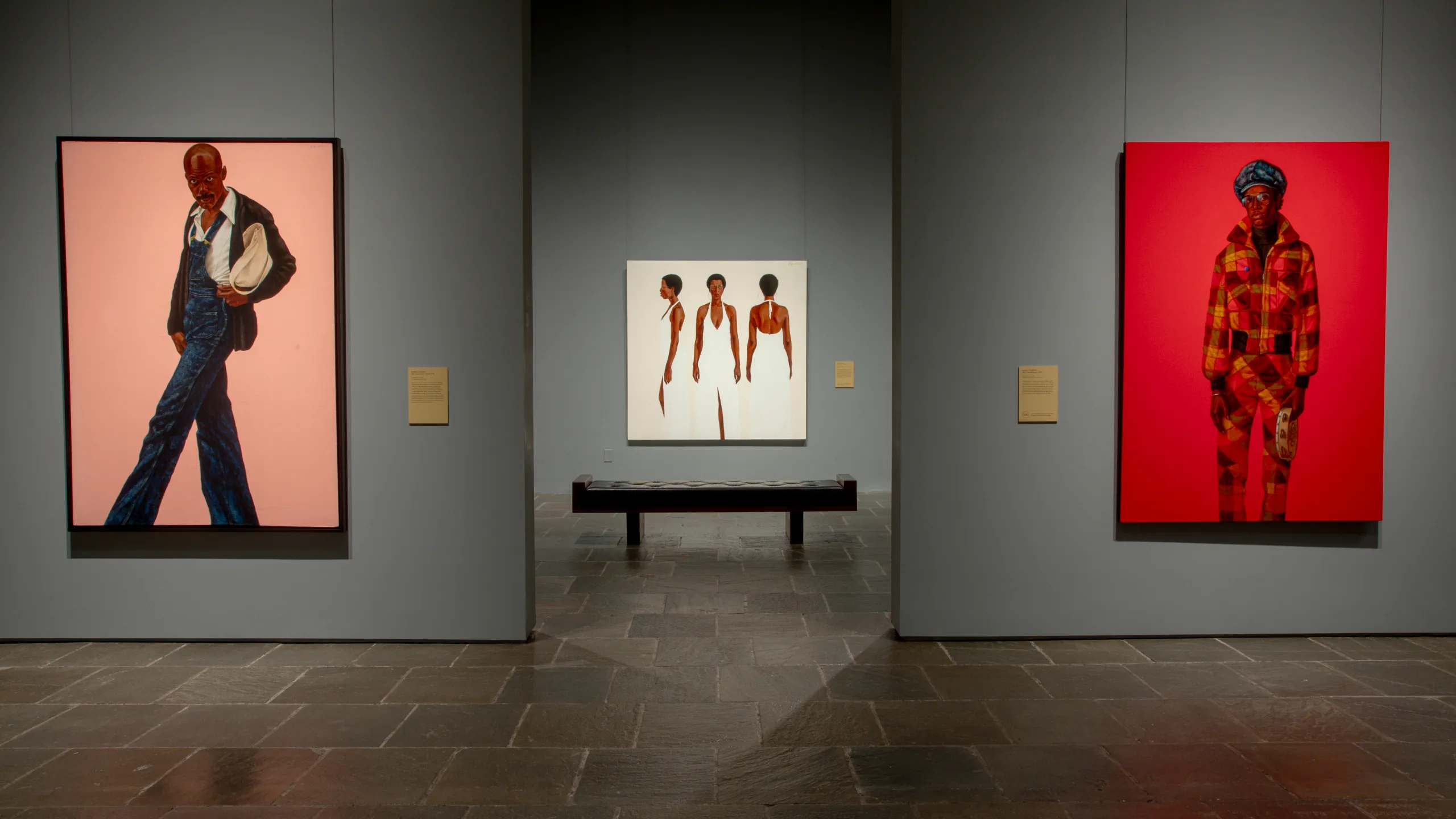
What makes Hendricks a foundational figure for the Afro Modernist sensibility is precisely this move: taking the most established form in the western canon, the grand portrait, and filling it with Black presence rendered without apology or exoticism. One of his most famous paintings, Lawdy Mama (1969), features a Black woman with a halo-like gold background, referencing both Byzantine iconography and the everyday beauty of Black women. The painting is formally rigorous. It is also unmistakably rooted in a specific cultural identity. The two things do not compete. They complete each other.
Hendricks proved that the European framework could be inhabited and transformed rather than accepted or rejected wholesale. Artists working today, from Njideka Akunyili Crosby's layered domestic interiors to Toyin Ojih Odutola's invented Nigerian histories drawn with obsessive precision, are working in the space he helped open.
Architecture is where Afromodernism first articulated itself as a conscious project. Between 1957 and the mid-1960s, as African nations gained their independence, architects across the continent were building the infrastructure of new nations. Modernism offered a language of progress and innovation, but copying it wholesale made little sense in vastly different climates, cultures, and material landscapes. The question was not whether to engage with modernism but how to do so without losing what the continent already knew about how to build.
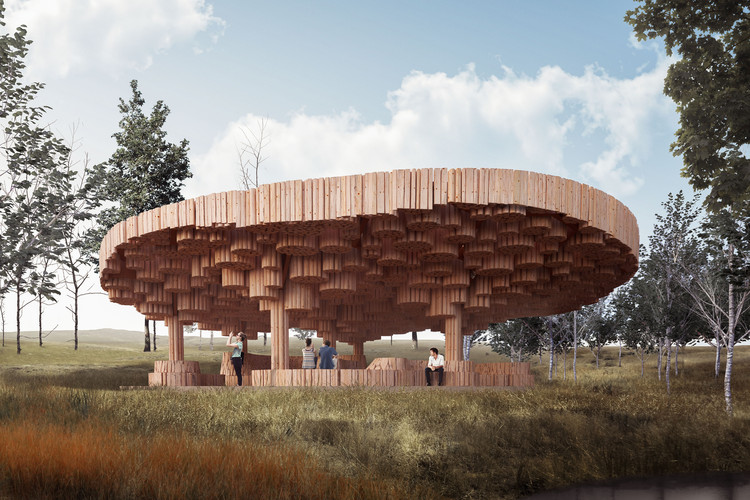
Diébédo Francis Kéré, who grew up in a small town in Burkina Faso and later won the Pritzker Architecture Prize, the highest honour in the field, has spent his career demonstrating that traditional building methods and local materials are not obstacles to contemporary design. They are the design. His Serpentine Pavilion, his schools in Burkina Faso, his public buildings across the continent and beyond: all of them take the logic of vernacular African architecture, its relationship to heat, to community, to the land, and translate it into a contemporary spatial language that is rigorous, minimal, and impossible to locate in any other cultural tradition.
David Adjaye's architectural works, including the Smithsonian National Museum of African American History and Culture in Washington D.C., draw inspiration from traditional African motifs and materials, celebrating African heritage in a contemporary context. The building's bronze latticework references the metalwork traditions of the African diaspora. It is one of the most formally distinctive buildings in America, and its distinctiveness comes directly from its cultural specificity.
Fashion is perhaps where the Afro Modernist sensibility is most visible in daily life, precisely because it is the discipline most immediately available to everyone.
The designers working in this mode share a common refusal: they will not simplify their references for an external audience. Wales Bonner builds collections from specific archives of Black Atlantic history, from the Harlem Renaissance to Caribbean intellectual culture, rendered in tailoring of exquisite precision. Labrum London's Foday Dumbuya works directly from Sierra Leonean lineage, presenting the reference as primary material rather than background inspiration. Thebe Magugu, whose win of the LVMH Prize in 2019 announced South African fashion to the global industry, makes work that is explicitly engaged with South African history and politics. The restraint of the silhouettes makes the cultural weight of the references land harder, not softer.
What these designers share with Hendricks, with Kéré, with Adjaye, is the understanding that cultural specificity is not decoration applied to an otherwise neutral form. It is the structural logic of the work itself. Remove the African reference and there is no garment, no building, no painting. The root is not embellishment. It is foundation.
Solange Knowles occupies a category of her own because her work refuses to stay inside any single discipline. Her work has long operated at the intersection of music, art, and architecture. What makes her aesthetic particularly interesting is how spatial it feels. Her projects are rarely just albums or videos. They create entire environments.
A Seat at the Table (2016) and When I Get Home (2019) are not albums in the conventional sense. They are constructed spaces: specific in their visual language, architectural in their approach to sound, deeply rooted in Black southern American and African diasporic experience while formally as disciplined and considered as anything produced in any other medium. Sculptural garments, curved silhouettes, and textured fabrics give the impression of clothing designed almost like small pieces of architecture. Yet the references remain grounded in Black southern culture, African diasporic identity, and experimental fashion.
The world-building impulse Solange embodies is central to the Afro Modernist project. It is not enough to make one beautiful object. The ambition is to construct an entire aesthetic universe with its own internal logic, its own relationship to history and memory, its own visual and sonic vocabulary. Sandra Githinji, the Kenyan creative director and stylist whose work moves between fashion, art direction, and cultural production, operates in the same register: the individual project is always part of a larger constructed world.
Film and visual culture have been slower to accumulate the kind of canonical reference points that art and architecture have, partly because the infrastructure for African cinema has been slower to develop. But the aesthetic is present and growing.
The films that carry the Afro Modernist sensibility are not defined by subject matter alone. They are defined by a specific relationship to form: restrained, precise, trusting the image rather than over-explaining it, allowing cultural specificity to do the work that exposition might otherwise crowd out. Akinola Davies Jr.'s My Father's Shadow, which won at both Cannes and the BAFTAs in the same season, is one such film. It does not explain Lagos. It documents it with the confidence of someone who knows that the specific is universal, that a particular story told with sufficient rigour becomes a story anyone can enter.
What connects these films to the broader Afro Modernist project is the same refusal that connects Hendricks to Kéré to Wales Bonner: the refusal to simplify. The work does not make itself easier to receive. It trusts the audience to arrive.
Loos's argument was never really about aesthetics. It was about who gets to define what is modern and what is primitive, who belongs in the future and who is stuck in the past. The answer Afro Modernist Chic gives to that argument is not a rebuttal delivered in the language of the original claim. It is something more complete: a body of work that makes the original question look provincial.
The things Loos called primitive: texture, pattern, the integration of cultural memory into form, the insistence that an object or space carry meaning beyond its function: these turn out to be exactly what the most compelling contemporary work is doing. Not despite its African roots. Because of them.
There is something quietly compelling about Afromodernism. Not because it is loud or decorative, but because it refuses a choice that modern design has long insisted upon. You do not have to choose between being rooted and being rigorous. You do not have to choose between cultural specificity and contemporary relevance. The work of the architects, artists, designers, musicians, and filmmakers working in this tradition has demonstrated, across disciplines and across decades, that the choice was never real.
What they have built instead is a modernism that actually looks like the world.