Stay In This World
The stories, the culture, the conversations. Every week.
No spam. No third parties. Just Unruly.
Ebuka Nwobu on Phlenjo's bet against the headliner cycle, and the unglamorous work of scaling a rave past 4,000 people.
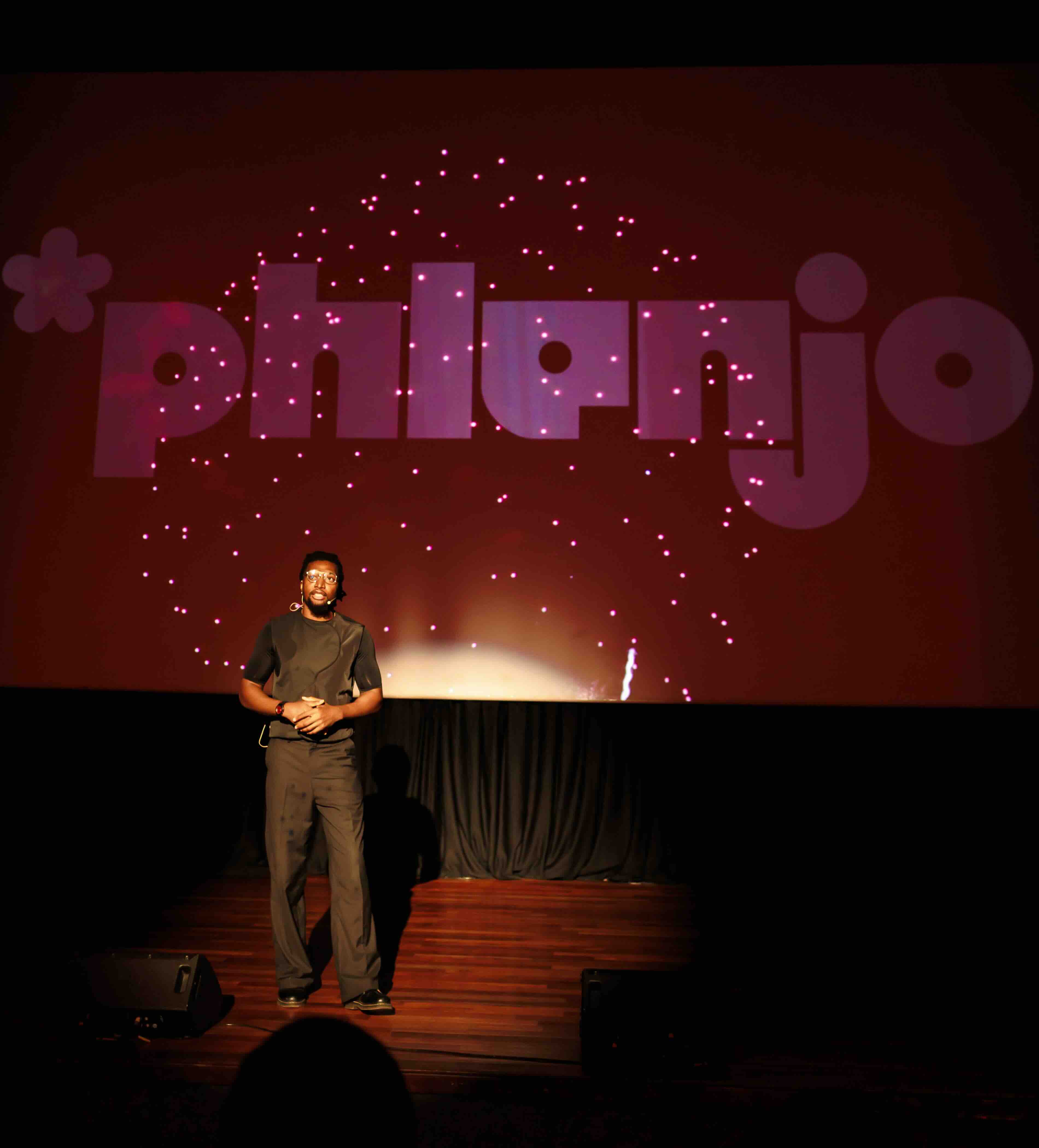
Ebuka Nwobu is betting that nobody needs to know who's playing. That's a strange thing to build a business on, in an industry where the lineup is usually the entire pitch. But Ebuka has watched Lagos nightlife move through the same cycle more than once. Back in an earlier era of parties and raves, an artist headliner was what gave an event its weight. Then DJs took that role, and for a while, the experience itself, not any one name, was what people were actually buying a ticket to. Now, by his read, the cycle has turned again. "We've now come back to a place where headline DJs are what are now selling the tickets," he says, and increasingly, those names are international rather than local. "We've replaced our Nigerian artists with international DJs."
He's careful not to frame this as a complaint. "I don't have anything against putting the big DJs on the lineup," he says. His resistance is structural, not personal. Phlenjo, the events collective he co-founded with his siblings, formerly Vogue Boys, has built its model on the opposite bet: that the experience itself, the production, the curation, the texture of the night, should be strong enough to sell tickets without leaning on a name.
"I want to see a world where, without any big headliner, people just trust your brand and your curation," he says. "They know the music is going to be good. The experience is going to be good. I don't really care who's doing it, I'm there.”
It is, by his own admission, the harder and more expensive path. Booking a major name guarantees a baseline of interest. Building a reputation strong enough to sell tickets on its own does not. "It's risky, especially when everyone else is kind of playing in this other space," he says. "But that's the battle we've chosen to fight.”
Ebuka didn't set out to run an events company. "We didn't intentionally start out to make an event company," he says. "We just did some cool events and people kept wanting more." In the early days, that was enough. A few hundred people, good music, good energy, the kind of night that runs on instinct rather than infrastructure.
That changed once the numbers did. "When you put five hundred people in one place, security becomes a concern," he says. "The logistics of them getting there, of them leaving, all these things become concerns, because you're bringing more and more people into a confined space." The shift wasn't gradual so much as it was a realization. "It's not just vibes anymore. People actually die if you don't pay attention to some things, like, in the case of an emergency, how are people actually going to leave this venue if there's no exit plan.”
What followed was a kind of invisible infrastructure most attendees never notice. Bigger teams. Safety staff walking the grounds. Bouncers spread through the crowd, not just at the entrance. At Phlenjo's December event, which pulled close to 4,000 people, even the restrooms carried thought-through detail, stickers placed at eye level above the urinals, some funny, some pointed reminders for men to be mindful of how they treat the women around them. "These things never make it to the event recap, never make it to the news," Ebuka says. "But the more you aspire to be bigger, the more things you have to take into account.”
That accumulation of unglamorous detail is, in his telling, the real difference between throwing a party and producing one. It's also, increasingly, the standard he's setting for himself as Phlenjo eyes a 5,000-capacity show next. "Our ambition has kind of pushed us to that place," he says. What changes between 4,000 and 5,000 isn't really the math. It's everything underneath the math that has to hold.
When Ebuka started imagining what a Lagos water party could become, he ran into a ceiling fast. "A pool party was too small for my mind," he says. "I was like, okay, how far can I push a pool party?" The answer, in his head, was something closer to a water park festival, not just a pool, but water cannons, water guns, a full production built around the idea of getting drenched on purpose. Once the concept existed, he went looking for proof that it could work at scale. "I cannot be the first person in the world to have this idea," he says. "Where else does this exist?”
That search led him to S2O, the water festival built around Songkran, Thailand's New Year celebration, in which pouring water on strangers is itself the cultural tradition the festival grew out of. He studied it from a distance for years before he finally went this year to see it for himself. "Great artists steal," he says. "But then when we steal it, we see it as Nigerians, and we give it a Nigerian spin, and it becomes something fresh when it touches here.”
What he was actually looking at on the ground had little to do with the spectacle. "You see how they approach the restrooms, for all this amount of people, restrooms are still clean," he says. "You see how they approach health and safety. There's medics in the four corners of the event. How the food courts work, how the water works is approached." It was less a festival experience than a logistics audit, the kind of research that doesn't show up in anyone's highlight reel but shapes everything underneath one.
The equipment Phlenjo had already imported for this year's Easter cookout was modeled on exactly what he'd been studying online for years. By the time it arrived, delayed and finally installed, the team realized the scale of what they'd built had outgrown the venues they were used to working with. "This is actually big," he says. "Too big for it." The S2O trip didn't just validate the ambition. It gave him a clearer, more specific list of what the next version needs to get right
The decision to retire the Vogue Boys name wasn't really a decision at all, by Ebuka's account. It was a reckoning that had been building for years, forced into the open by a moment he didn't choose. "I knew it was a flawed name even at the height of it," he says. The problems were structural from the start, a name that centred boys when half the audience showing up was women, two words where branding logic favoured one. He'd known all of this for a while. What he hadn't done was act on it, because the name was loved, and because there was no real pressure to change something that was working. Then Phlenjo took the brand to Paris, its first event outside Nigeria, and Vogue, the magazine, took the Instagram page down over the name.
"It feels like the whole Vogue episode really just forced us to realize that we couldn't expand internationally on a borrowed name or borrowed identity,"
He doesn't describe the moment as a setback. "It was like God saying, okay, you've done the most you can do with this name if you want to remain in Nigeria as local champions," he says. "But if you really want to take it to where you need to take it to, you need to come up with something that's your own." What he landed on was Phlenjo, a Nigerian street slang for having fun, chosen specifically because it didn't trade Nigerian specificity for easier export. "I don't think those two things are mutually exclusive," he says. "The most exportable things are the most specific things." He points to Asake doing interviews in Yoruba, or Bad Bunny singing in Spanish to audiences who don't understand a word, as proof that the bet on specificity, not dilution, is what actually travels. "People want a feeling. People want something they don't already have." What forced the rebrand, in other words, wasn't ambition outpacing identity. But rather, was ambition finally catching up to a flaw he'd been carrying, comfortably, for years.
Ebuka doesn't see scaling at home and expanding abroad as competing priorities. In his telling, they're the same engine, running in both directions at once.
"Nigerian culture is in an increasingly good place right now. We love our own, we embrace our things, but we also have such a huge diaspora, our things travel well."
His logic runs through specific moments on the calendar, December, when diaspora Nigerians and curious foreigners flood Lagos for the season, and Easter, when Phlenjo runs its cookout. Anyone visiting Nigeria for the first time during either period and walking into one of his events becomes, almost by accident, an ambassador for it once they leave. "When you go back home and you're telling people about your Nigerian experience, this is part of it," he says. "Now these people are taking back our story to their countries."
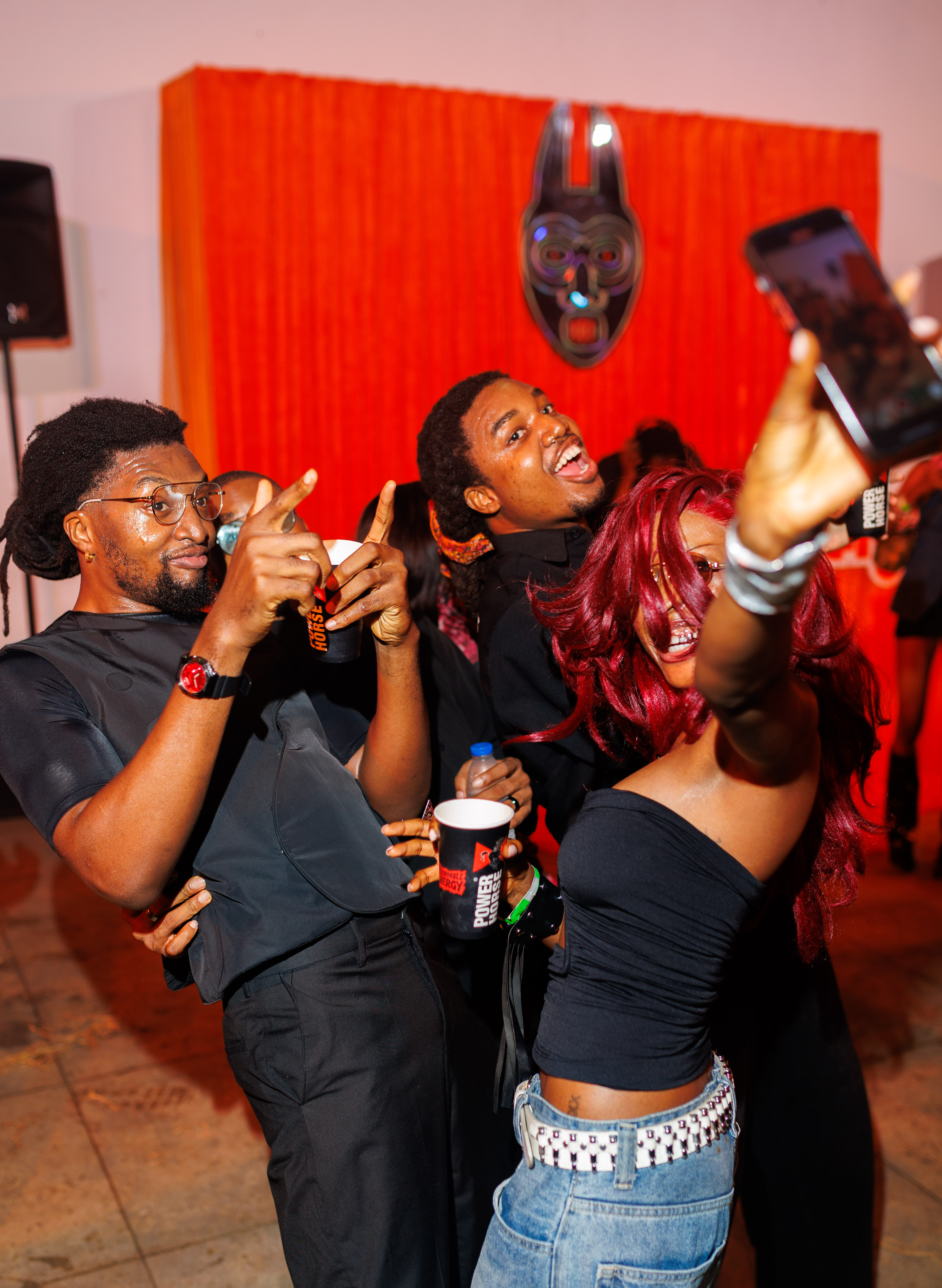
That loop, in his view, is exactly what makes international expansion worth pursuing even before the local business model has fully caught up. "Maybe our industry is not mature enough to make a profit putting on the kind of world-class experience you want to put on," he says. "But if we're built such that we can make money abroad, we can afford to take a loss at home and just raise the standard of what's possible." It's the same logic, he points out, behind Nigerian artists who tour internationally and occasionally play loss-making shows back home, betting that raising the ceiling matters more than breaking even on any single night.
Five years from now, Ebuka expects Lagos nightlife to look nothing like it does today, and he doesn't say this hesitantly. "I know for a fact that I would be one of the reasons that have made that difference," he says. He describes the culture as a cycle of innovation and imitation, a small number of people building something new, a much larger number copying it, until the copying flattens into fatigue and someone builds the next thing. He sees himself, plainly, as one of the people doing the building. "We're just going to wake up and see that everything has changed from where we were five years ago," he says. "And it would be good for the people innovating, good for the people copying, and most of all, good for the audience."