Stay In This World
The stories, the culture, the conversations. Every week.
No spam. No third parties. Just Unruly.
What the argument over his faith reveals about Nigeria's own unresolved spiritual inheritance.
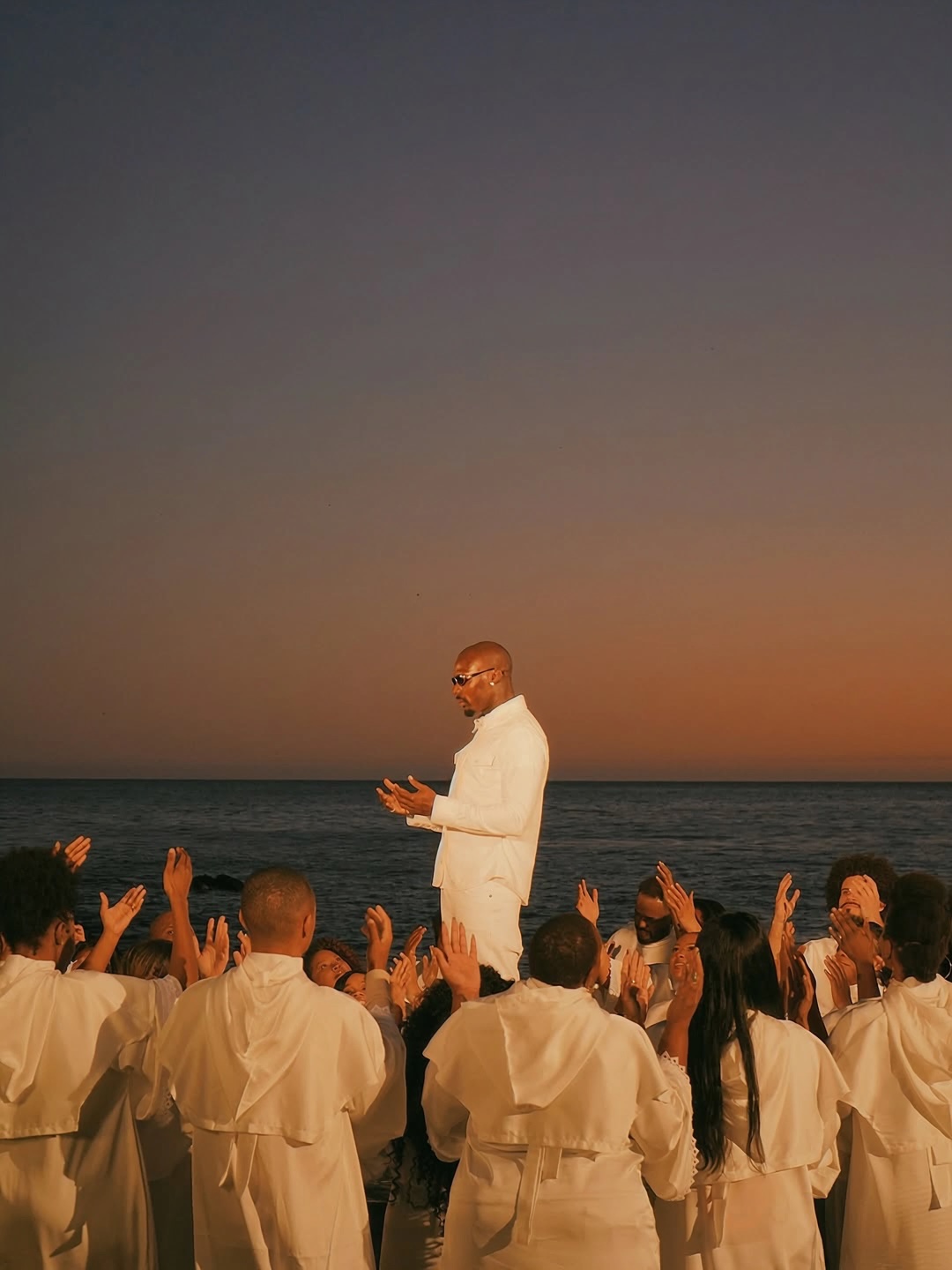
In March 2024, a Nigerian pastor named Prophet Gideon stood in front of a camera and prophesied that Asake would soon cut his dreadlocks and become a preacher. God was going to "arrest" him, the pastor said, before the year was out. Two years later, in 2026, Asake posted a video of himself performing Umrah at Raudhatul Jannah in Medina, one of the most sacred prayer sites in Islam. Fans read it as a quiet but clear answer to the prophecy. A few months before that, a different controversy: a Muslim commentator criticized him for sampling a Quranic verse, Surah Al-Ikhlas, on his song "I Swear." Before that, a different argument entirely, this time from Christian viewers, who accused him of mocking their faith in the video for "Only Me," where he appeared in a cassock and a halo, surrounded by dancers collapsing as he threw money at them.
Nobody has ever managed to settle the matter. Not the prophets, not the Muslim commentators on TikTok, not the Christian broadcasters, not the journalists who keep asking. Ask Nigerians what Asake actually believes and you will get three confident, contradictory answers, often from people standing next to each other.
The standard way to write about this is as a mystery to be solved, a contradiction in need of resolution, evidence gathered until a verdict can be reached. But that framing assumes the contradiction is the interesting part. It is not. The interesting part is that an entire country has spent years arguing about one man's religion without ever once agreeing on an answer, and somehow that disagreement has cost him nothing. His career has not stalled. His audience has not split along religious lines and abandoned him. If anything, the ambiguity has become part of the appeal, not despite who he is, but because of how unremarkable that ambiguity actually is to the people listening.
Asake has, on the rare occasion he is asked directly, been more forthcoming about where the sound comes from than where the faith lands. Growing up, he listened to the Fuji greats, Ayinde Barrister most of all. "I love Barrister a lot, because of the soul in his voice," he told Rolling Stone in 2023. "When you talk about music, real music, it is Barrister's for me." Fuji's own history runs straight back to wéré, the Islamic devotional chanting performed to wake Muslim households during Ramadan, a tradition more than a century old in Yorubaland. To listen to Barrister is to hear that lineage directly, percussion and praise-singing built for a specific religious purpose long before it became something you danced to at a wedding.
But in the same breath, in the same interview, Asake mentions something else entirely. "I also listened to songs from the Cherubim and Seraphim church," he said, "known for its bells and conga drums, and the white gowns members wear to church." He does not present this as a second, separate influence requiring its own explanation. It sits beside the Fuji reference as though it belongs there, because to him, it does. "I just like spirituality," he says. "Songs that can wake your spirit. I need things to always spark me."
That sentence does more work than it appears to. He is not describing two religions. He is describing one feeling, located across multiple traditions, that happened to be the soundtrack of his upbringing. The white garment churches common across Yorubaland, the Aladura movement broadly, were themselves never a clean import. They emerged out of contact between Christian liturgy and indigenous Yoruba spiritual practice, prophecy, vision, ecstatic worship, possession, and produced something that resembled neither tradition exactly. The bells, the white gowns, the conga drums, all of it carries the same call-and-response logic, the same physical, embodied worship, that defines wéré and Fuji on the other side of the religious line. Asake did not have to go looking for the connection between them. He simply grew up inside a soundscape where the connection had already been made, generations before he was born.
That inheritance is not something Asake left behind once the dreadlocks and the global tours arrived. If anything, his most recent work makes the clearest case yet that it sits at the centre of what he is doing. His fourth studio album, M$NEY, released on the first of May 2026, opens not with a beat but with a live choral performance, an unusual choice for a record that would go on to top streaming charts in more than nineteen countries. The tracklist reads less like a typical Afrobeats sequence and more like a service order, "Intro," "WORSHIP," "Gratitude," "Amen," and on "Worship" itself, produced with DJ Snake, Asake opens with "Alhamdulillah, praise be to God, no matter your condition, stay close to God." Two tracks later, on "Amen," he is praying for wisdom in the same register a churchgoer might recognize from a Sunday service. Asake has described the album himself as "a reflection of my spiritual and creative journey," naming gratitude, prosperity, spirituality, and ambition as the four things the record is actually about.
Critics reviewing the album kept landing on the same observation, independently of each other, that the record's defining feature is not which faith it belongs to, but how easily Asake moves between registers that are supposedly meant to stay separate. One reviewer described it plainly: Asake "moves from one to the other the way you move from the mosque to the club, same person, same night, different rooms." Another called the production a fusion of "Fuji rhythms layered over Amapiano bounce, with real choirs and drums doing most of the work while the melody rides on top," the choir voices handpicked by Asake himself rather than synthesized, a deliberate choice rather than an accident of production.
On the twenty-first of June, he performed the album live for the first time, at Theatre Royal Drury Lane in London, backed by a full orchestra, in an invite-only show hosted with Spotify for friends, family, and a room of his most devoted listeners. In the day after, I saw a line surfaced in the public reaction to the performance: that he had, found his sound. It is a strange thing to say about an artist four albums and several Grammy nominations into his career, as though the sound had been missing all along. What I’d like to believe the comment more likely captures is something closer to recognition, that the fusion underneath everything Asake has made, Fuji cadence beside Amapiano log drums, Quranic phrasing beside choral "Amen," had finally arrived at its fullest, most settled expression, in front of an audience that did not need any of it explained to them.
This is, in the end, the thing the question "what does Asake actually believe" keeps missing. It treats his refusal to resolve the matter as evasion, when it might be closer to the most honest thing about him. He was not raised inside a single, sealed tradition that he is now betraying or concealing. He was raised inside a country that has never fully agreed on where one tradition ends and another begins, and he makes music that sounds exactly like that inheritance, whether anyone can name it correctly or not.
Somewhere, a pastor is probably still waiting for the prophecy to come true. Somewhere else, a commentator is drafting a post about whether "Worship" counts as Islamic devotion or something closer to blasphemy. Asake, for his part, has never once stepped in to settle either argument. He does not need to. The contradiction they are arguing about was never really his to resolve, it belongs to a country that built its spiritual life out of more than one inheritance long before he was born, and never finished deciding how to talk about it. He simply makes the music it sounds like.