Stay In This World
The stories, the culture, the conversations. Every week.
No spam. No third parties. Just Unruly.
On the lesbian-bisexual divide in Nigeria's queer community and what it reveals about belonging.
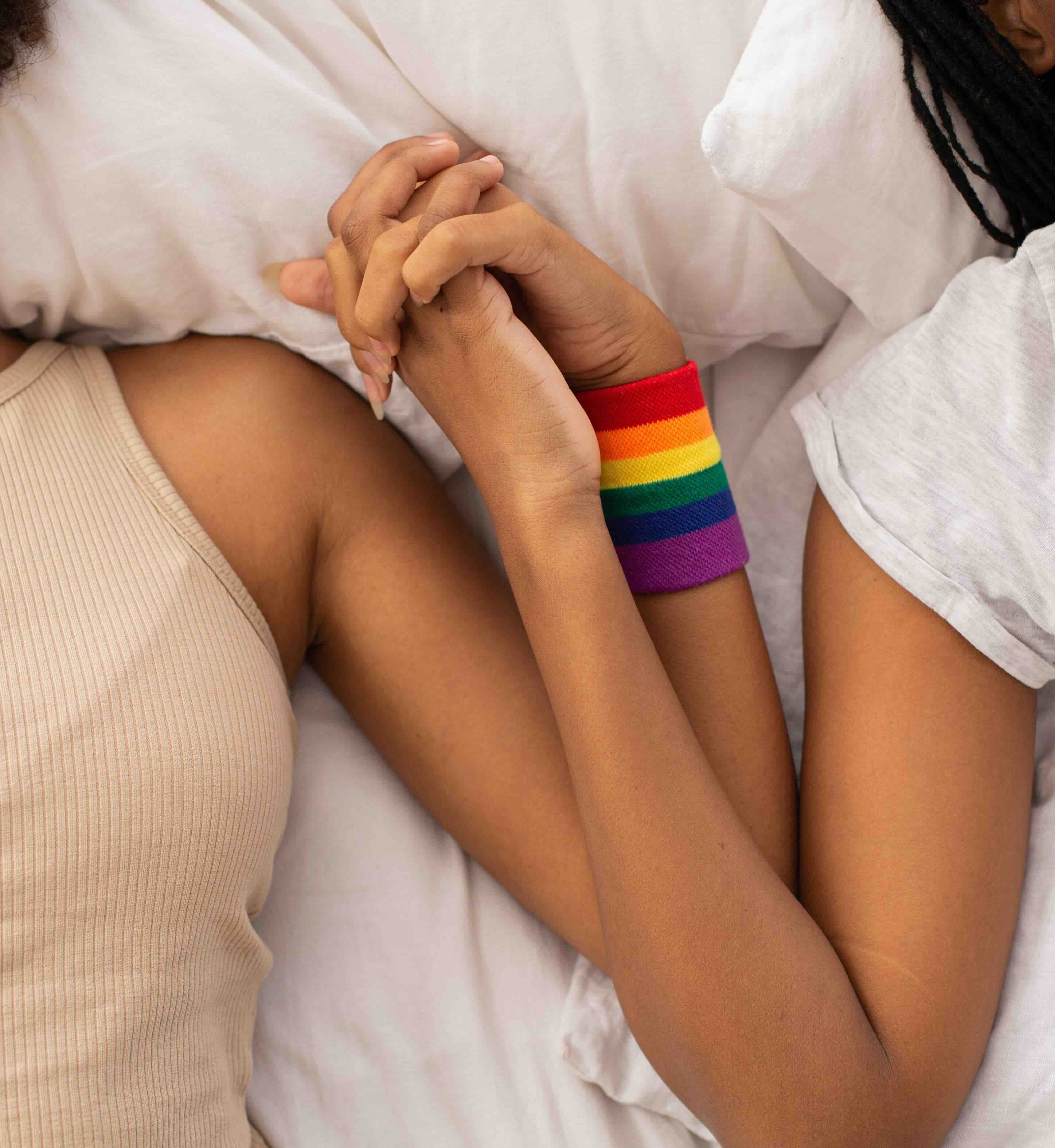
In June during Pride month, Nigerian social media filled with people celebrating their queerness publicly. Profile pictures were changed, captions became declarations, and a lot happened. For a community that navigates real and persistent risk, visibility felt like progress. But visibility is not the same as belonging. Inside queer spaces, a quieter and older argument continues: who gets to count as queer enough? The tension this piece is concerned with is a specific one, the friction between lesbians and bisexual women, and the accusation from some lesbians that bisexual women continue to center men through their relationships, desires, or proximity to heterosexuality.
Writing this piece required earning trust that does not come easily. Several individuals I approached declined to participate, explaining they were not comfortable discussing an internal community affair with an outsider. Even within a community that has continuously taken steps to protect itself, outsiders have taken bolder initiatives to prosecute its members, going as far as luring them into hotels and assaulting them. In the end, only one lesbian agreed to speak on record. Through introductions from mutual contacts, I was able to speak with three women in total: Ella, a lesbian in her mid-twenties who spoke under a pseudonym; Laurène, 26, a bisexual woman who agreed to be named; and Yetunde, also bisexual and in her mid-twenties, who spoke under a pseudonym.
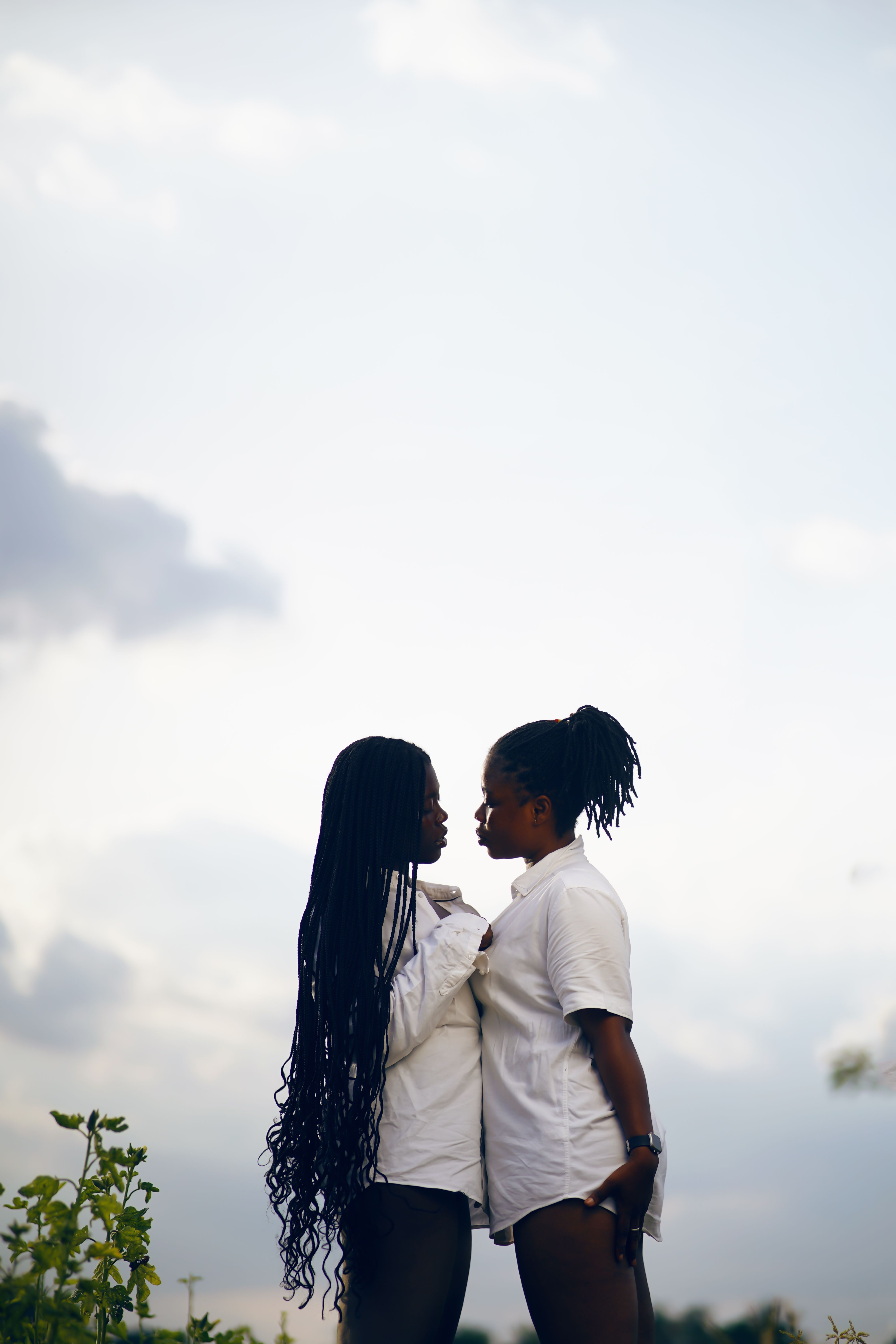
The first point of call has to be Nigerian social media commentary on the subject. As recently as June on X, bisexual women have constantly been accused of being male centering by lesbians, a debate that has been in existence for decades. American sociologist, Paula Rust, who interviewed 470 women about bisexuality from a lesbian viewpoint for her book, Bisexuality and the Challenge to Lesbian Politics, found that lesbians are extremely sensitive to bisexuality on both personal and political levels. One of Rust's interviewees, Karen, said her experience of women who identify as bisexual is that they’re either truly lesbian but are using the label to maintain heterosexual privilege, on the path to becoming a lesbian and using the label as a "safe" transition stage, or simply “sexual tourists”, experimenting with lesbianism. Karen's answer, like those of Rust’s other interviewees, suggests that lesbians see bisexual women as unsure of who they are, and stigmatise them more than they would other gay men and lesbians.
From the outside looking in, lesbianism is generally understood as some women’s way to relate with the world without focusing on men. Yet, Ella, a lesbian in her mid-twenties, tells me this isn’t entirely the case, in that “Lesbianism is more than just sexuality for me. For me personally, it's a lifestyle. I feel like people can perceive you as being a lesbian just by the way you present, talk, do things. It's supposed to be an everyday life for lesbians, not just decentering men. Men are not the main focus of why women become lesbians”. This decentering of women also seems to resonate with bisexual women as Laurène, 26, notes, “The Black woman is the center of my universe because I come from one, because I am one. No matter the sexuality I fall under, I can't imagine a world where women are not my protectors. Sexuality, in that regard, is secondary”.
Yetunde’s, bisexual and in her mid-twenties, echoes something similar. “People don’t understand that you can be sexually attracted to men and still not centre them and you cannot be sexually attracted to men and still centre them. We live in a very patriarchal society so yes and no”. Taken together, their responses complicate the assumption that bisexuality necessarily revolves around men. Ella captures it as a lifestyle, Yetunde understands that the distinction between both lesbianism and bisexuality is not as clear-cut as believed while Laurène sees herself first through womanhood before sexuality.
So why are Nigerian bisexual women often accused of being male-centering? For Ella, this belief came from lived experience. “I’ve had one too many encounters and it makes my relationship moving forward with bisexual women a bit difficult because I always have that at the back of my mind,“ she says*. “I’ve met women whose entire point of being bisexual is to be able to provide a sort of sexual intimacy with their male partners, be able to introduce their male partners to other women so that they can have threesomes and all that. So I would say, and this is based on personal experience. I’ve met bisexual women who do the things that they do because of their man. I met a woman and she was in a relationship and she wanted me to be their third and along the line, I got to know that they were basically playing a long game. I also noticed that when I want to speak to her, it has to be a three-way call. Her man had to be on the call”.
It is this kind of experience that hardens into cultural shorthand, the way a few encounters become the template through which an entire identity is read. But Yetunde resists this, noting “Some lesbian women, in my own opinion, usually the masc-presenting ones, believe that being bi is not real. As a bi, you’re always told your attraction to men is valid and your attraction to a woman is not”. For Ella and Yetunde, both their responses point to how differently lesbians and bisexual women understand what it means to ‘decenter men’: Ella believes that relationships prove whether one’s priorities lie while Yetunde focuses on individual personality, not gender of one’s partner. This highlights a certain set of expectations bisexual women are expected to constantly negotiate.
The truth lies in the consequence of failing to meet those expectations. “When I came out to my friends, many of them instantly cut me off. There is a notion around bisexuality that you're just confused, and that exists in both queer and straight spaces. In relationships, regardless of sexual background, I was expected to take on a more masculine role”, **Laurène tells me. This maps the specific limbo that most Nigerian bisexual women seem to exist in, making their existence feel conditional. More than this, it complicates potential relationships for bisexual women, a situation Laurène describes as “ too straight for the gays and too gay for the straights”. The likely outcome is what scholars have described as bisexual erasure, the tendency to deny the existence and validity of bisexuality.
The irony, however, is that this burden doesn’t exist in a vacuum and is shaped by conflicting understandings of what it means to be queer. Yetunde, resisting the perceived notion of bisexual women, tells me, about her previous relationships with bisexual women, “I noticed that men were still the focus. I’ve been with a bi before that I kinda ended because I realised she was male centered”. But even then, Yetunde refuses to conform to one person’s behaviour into a verdict on bisexuality itself. Laurène captures this tension aptly: “A lot of queer people may not admit it, but there are numerous rules in the playground, alongside the stigma that bisexuality is not a real thing. A lot of women are closeted, self-hated to a certain degree, and operate within heteronormative relationships.” This shows that the problem is about how quickly singular experiences become collective assumptions and generalisations. Bisexual women are no longer judged on their own relationships or politics but on the expectations attached to their identity.
For all the conflict between lesbians and bisexual women, when I asked each of them what should actually matter when it comes to belonging to the queer community, none of them answered from the perspective of who someone sleeps with. Rather, each returned to politics, values and the way a person moves through the world. “Personally, I think their social and political commitment,” says Ella, “because I need to know where you stand on and what you believe on certain issues”. Yetunde is more direct: “It should be more about your politics and how you navigate the world. Fuck who you’re fucking, to be honest”.
This seems contradictory. Earlier, the conversation revolved around whether relationships with men undermine queer identity. But on the question of what sustains queer belonging, the women gave more priority to politics, values and accountability. Laurène's response complicates the picture even further. Rather than offering a criterion for belonging, she questions the premise itself. "I personally don't move inside anybody's community," she tells me. "I am very much my own island. A community for me is where you can come as you are. I don't think I have found mine yet". Her answer suggests that belonging cannot be earned by meeting the right political or social expectations and must also be offered by the community itself. And for bisexual women who are, in her words, often considered "too straight for the gays and too gay for the straights," that offer can feel out of reach.
Perhaps this is why the lesbian-bisexual divide in Nigeria has endured for so long. Visibility matters first but these conversations hint that such recognition by the community may not be so easy to get. Simmering beneath the surface of arguments about men, dating, and labels is an older question: is queerness defined by who we desire, how we live, the politics we practice, or the communities willing to recognise us? The interviews do not settle that question but suggest there may never be a single answer and that any such answer may not be arrived at by a single measure.