Stay In This World
The stories, the culture, the conversations. Every week.
No spam. No third parties. Just Unruly.
On love, performance, and the families African men carry.
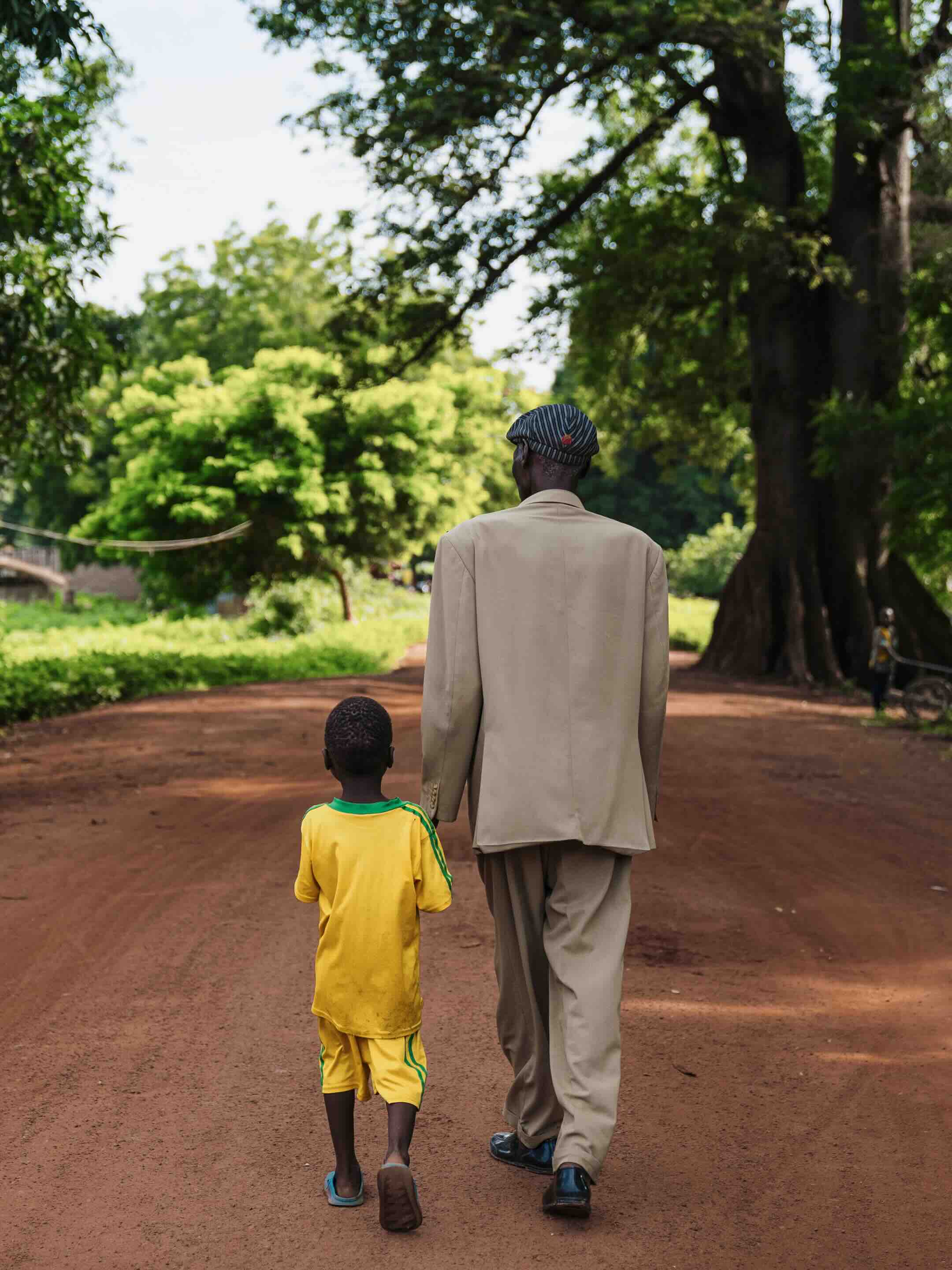
My father and I are walking to our neighbour’s house. It is a short walk, one that should take no more than a few minutes, but it feels considerably longer. We don't talk. There is no banter, no attempt at small talk, only the occasional grunt from him as we make our way there. In our household, and perhaps in many others, you learn early that you speak only when spoken to.
In my hands is a care package. A few essentials: Ribena, some fruit; beetroot, oranges, tangerines, apples, bananas and provisions for porridge. You know, the classic ‘sick-bed’ stuff. It is only the beginning. We are headed to our neighbour’s house. He had been stabbed. This is only the third time. We don’t know when, where, how and why it happened, nor do we get to see him during our unannounced visit. His wife instead greets us. She takes the basket from our hands, first from mine to my father’s, then from his to hers.
It is the order of things. The untold hierarchy. We never get to sit. There is no time for a chat or even to find out in detail how he is faring. That, needless to say, feels too emotional. In no time, we are on our way home.
Picking up the basket after my father has briefly held it acknowledges where it comes from. It shows that the family cares. His wife, my mother, is represented.
I keep returning to this exchange because everyone has a place in it. My father and I carry the gift; the man’s wife receives it. My mother, who is not there, is present in what the gesture represents. The care is real, but we leave without speaking to the man we came to see.
Perhaps the visit was enough. Not every act of kindness needs a conversation. Still, I wonder what men find easier to communicate through gestures than words, and who becomes the means of that communication.
There is something almost tender about the way African men talk about their wives and children, until you begin to wonder how often that tenderness is also a performance of the man himself. The father who rarely speaks about his feelings may become sentimental when talking about his daughter. The husband who struggles to articulate affection might comfortably call his wife his queen. The man who finds it difficult to admit that he is lonely can say, without hesitation, that he would do anything for his family.
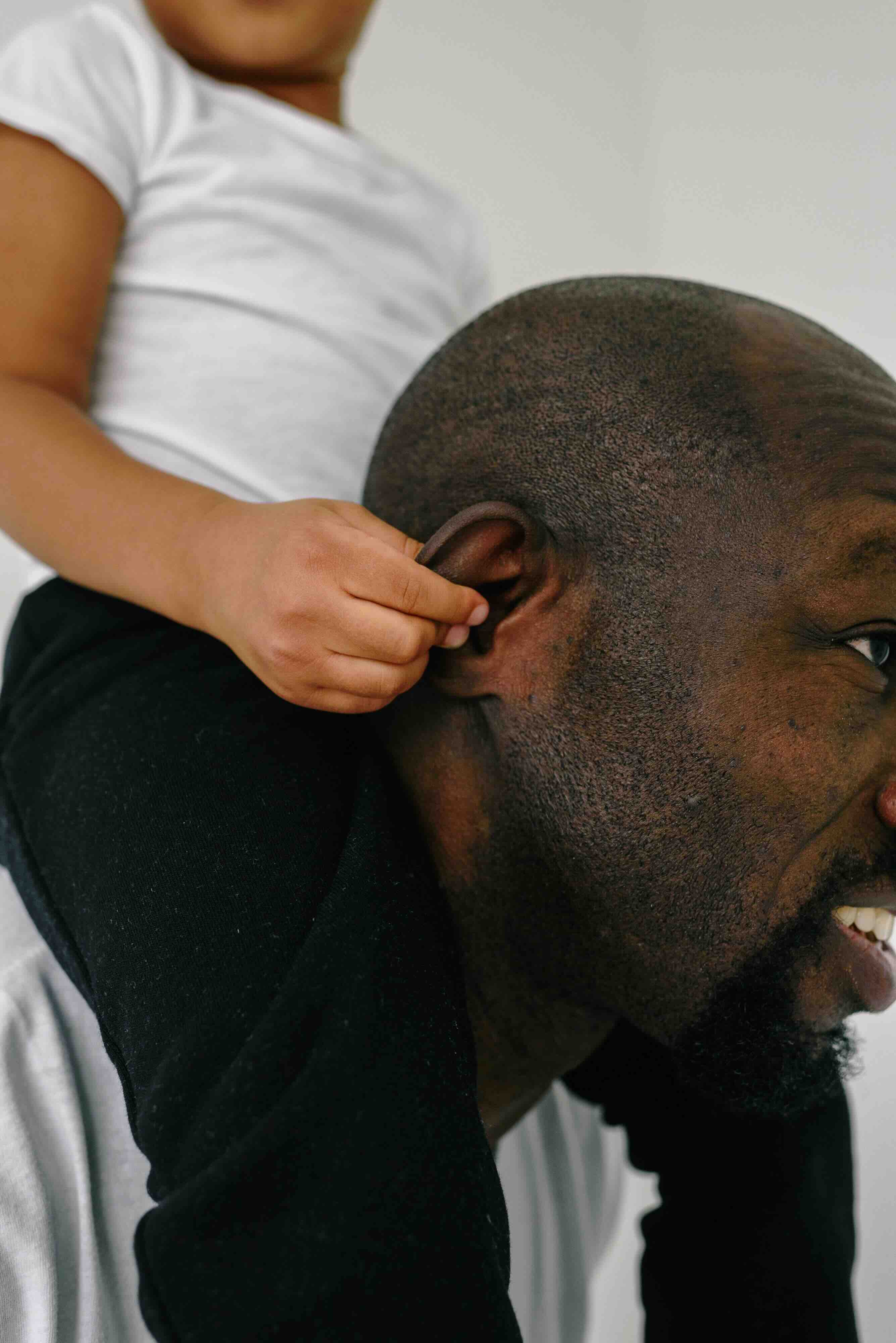
The affection may be genuine. That is what makes this difficult to untangle. The problem is not necessarily that these men do not love the people closest to them. It is that love becomes tangled up with the identities they have learned to perform.
Like any other African boy, most of us have grown up learning that there are things a man should not do. We should not cry too easily, appear frightened, complain excessively or depend on someone else. Even when unstated, these lessons have arrived through ridicule, parents’ impatience, a relative’s joke or the instruction to stop ‘behaving like a girl.’
As a boy grows up, he learns to fulfil the responsibilities attached to manhood. He can work, provide, protect and make sacrifices. What he may not have learned is how to talk about what these responsibilities cost him, what he fears or what he needs from others.
Marriage and fatherhood can offer a way around that discomfort. A man can express devotion without having to describe his inner life. He can talk about how hard he works for his children instead of admitting that he is afraid of failing them. He can call his wife his greatest blessing without telling her he needs reassurance. He can become emotional at his child’s graduation while remaining uncomfortable discussing the anxieties that have occupied him for years.
The emotion is there, but it arrives with a respectable explanation.
This is not to say that every father who struggles to say “I love you” is emotionally repressed, or that every husband who celebrates his wife publicly is concealing something. People express affection differently. Providing, visiting, giving gifts and helping during difficult times can all be meaningful expressions of love. The trouble begins when gestures substitute for intimacy. You can provide for someone without knowing them well, or protect them without letting them see you frightened.
An accessory does not have to be fake. It can be valuable, beautiful and carefully chosen. What makes it an accessory is the way it complements something else, helping complete a particular image.
This is the uncomfortable possibility at the centre of the family-man ideal. A wife and children can be people a man genuinely loves and, at the same time, evidence of the man he believes himself to be.
A wife can signify stability, desirability and achievement. Children can represent legacy and proof that a man has built something that will outlive him. A family photograph can communicate that he is present, that he provides, that people depend on him. None of these meanings cancels out affection, but they can change how it is expressed.
Being a family man is often treated as a credential. A man has a home, a wife, children and the means to provide for them. He has seemingly arrived at the version of adulthood he was expected to achieve. His family becomes part of his résumé, helping establish his respectability and standing.
The distinction is between seeing one’s family as people whose lives matter and seeing them as proof that one’s own life has gone according to plan. A wife may have ambitions and desires that have little to do with her husband. His children may grow into people who reject his expectations. Loving them means making room for those realities; treating them as extensions of himself means expecting their lives to affirm his own.
This is where love and objectification can coexist. A man can be proud of his wife while valuing what her presence says about him. He can adore his children while thinking of them as his legacy. The love needs not be fabricated for the relationship to carry expectations that diminish the people receiving it.
A father may celebrate a child’s success because he is proud of the child, but also because the achievement confirms something about his own parenting. A husband may praise his wife’s beauty, ambition or success while quietly expecting those qualities to reflect well on him.
It’s not a matter of whether the pride is real rather whether the person being loved is allowed to exist beyond what they represent.
That becomes particularly complicated when the people being represented stop behaving like symbols and start asserting themselves as individuals. A child who chooses a career his father does not understand, a daughter whose life does not resemble the one imagined for her, or a wife whose ambitions take her somewhere her husband did not expect can disrupt the image the family once helped create.
Love should survive that disruption. If it cannot, perhaps some of what looked like devotion was also ownership.
I think about the ways families are presented to others. The anniversary tributes, the Fathers’ Day messages, the carefully chosen family photographs. There is nothing inherently wrong with wanting to celebrate the people you love, or with letting others see that affection. But I wonder how often the gesture becomes more important than the relationship it is supposed to represent.
I return to our visit to the neighbour. The basket was a gesture of concern, and my mother was represented in it despite not being there. From the outside, it was a picture of a family showing up for another. Yet the man we had come to see remained absent from the exchange. We had fulfilled the social obligation of care without having to confront the more difficult, personal work of sitting with the afflicted party.
The same distinction can exist in the way men present their own families. A husband might write beautifully about his wife while refusing to listen when she is unhappy with him. A father might celebrate his children online while struggling to have difficult conversations with them at home. The image of a loving man can exist alongside relationships in which emotional communication remains limited.
The same tension appears away from social media. A man might measure devotion by the school fees he pays, the bills he clears or the comforts he provides. These are real contributions, often made at considerable personal cost. But when provision becomes the primary evidence of love, it can become a shield against other forms of responsibility. The claim that he has provided everything can make it harder to ask whether he has been present, attentive or willing to listen.
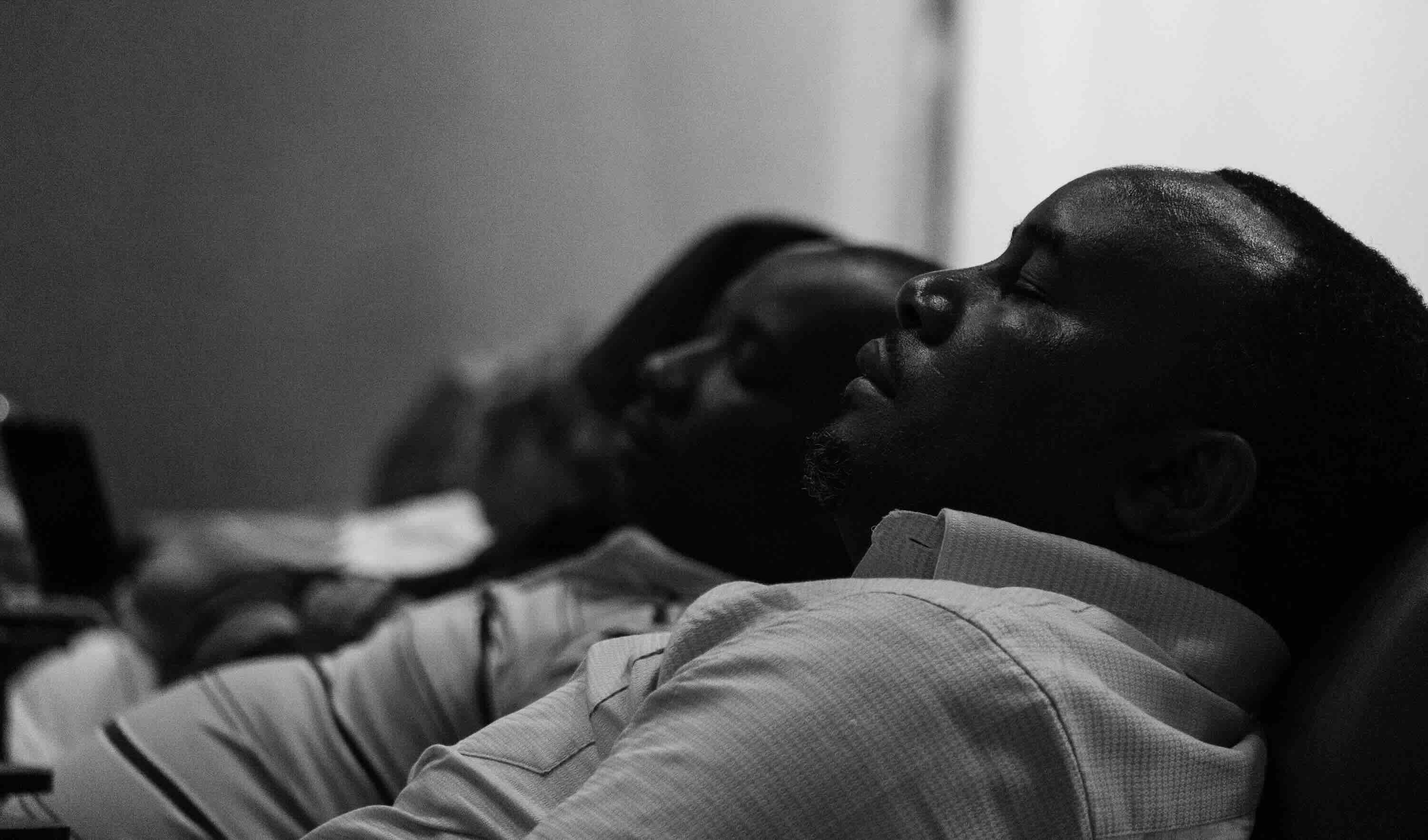
Providing for a family is one way of loving it. It is not the same as knowing everyone in it.
I think again about our visit to the neighbour. My father and I arrived with something to offer, and his wife received it. The gesture carried concern, but it also followed a familiar arrangement: we made the visit, she received what was brought into the home, and we left without speaking to the person who had been hurt.
I cannot say what either man would have said if they had sat down together. I do not know what our neighbour needed beyond the care package. The encounter leaves me with questions, not a verdict.
Maybe a conversation would have been unnecessary. Maybe the gesture said enough. But I wonder how often men learn to fulfil the social obligations of care without learning what it means to be emotionally present inside them.
My father and I carried a basket to a neighbour. His wife received it, and we went home. It was a small act of care, yet I keep thinking about the people represented in the exchange, those who carried the gesture and the person who received it.
Love can travel through a gift, a visit, a photograph or a public declaration. But perhaps it becomes something fuller when the people we love no longer have to make our tenderness respectable, or prove that we possess it at all.