Stay In This World
The stories, the culture, the conversations. Every week.
No spam. No third parties. Just Unruly.
What African cultural unity already looks like, and what it could become with the right conditions.
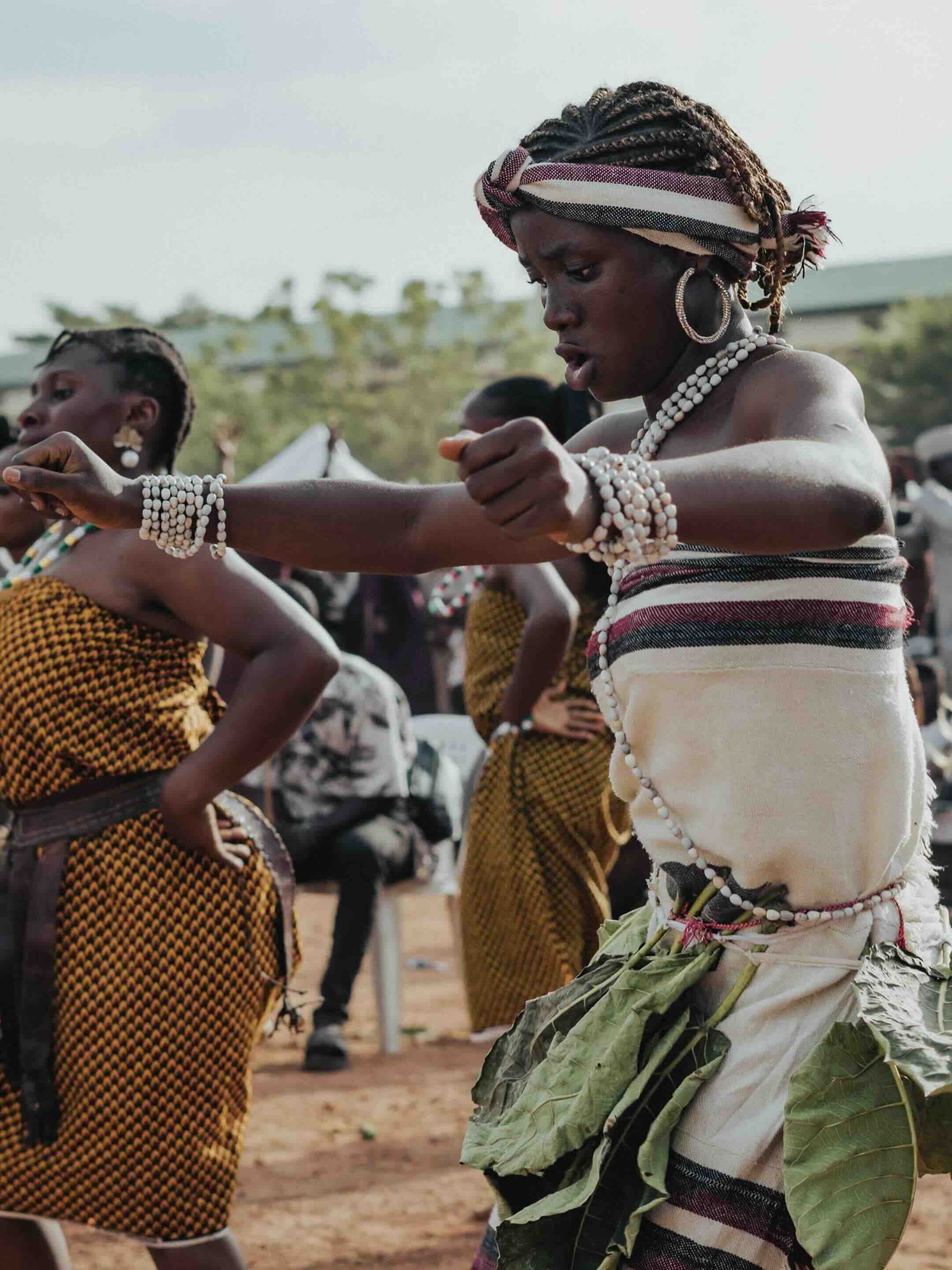
Amapiano left Johannesburg’s townships sometime in the early to mid 2010s. It arrived in Lagos, carried by DJs, shared via mobile phones, played at parties and clubs in cities across the continent with no formal cultural exchange program between them. By 2024, it was in clubs everywhere across the continent and beyond. It did this without any real government facilitation. This is one way to understand what Pan-Africanism already looks like in practice. Not as a political declaration or an institutional program, but as the movement of people, sounds, aesthetics, and ideas across lines that were drawn without African consent and have never fully contained African life. The political project of Pan-Africanism has a complex and largely frustrated history. But, the creative and cultural connections it sough to formalize have never stopped moving.
The borders diving the African continent into 54 countries were drawn primarily between 1884 and 1914, during the period formalized by the Berlin Conference, at which European powers established the framework for dividing the continent among themselves with minimal regard for the peoples, kinship networks, and cultural communities they were cutting through. The Ewe people were divided between Ghana, Togo, and Benin. The Maasai between Kenya and Tanzania. The Hausa-Fulani across Nigeria, Niger, Cameroon, and beyond. These were not neutral political units. They were administrative conveniences for colonial extraction. The diversity they contain, which is very real and vast, was not organized by those borders. It predates them, and in many cases people continue to live and move across them in ways that formal political maps simply cannot capture.
Pan-Africanism as an idea emerging not from Africa but the diaspora. It was Trinidadian lawyer Henry Sylvester Williams who convened the first Pan-African Conference in London in 1900. W.E.B. Du Bois, Marcus Garvey, and Aimé Césaire gave it its early intellectual architecture. The first generation of African independence leaders, Kwame Nkrumah in Ghana, Patrice Lumumba in Congo, Julius Nyerere in Tanzania, took those diaspora ideas and tried to build continental institutions from them. The attempt had a genuine vision, and the response from the powers that had built the extraction system was serious.
Lumumba was assassinated in 1961, with documented involvement from Belgian and American intelligence services. Sylvanus Olympio of Togo, who had refused to join the French franc zone and was building an independent monetary system, was killed in a coup in 1963. Thomas Sankara of Burkina Faso, who was building one of the most ambitious programs of African self sufficiency on the continent, was killed in 1987. The pattern is consistent enough that it requires no conspiracy theory to observe: a continent that organized itself would set its own terms for how its resources moved. That was the threat. The response was what empires typically do when their income is at risk.
Nkrumah himself was deposed in a CIA assisted coup in 1966, two years after publishing his most comprehensive argument for continental unity. That the political project has struggled is not entirely an African failure. It is partly the result of sustained external effort to prevent it from succeeding.
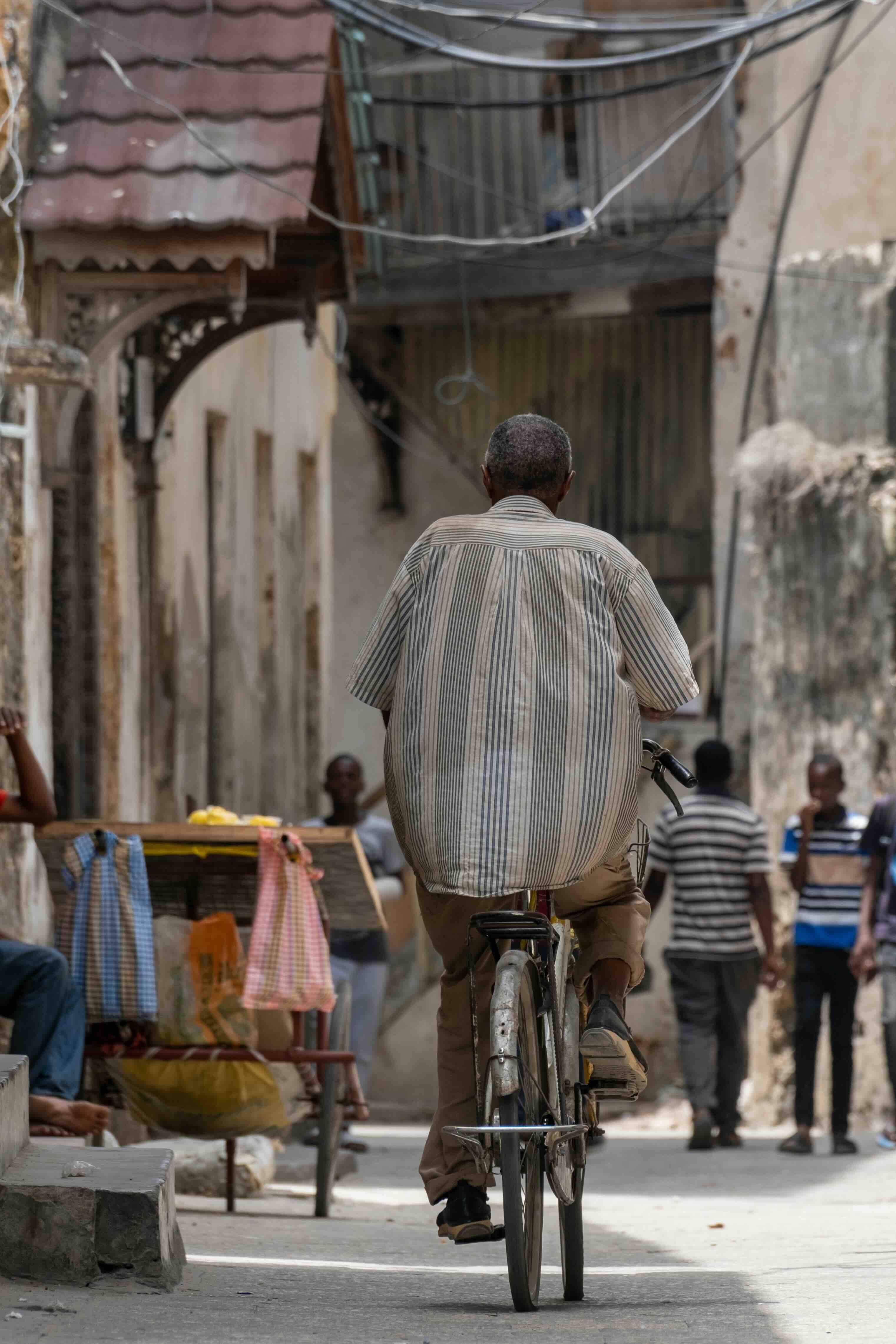
There are honest objections to Pan Africanism that deserve engagement rather than dismissal. The most powerful objection is the diversity argument. Africa has 54 countries, over 3000 ethnic groups, and more that 2000 languages. The Yoruba and the Zulu do not share a culture. The Egyptian and the Congolese do not share a language, history, or a religion in any meaningful sense. The idea that these people constitute a natural unity is, at minimum, a simplification. At maximum, it is itself a form of erasure, collapsing real and significant differences into a single identity that nobody on the continent actually exists within.
Oluwasemilore Alabi, a young writer in Abuja, made this case in African Arguments last month: “Pan-Africanism does not unite Africa. It simply makes Africa legible and digestible to everyone else.” Her argument is that the idea, however well-intentioned, serves external audiences more than it serves Africans themselves.
The political philosopher, Achille Mbembe, argued that Pan-Africanism and anti-colonial nationalism no longer offer creative potential for cultural criticism or current politics, precisely because their fixation on colonialism and the resulting reflex of defining Africa primarily in relation to what was done to it rather than what it is.
These are all real arguments. Communities that have built genuine post-colonial identities, with their own national cultures, languages of governance, and political identities, do not necessarily want those identities subsumed into a continental framework whose center of gravity is unclear. Who decides what Pan-African culture looks like? Whose values, languages, and aesthetic standards become the foundation? These questions have not been answered, and the failure to answer them has contributed to the frustration of every institutional attempt at continental unity since 1958.
Despite those frustrations, a great deal has happened without waiting for the political questions to be resolved. In 1977, FESTAC brought 17,000 artists, performers and intellectuals from 55 nations to Lagos, for 29 days. It was the largest Pan-African cultural gathering in recorded history. The Zulu dancer, the Yoruba poet, the Ghanian novelist and the Caribbean musician occupied the same rooms, made work alongside one another, and argued about identity and decolonization. It has not been repeated at that scale since then.
Nollywood has built genuine audiences across East Africa through informal distribution channels that preceded any formal trade agreement. Nigerian films circulate in Kenya, Tanzania, and Uganda not because a government program facilitated it but because audiences sought them out. The connection preceded the infrastructure.
The Sahel's musical traditions offer a longer version of the same story. The griots of Mali, Senegal, and Guinea have always moved across the borders that colonialism drew through their communities, because the ethnic and cultural networks those borders cut through never stopped functioning. Mande music, rooted in communities that span four countries, has maintained a continental reach for centuries not despite the borders but in spite of them.
A growing network of African literary festivals is building something more deliberate. Ake Festival in Lagos, Writivism in Kampala, Abantu Book Festival in Johannesburg: these are not export projects. They are spaces where African writers build continental readerships, where a Kenyan novelist's work reaches a South African reader not through a London publisher but through a shared literary conversation happening on the continent itself.
The AfCFTA, which came into effect in 2021, is the largest free trade zone in the world by number of participating countries. Its full implementation could add $450 billion to Africa’s income by 2035. Among other things, it provides a potential framework through which African creative industries could reach African audiences across borders. The creative economy and the trade economy are not separate projects.
The argument that African cultural integration is impossible because the continent is too diverse or large does not survive contact with precedent. ASEAN, the Association of Southeast Asian Nations, brought together ten countries with vastly different languages, religions, colonial histories, and political systems. Thailand is Buddhist and has never been colonized. Indonesia is the world’s largest Muslim-majority country and was under Dutch rule. The Philippines is majority Christian and was colonized by Spain and then America. Vietnam endured decades of war. These are not superficially different societies. They are fundamentally different ones. And yet the loosening of cultural trade barriers within ASEAN produced genuine cross-pollination. The Korean Wave, which spread Korean film, music, food, and fashion across Southeast Asia, did not happen purely because of Korean talent. It happened because ASEAN created the conditions for cultural goods to move across borders with less friction. Korean pop stars became household names in Manila, Jakarta, and Kuala Lumpur because the infrastructure existed to carry them there.
The European Union carries more political baggage, and its model is not one I believe Africa should replicate wholesale. But the cultural outcome of European integration is worth noting: French filmmakers influenced German directors, Scandinavian crime fiction reshaped British publishing, Italian design became the aesthetic reference point for industrial designers across the continent. Cultural exchange at scale produces something that isolated national industries cannot produce alone. It raises the standard, broadens the reference pints, and creates hybrid forms that belong to the region rather than to any single country.
African diversity is real. But diversity has not stopped ASEAN, neither did it stop Europe. The question is not whether the difference are too great. It is whether the will to build the connections exists.
Imagine learning Swahili in a secondary school in Lagos, instead of French. Swahili is spoken by over 200 million people across East and Central Africa. It is the official language of Kenya, Tanzania, Uganda, Rwanda, and the Democratic Republic of Congo. It is a language of trade, literature, and of daily life across an enormous swathe of the continent. French, by contrast, was taught because of a colonial inheritance that has less and less relevance to the daily reality of most Nigerians. A generation of West Africans who spoke Swahili alongside their indigenous languages would have cultural and economic access to a part of the continent that currently feels as foreign to them as Europe does.
Imagine a Nollywood film that proved itself commercially viable in Lagos, and whose distribution deal included Accra, Nairobi, Dakar, and Dar es Salaam before it included Toronto or Atlanta. Nigerian films currently travel to North American diaspora markets before they travel to neighboring African ones, not because African audiences would not watch them, but because the distribution infrastructure is oriented outward rather than inward. The same film that reaches a Nigerian in Canada cannot easily reach a Ghanaian in Kumasi.
Imagine FESTAC not as a historical event but as recurring institution. An annual gathering, rotating between African cities, with its own endowment and its own editorial independence, where the creative communities of the continent and the diaspora meet in person to make work, argue about ideas, and build the relationships that produce the next generation of collaborative projects. The 1977 event demonstrated what 29 days could produce. A permanent institution would produce something that no single event can.
None of these requires erasing differences. The Yoruba, the Zulu, the Amhara, the Wolof: these are diluted versions of a single African identity. They are distinct and complete worlds. The argument is not that they should become one thing, but that the people within them should be able to reach each other.

When a Nollywood film travels to North America before it travels to Ghana, the loss is not just economic. It is a story about Nigerians that Ghanians did not get to see, a point of connection that did not happen, a conversation between to cultures that share a coastline, a colonial history, and a creative moment that was never had because the distribution chain pointed in the other direction.
When a griot in Mali has no platform that reaches a Igbo scholar in Lagos, knowledge that has survived centuries of oral transmission reaches the end of its line because nobody built the bridge to share it.
When African secondary school students learn French or Portuguese as their primary window onto the world and emerge unable to speak to the majority of their continental neighbors, the continent reproduces its own division without any external help.
Pan-Africanism as a political project has been interrupted, co-opted, and consistently undermined. As a description of what African artists, musicians, filmmakers, and designers are already doing across borders, it is simply accurate. The connections already exist, the question is now what it would take to let it reach its full scale, and what another generation of not answering that question will cost.