Stay In This World
The stories, the culture, the conversations. Every week.
No spam. No third parties. Just Unruly.
Lagos has always had the appetite. April 5 was the proof.
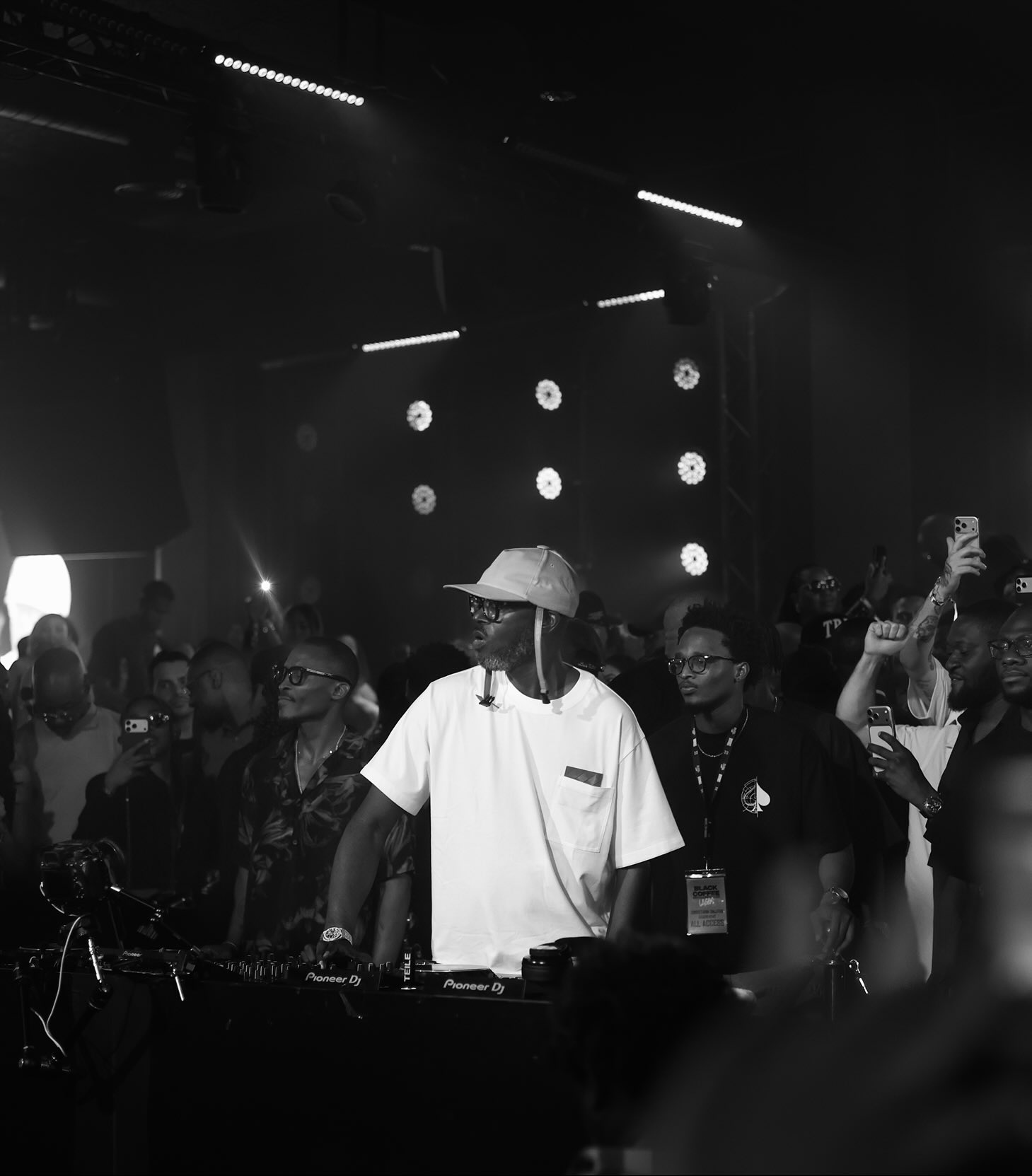
There is a version of Lagos that the world knows well. The city that built Afrobeats into a global language, that sent its sound into charts and playlists across every continent, that made Nigerian music synonymous with a particular kind of joy, energy and cultural confidence. That version of Lagos is real and well documented.
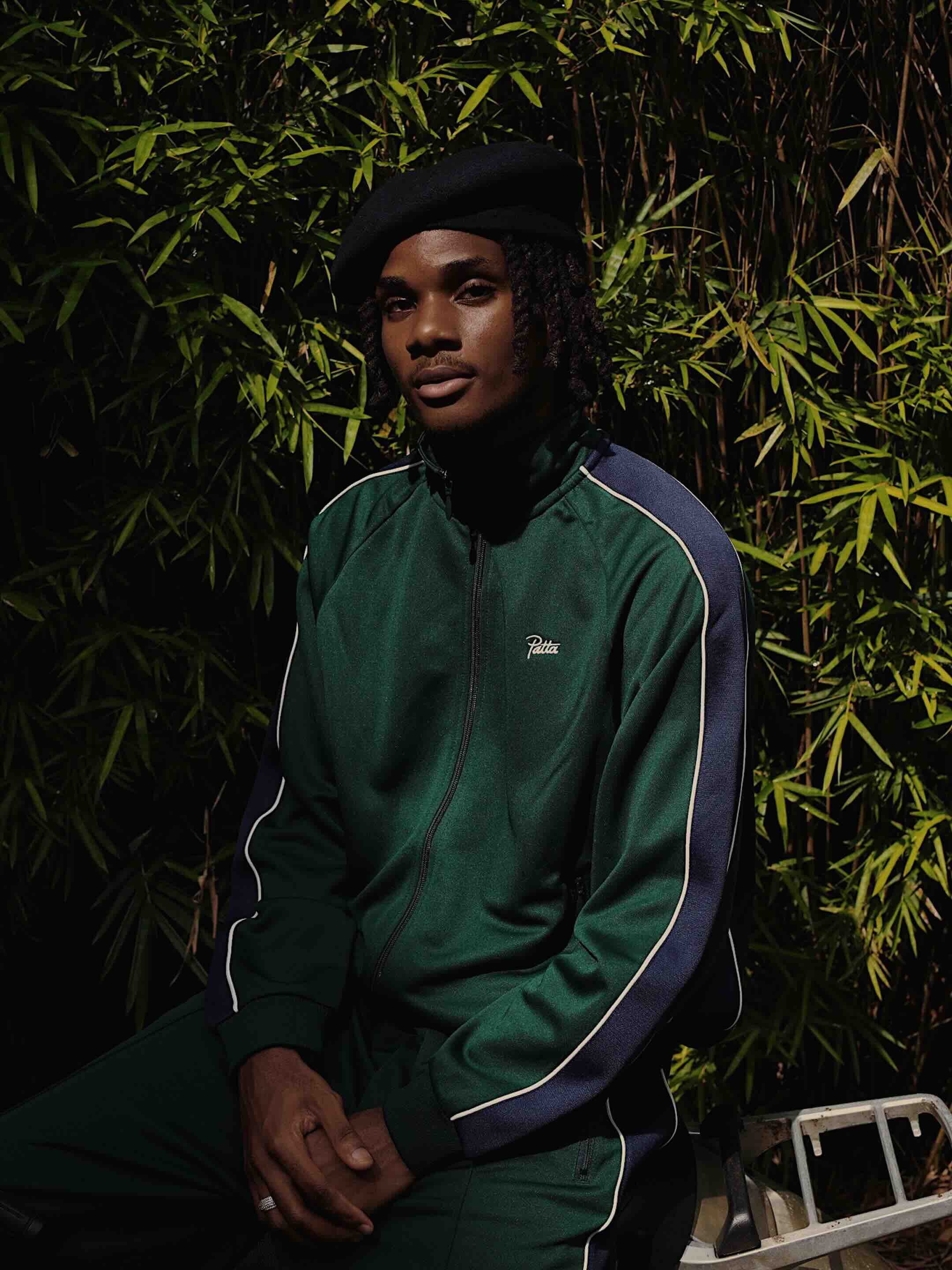
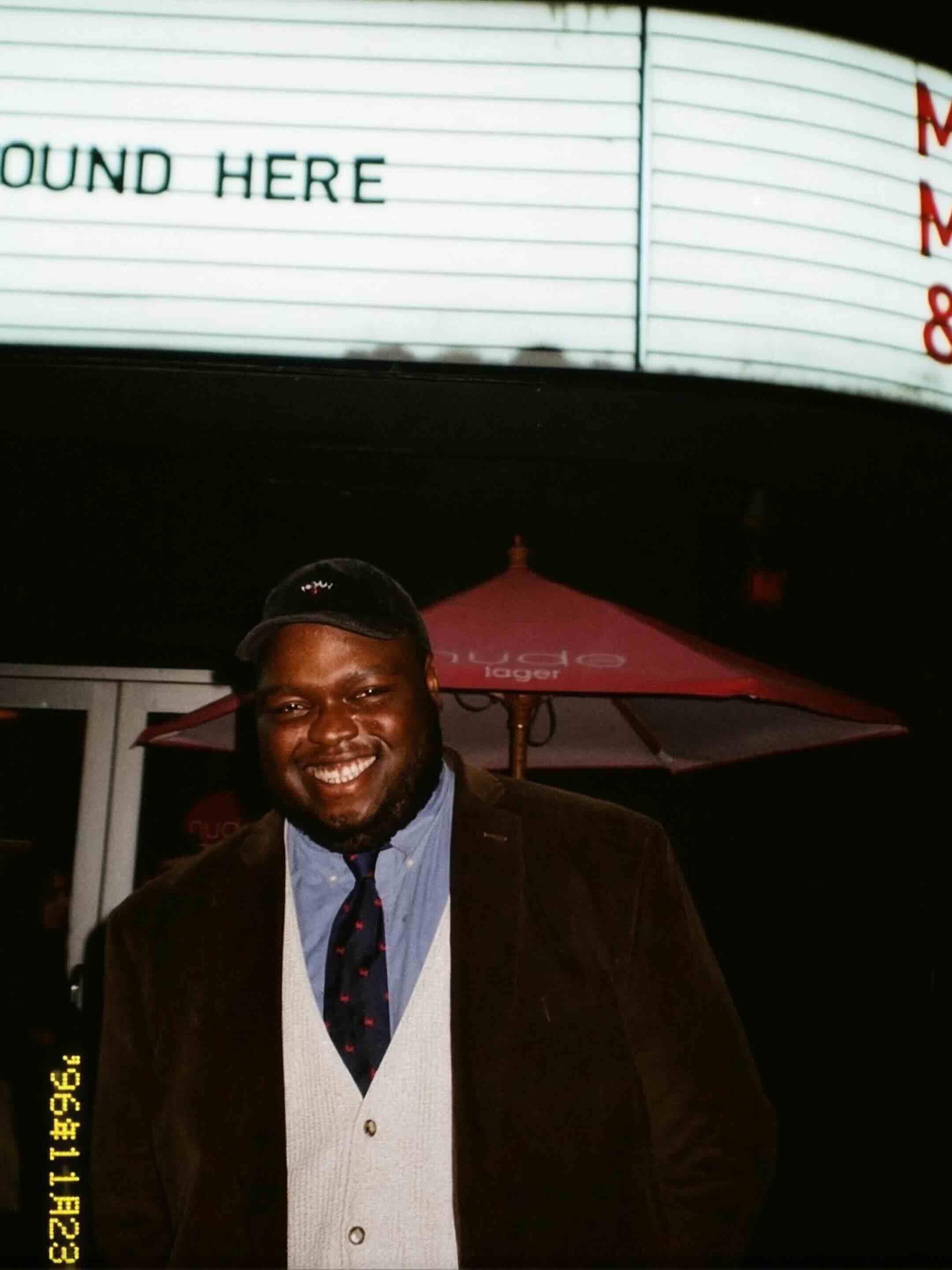
But on the night of April 5, 2026, a different Lagos showed up to the Royal Box Event Centre. Older. More deliberate. Couples on the dance floor, many of them taking breaks every thirty minutes because their backs would not allow otherwise. People asking for consent before dancing with strangers. A crowd that felt safe in a way that Lagos events do not always feel. Unruly was in the room that night, and it was, by any measure, unlike most Lagos events we have attended. Not necessarily curated for the typical raver. Curated for people who had been waiting a long time for something like this.
M:E Entertainment and DAPO brought Black Coffee to Lagos. But what arrived that night was more than a headline performance.
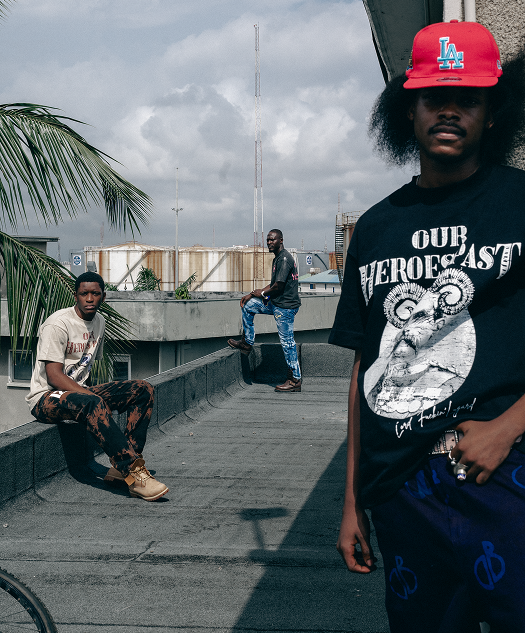
The crowd at the Royal Box was notably multinational. Easter weekend tends to bring a surge of diaspora visitors and international residents into the city, and this night drew from all of them. From where we stood, it was the most diverse gathering of nationalities we had seen at a Lagos event in recent memory. Different age groups, different relationships to the music. Some had followed Black Coffee for over a decade. Some were encountering this world for the first time. What they shared was a willingness to let the night take them somewhere.
That diversity matters because it says something about what electronic music in Lagos is becoming. Afrobeats built its audience from the ground up across every stratum of Nigerian youth culture. The electronic music scene has grown differently, more quietly, in rave spaces and late-night rooms, among a crowd that sought out something with a different emotional register. It is a scene that has existed for years without the mainstream attention its participants knew it deserved. April 5 was the night it asked to be seen.
The media presence at the event was significant, and deliberately so. Moments like this need to be captured not just for the people in the room but for the broader argument they make: that Nigeria, in the middle of its governance failures and economic pressures, still produces people with a deep appetite for quality and experience. The crowd that showed up on April 5 made that argument plainly.
Before Black Coffee took the decks, the night belonged to Caiiro, Da Capo, and Enoo Napa, three names who represent the depth of the continental electronic music scene in a way that a single headliner cannot.
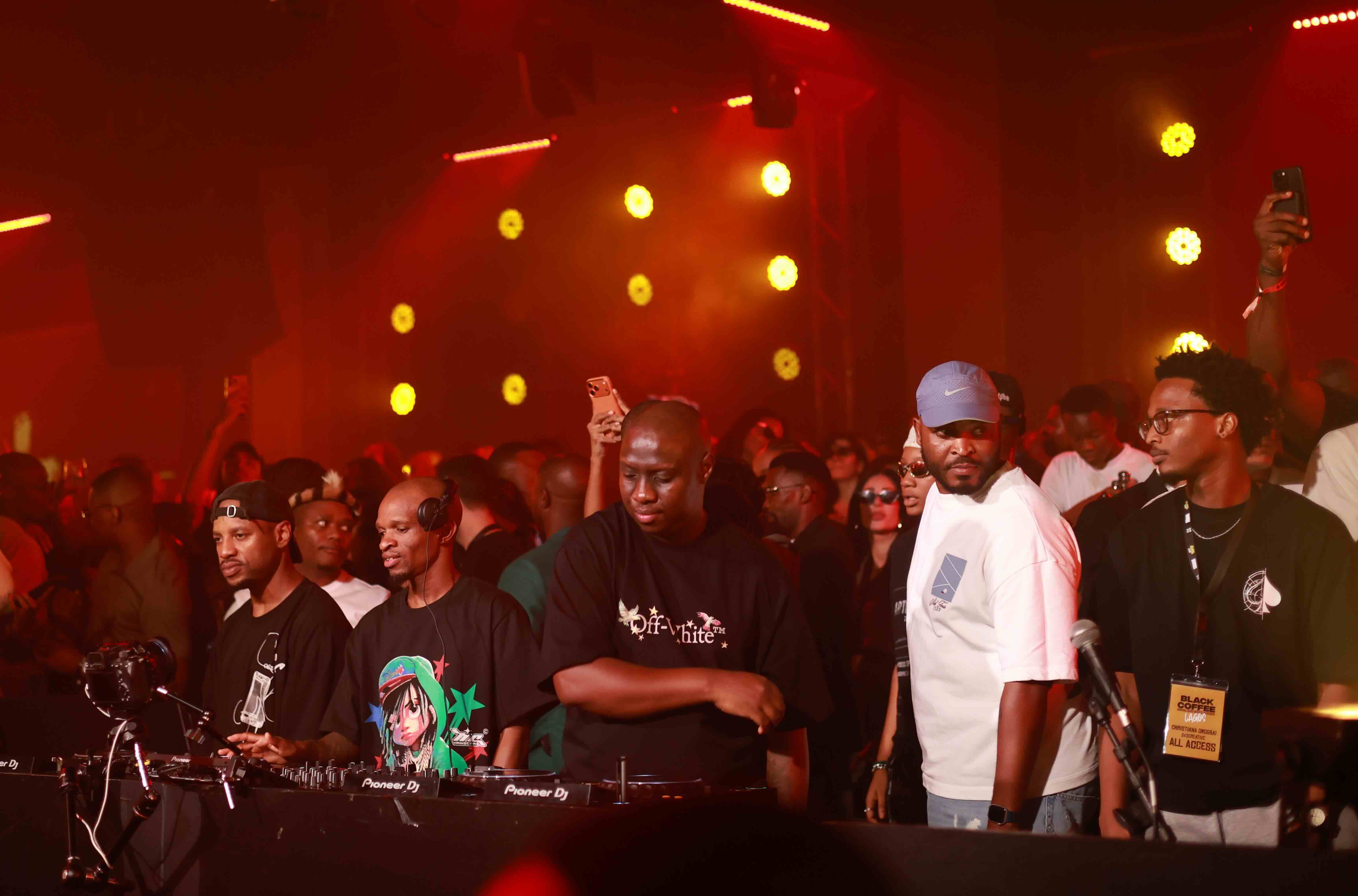
Their back-to-back-to-back set was the standout sequence of the evening. Caiiro in particular drew the kind of response that reminds you what a DJ can do when they know exactly where they are and who they are playing for. The B3B was not a warm-up. It was a statement in its own right, a demonstration that the talent producing and performing this music across the continent does not need a famous name above it to hold a room.
That the night was built this way, with genuine weight given to artists who are not yet household names outside the electronic music world, reflects something intentional about how M:E Entertainment has approached this project. They are not simply importing a global brand and pointing Lagos at it. They are building a scene, with all the infrastructure that entails.
Black Coffee, born Nkosinathi Innocent Maphumulo in Durban in 1976, is the most significant figure afro house has produced. He carried the genre from South African townships to Ibiza's DC10, to Avant Gardner in New York, to the Grammy stage in 2022 when he became the first African artist to win Best Dance/Electronic Album. He DJs with one hand, his left arm paralysed since a car accident in 1990. He does not use that as a talking point. He simply plays.
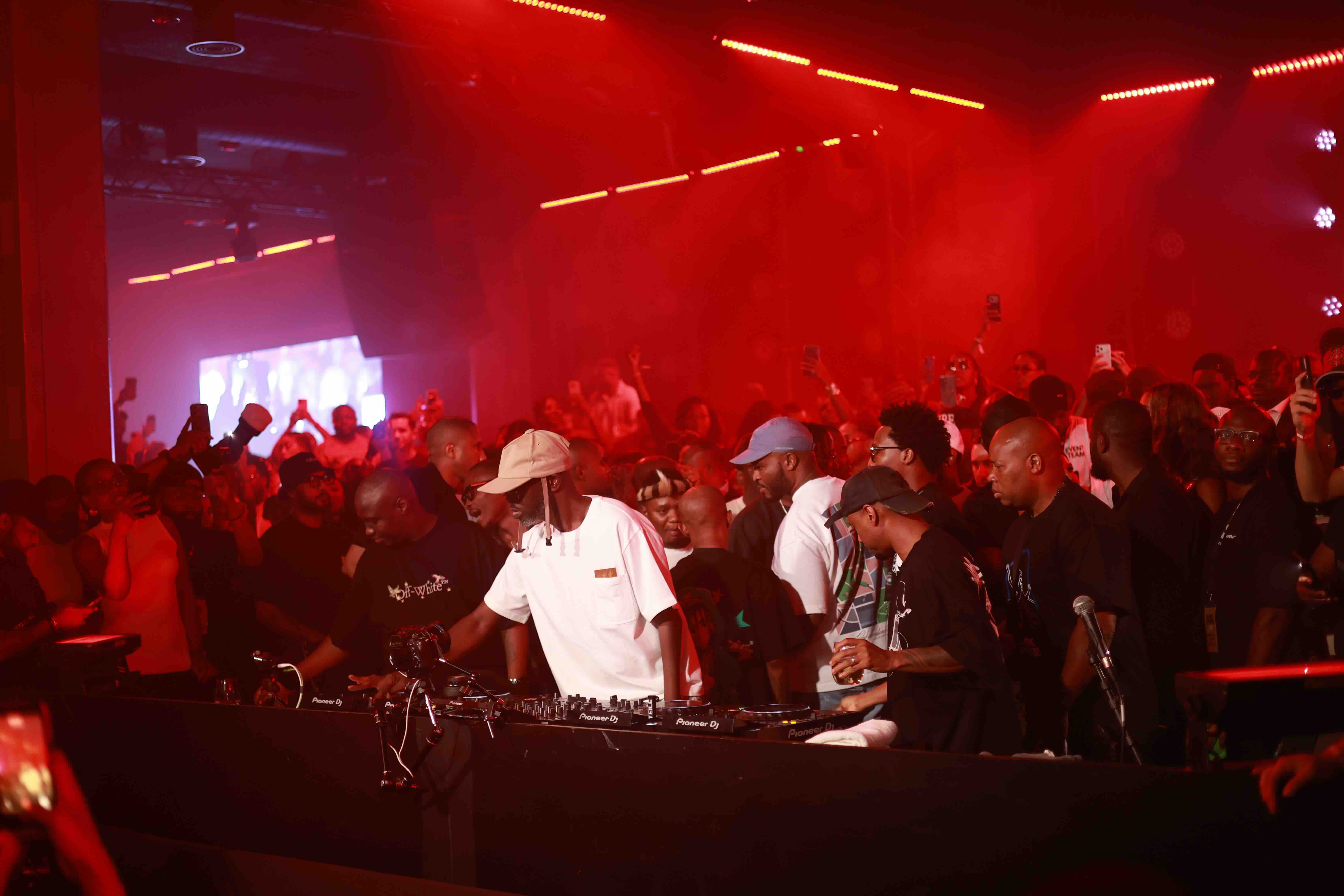
His sets are not designed to explode. They are designed to build. Gradually, patiently, over the course of hours, he constructs an emotional journey through music, reading the room and letting the crowd rise rather than forcing them. It is a quality that is easy to describe and difficult to convey until you are standing inside it. Being in that room on April 5, watching a packed Lagos crowd respond to exactly that quality, was something different from anything a recorded set can prepare you for.
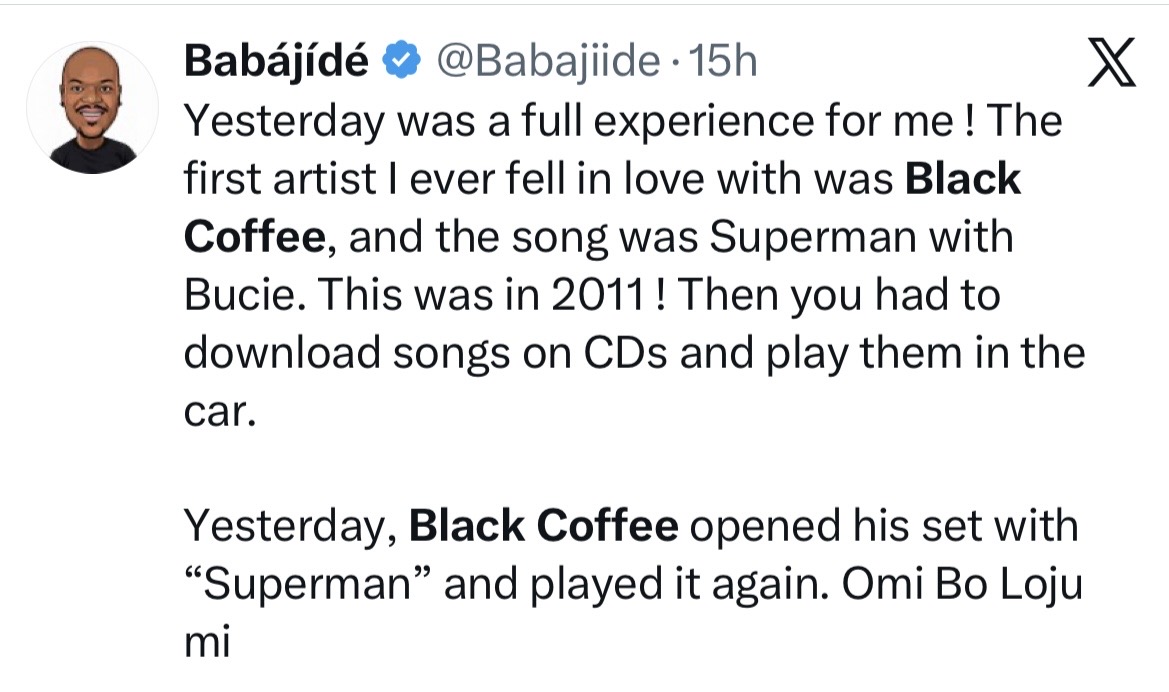
One attendee captured what many in the room were feeling. He had fallen in love with Black Coffee in 2011 through "Superman," a collaboration with Bucie, downloaded onto CD and played in the car because that was how you got music then. Black Coffee opened his Lagos set with that song. Fifteen years of relationship with an artist, collapsed into a single opening track in a packed room. The response in that moment said everything about who was in that room and why they were there.
Another person wrote afterward that they had spent the previous day unwell, had forced themselves out, and the moment they stepped onto the dance floor they felt healed. The word is not incidental. House music has always carried that quality for the people who understand it, something closer to ritual than entertainment. Black Coffee is, more than almost any other figure in the genre, the person who makes that quality audible.
South Africa gave the world afro house. It developed the genre over decades, built its infrastructure, produced the artists, and through figures like Black Coffee exported it to the most prestigious stages in the world. Lagos, for all its musical dominance in the Afrobeats space, has historically been a receiver of this particular sound rather than a shaper of it.
April 5 began to shift that. Not through performance alone, but through the quality and specificity of the audience. A crowd that knew the music, that responded to it with understanding rather than novelty, that had its own relationship with these artists built over years of engagement, is a crowd that signals something real about a city's readiness. Lagos did not just show up for Black Coffee. Lagos showed up knowing what it was showing up for.The ambition M:E Entertainment has stated publicly, that Lagos should be discussed with the same reverence as Fabric in London or DC10 in Ibiza, is not a modest one. But the conditions for that conversation are being built. The community exists. The appetite is real. What April 5 demonstrated is that when the right event arrives, Lagos can meet it.
The Nigeria-South Africa musical relationship is one of the more interesting developments in African music right now. South African DJs are widely regarded among the best in the world at what they do. Nigerian DJs and producers are finding their own voice in the electronic space. The exchange that happened at the Royal Box on Easter Sunday was, in that sense, more than a concert. It was a data point in a longer conversation about where this continent's music is going and who is shaping it.
That conversation is still early. But Lagos, as it turns out, has been ready for it longer than most people realised.