Stay In This World
The stories, the culture, the conversations. Every week.
No spam. No third parties. Just Unruly.
How a Franco-Gabonese Artist Is Redefining Visibility on Her Own Terms

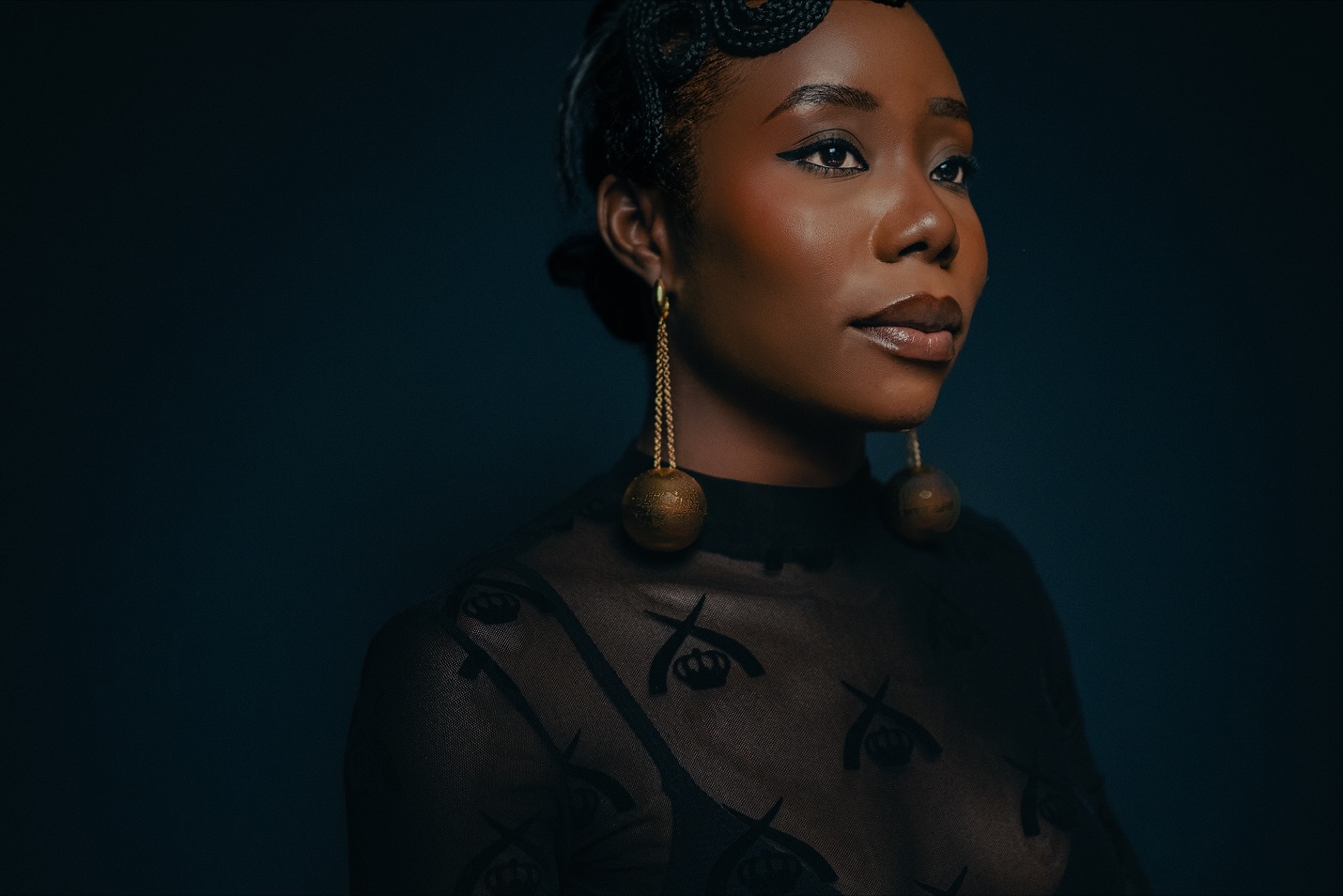
Anaïs Cardot releases her new single "3am In Paris" into a music landscape she's quietly been reshaping. The track, produced by LJay, explores those suspended hours where insomnia dissolves defenses and vulnerability takes control—a fitting metaphor for an artist who's built her career on refusing to shrink herself for anyone's comfort.
The Franco-Gabonese singer-songwriter has accumulated over 10 million streams since her 2023 debut EP Pink Magnolia, collaborated with Wizkid and Asake on their respective 2024 albums, and stood out at COLORS' "Tones Of Paris" show in October of 2025. But what makes Cardot's trajectory particularly significant isn't just the numbers or the high-profile features; it's how she's navigating visibility while maintaining cultural specificity in an industry that often demands assimilation as the price of access.
Born in Gabon and raised between there, France, the U.S., and Canada, Cardot is multilingual by necessity and choice. She sings in English, French, Portuguese, and Spanish—not as novelty, but as natural expression of a life lived across borders. Her music blends R&B, soul, jazz, and Afrobeats, rooted in what she calls her "big, artistic family." Her father was a musician who would make the family sing together after dinner, fill car rides with everything from reggae to funk, carry 7,000 songs on an iPad like a portable archive.
When she moved to Paris in 2018 to pursue music professionally, the decision was both geographic and artistic. Paris offered infrastructure—studios, producers, platforms. But it also demanded questions: How does a Franco-Gabonese artist exist in a French music industry that has historically preferred its Black artists packaged in specific ways? How do you maintain the rootedness of Gabonese influence, the intimacy of personal songwriting, the genre-fluidity of a transnational upbringing, while also building something commercially sustainable?
Cardot's answer has been to refuse the binary entirely. She doesn't translate herself for easier consumption, but she also doesn't position her multiculturalism as exotic difference. It simply is, the foundation from which everything else emerges.
Her collaborations with Wizkid and Asake in 2024 raised an important question about ownership and platform. When Cardot contributed vocals to "Slow" on Wizkid's Morayo and "My Heart" on Asake's Lungu Boy (while also co-writing "Mood"), was this cultural solidarity or strategic positioning? The answer, as with most things in Cardot's career, resists simple categorization.
In an interview with TheCable Lifestyle about the Asake collaboration, she explained how it happened: a mutual producer knew her work, Asake needed someone who could speak Spanish and sing on hooks, she was referred.
"It was a really beautiful experience," she said. "I learnt a lot, especially from Asake and the way he approaches music."
What's notable is the pragmatism. This wasn't framed as validation from a bigger artist or arrival on a global stage. It was work—meaningful, collaborative work with artists she respected, but work nonetheless. The collaboration introduced her to larger Afrobeats audiences, yes. But it also positioned her as someone shaping the sound, not just decorating it. Co-writing credits matter. They're the difference between being featured and being fundamental.
This is the tension Cardot navigates constantly: building visibility without erasure. Using platforms like Wizkid's album and Asake's tour (she performed with him at the sold-out O2 Arena) to reach audiences, while ensuring her own artistic identity doesn't get absorbed in the process.
There's a practical reality underlying all of this: producing music at the level Cardot is working requires resources most independent artists don't have. Pink Magnolia was co-produced by Anoop D'Souza and featured production from P.priime, the Nigerian hitmaker behind some of Wizkid and Rema's biggest records. "3am In Paris" brings in LJay, who's worked with Drake amongst others.
These aren't just names. They're access to studios, mixing engineers, distribution networks, the machinery that turns artistic vision into commercially competitive product. The question becomes: does working with producers connected to major artists and labels compromise what gets expressed, or does it simply make expression possible at scale?
Cardot seems to have found a middle path—collaborating with producers who understand the Afro sound and R&B infrastructure while maintaining control over her songwriting and aesthetic direction. Pink Magnolia explored themes of self-love, fear of intimacy, the "journey with emotions" and "how I tend to not accept love around me, whether it's from me or from someone else." The project was deeply personal even as it was professionally produced.
"3am In Paris" continues this trajectory—intimate subject matter (intrusive thoughts, overthinking, vulnerability in the dark hours) given sonic weight through high-level production. The result is music that feels both personal and polished, specific and accessible.
It would be easy, and reductive, to center Cardot's story on overcoming arthrogryposis, the condition she was born with that affects physical mobility. Doctors said she might never walk, talk, or sit independently. Her mother refused to accept those limitations, sought every possibility for mobility, and Cardot defied predictions.
But when asked in a 2023 Keke Magazine interview how arthrogryposis affected her musical journey, her answer was clear:
"To be honest, I wouldn't say arthrogryposis affected my musical journey. I've been taught to never think it's an obstacle, and I'm so aware of the limits that society puts in front of me that my goal is to always overcome them... To me, my condition is a blessing!"
She's not denying the condition exists or minimizing its impact. She's refusing to let it become the narrative frame through which everything else is understood. Her music isn't "inspiring despite disability", it's simply music, made by someone who happens to navigate the world differently than some others.
This matters because the music industry, like most industries, loves a redemption story. Disability becomes marketable when packaged as triumph. But Cardot's refusal to center that narrative is itself a form of ownership—deciding what defines her publicly, what gets foregrounded, what stays personal.
Emerging as "one of the leading figures of the new soul/R&B generation, rooted within Afro and jazz communities," as her team describes it, means something specific in 2026. It means navigating an industry where streaming numbers matter but don't always translate to financial sustainability. Where visibility is necessary but comes with pressure to perform identity in specific ways. Where collaboration can elevate or erase, depending on how it's structured.
Cardot is building something that looks deceptively traditional on the surface—quality music, strategic features, growing audiences—but operates according to different principles. She's multilingual not as marketing strategy but as lived reality. She blends genres not to be eclectic but because her influences refuse neat categories. She collaborates with major artists while maintaining co-writing credits and artistic control.
"3am In Paris" arrives as she enters what her team calls "a new era, connected to her story, vulnerability, and creative elevation." If the previous era was about establishing foundation—Pink Magnolia, the early collaborations, the sold-out shows—this era seems positioned to build on that foundation without compromising what made it solid.
The revolution isn't loud. It's a Franco-Gabonese artist singing in multiple languages, collaborating across borders, refusing to translate herself for easier consumption, and building a career that doesn't require her to choose between cultural specificity and commercial viability.