Stay In This World
The stories, the culture, the conversations. Every week.
No spam. No third parties. Just Unruly.
From frankincense to Thiouraye, Africa's scent culture runs deeper than most people know
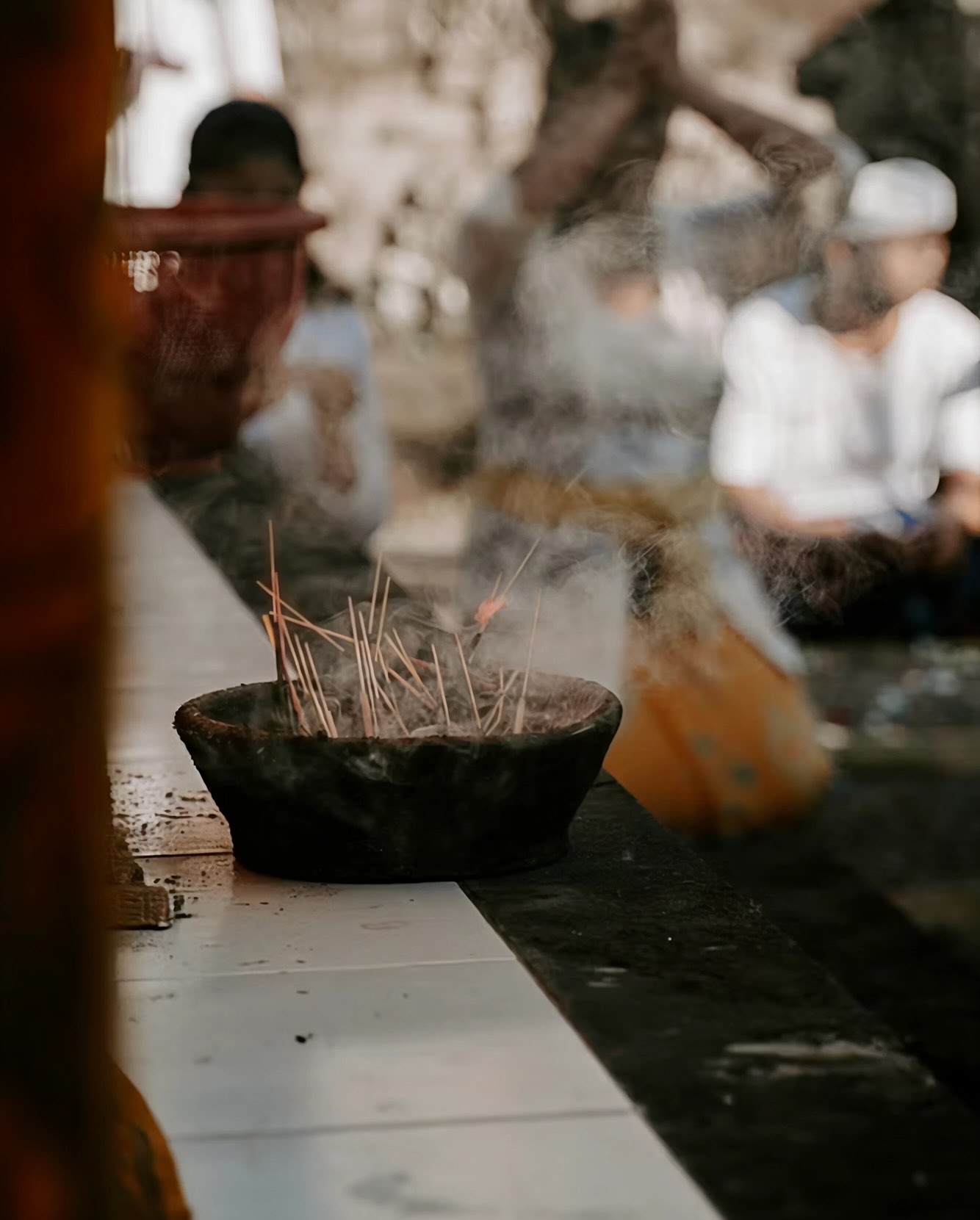
Scent arrives before anything else. Before a face is seen, before a name is exchanged, before a word is spoken. In many African cultures, this was never incidental. It was the point.
Across the continent and across millennia, fragrance was not a finishing touch or a luxury reserved for special occasions. It was a language that moved through daily life. It marked who you were, where you came from, what transition you were moving through. It connected the living to the dead, the human to the divine, the individual to their community. And long before European perfume houses built their reputation around scent as a refined art form, Africa had already been doing this work for thousands of years.
Ancient Egypt is where most Western accounts of perfumery begin, and the reason is legitimate. Egyptians developed Kyphi, one of the earliest known perfume blends, a complex mixture of resins, honey, wine, and aromatics burned in temples and used in the preparation of the dead. They believed fragrance was the sweat of the gods. They applied it in medicine, in ritual, in daily grooming. The technology of perfume, the distillation of scent into something portable and lasting, has Egyptian roots that are well documented.
But Egypt is one part of a much larger story. In the Horn of Africa, Ethiopia and Somalia have supplied the world with frankincense for over five thousand years. The Boswellia tree, tapped by hand to release its resin, harvested using methods that have changed almost nothing across that span of time. The same material that burned in pharaonic temples, that scented the courts of ancient Rome, that appears in the Biblical account of the Nativity, came from this continent.
In Senegal, the tradition of Thiouraye is so intimate it resists industrial replication. Women blend wood shavings, fragrant herbs, and incense with sandalwood, musk, oud, or amber. The mixture sits for months, sometimes years, until the elements have fully merged. The recipe is not written down. It travels from mother to daughter as knowledge rather than formula, and every woman's version carries her own variation. On the East African coast, the Swahili ritual of Kunukia uses scented smoke to perfume clothes, hair, and bedding before significant occasions. In Somali homes, entering as a guest has long involved wafting incense smoke over yourself, a gesture of welcome and purification combined. These are not decorative customs. They are structural ones, woven into how people move through the significant moments of their lives.
For much of the twentieth century, the French perfume houses that positioned themselves as the custodians of fragrance as an art form were sourcing their raw materials from Africa. Algeria and Morocco supplied geranium and roses. Tunisia supplied neroli. Comoros and Madagascar supplied ylang-ylang. Kenya supplied cedarwood. The continent provided the supply chain for an industry that claimed the authorship.
This is not a straightforward story of extraction. The agricultural relationships created livelihoods, sometimes significant ones. Thousands of Tunisian women have picked orange blossoms each spring for the neroli factories for generations. But the cultural credit, the prestige of the finished product, the narrative of who invented and perfected the art of perfumery, that remained elsewhere. Africa provided the raw material while Europe constructed the story around it.
There is also Bint-El-Sudan, created in 1920 and drawing directly from Sudanese aromatic traditions. By some accounts it was briefly among the best-selling perfumes in the world, a product built on African scent culture, named for a Sudanese woman, created by a British adventurer and sold by a British company. The tradition that inspired it was largely invisible in the telling of where the perfume came from.
What is happening across the continent now is not an emergence of something new. African perfumers are building practices that make the origin of the tradition visible, placing authorship where it has always belonged.
Scent of Africa, founded in Ghana, operates under the motto "Who I am is where I am from." Their fragrances are named for African deities and draw from the continent's botanical traditions: Madagascan clove, Egyptian jasmine, South African buchu. These ingredients have always been here. The decision to build a finished luxury product around them, to present that product as fine fragrance on its own terms, is what has shifted.
Réserve en Afrique in Senegal, Catherine Omai in Nigeria, Maison Yusif in Ghana, whose founder Yusif Meizongo Jnr. became the first West African certified by the International Perfume Foundation. Perfumeology, based between Lagos and London, whose founder describes their process as intimate, intuitive, and intentionally poetic, with Nigerian heritage carried in the warmth of the spice and the richness of the wood. These are different projects with different aesthetics and different ambitions. What they share is an insistence on being the authors of their own fragrance story rather than the supplier of someone else's.
Scent is the sense most directly connected to memory. Smell bypasses the thalamus and travels directly to the brain's limbic system, the region governing emotion and memory. A fragrance can return you to a place or a person with a speed and completeness that no other sense can match.
This is why what African perfumers are building matters beyond the commercial question of market share. When Thiouraye is passed from mother to daughter, a way of carrying someone forward in scent is being transmitted alongside the recipe. When Senegalese streets carry a particular warm and resinous smell, that smell is communal memory made atmospheric. It is identity you can breathe.
The global fragrance industry has always understood this about scent. It has built substantial businesses on the promise that a bottle can carry aspiration, memory, desire. What it did not always acknowledge was that Africa had understood this first, and built traditions around it that ran far deeper than any marketing brief.
Africa's fragrance market is projected to reach nearly nine billion dollars, and the niche end is where growth is most concentrated. The appetite for something specific and rooted, something that smells like a particular place and culture rather than a generic idea of luxury, is real and growing.
The continent that supplied the world's scent for centuries is now building its own houses, naming its own products, telling its own stories. The raw material was always African. The authorship is catching up.