Stay In This World
The stories, the culture, the conversations. Every week.
No spam. No third parties. Just Unruly.
Africa has been at the World Cup since 1934. It has never felt entirely welcome. That is changing, slowly, on its own terms.
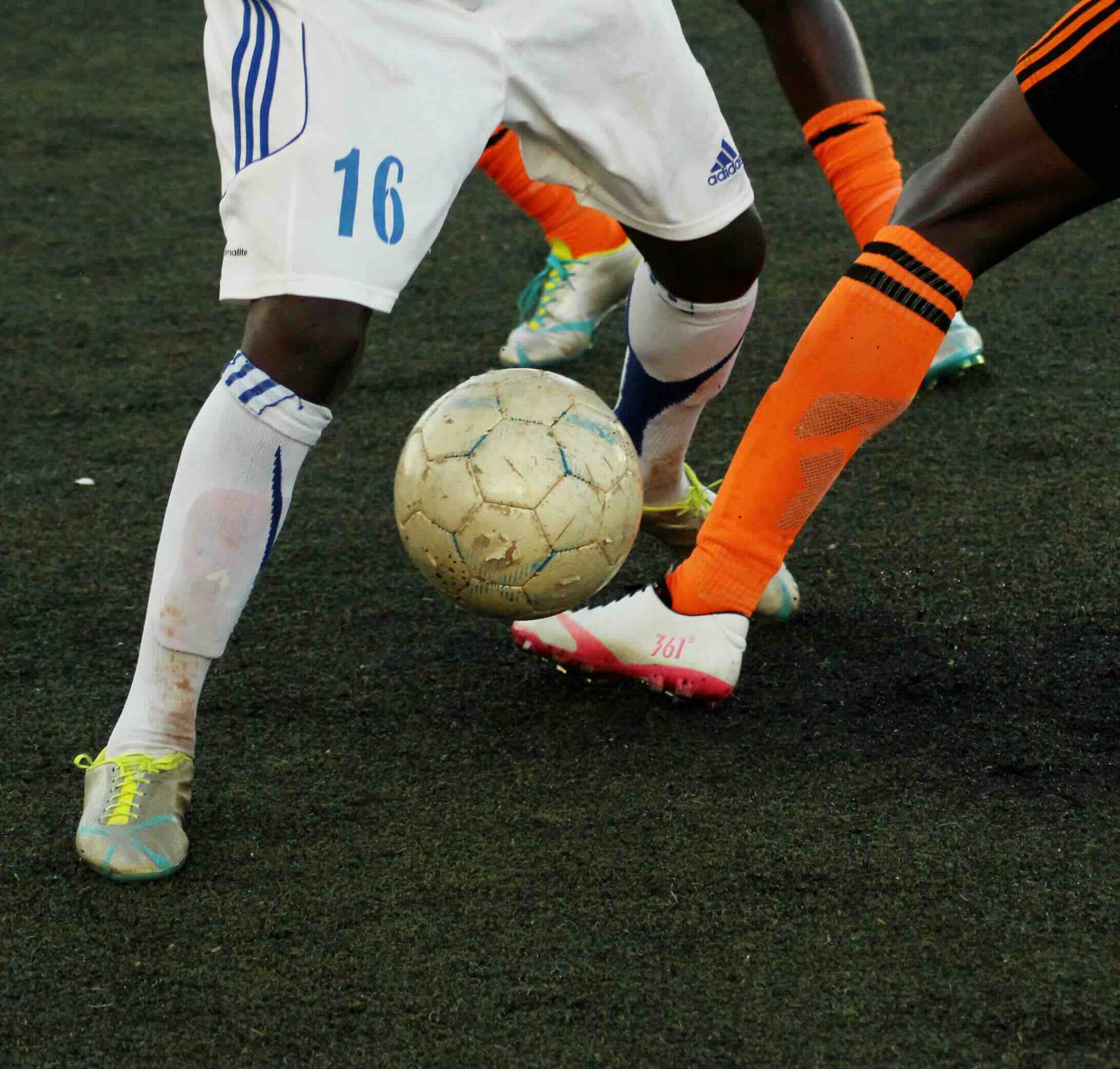
The FIFA World Cup began in 1930. Egypt qualified for the second edition, in 1934. Ninety-two years ago, an African nation was already present at football's second-ever global gathering. Yet the dominant narrative of African football at the World Cup has always been one of “coming soon”, “we are still on its way”, or who’s best is always “just around the corner”.
The story of Africa at the World Cup is not the story of a continent that discovered football late and is slowly catching up. It is the story of a continent that has been present from nearly the beginning, that has produced moments of extraordinary brilliance at regular intervals, and that has spent decades navigating a competition whose structures has not always been designed with it in mind. The failures are real, no doubt. But so are the circumstances that shaped them.
Some performances at the World Cup transcend just the end result. They change what people believe is possible, not just for the team on the pitch but for everyone watching from the same country, city, or living room. Cameroon in 1990 was one of those performances. They beat defending champions Argentina in their opening game, a result so unexpected the Argentines were widely criticized rather than the Indomitable Lions celebrated. Central to that run was Roger Milla, thirty-eight years old and two years retired, recalled to the squad by President Paul Biya personally. He came off the bench, scored four goals across the tournament, and after each one ran to the corner flag and danced with the joyful unselfconsciousness of someone who knew exactly what he was doing and did not care what anyone thought about it. Cameroon reached the quarter-final, the first African team to do so.
Eight years before that, the same tournament had produced a different kind of moment. Algeria beat West Germany in 1982. Then Austria and West Germany played out a result in their final group game that conveniently sent both through and eliminated the Algerians, who had done nothing wrong except beat the wrong team. The collusion was widely condemned and led to rule changes ensuring final group games are now played simultaneously. Africa, at its first serious World Cup challenge, had already encountered the specific texture of how the game's power structures operate when inconvenienced.
Senegal in 2002 belongs in any honest account of Africa at the World Cup. It was Senegal's first ever World Cup appearance and they beat France, the reigning world and European champions, in their opening game. Papa Bouba Diop's goal and the celebration that followed remains one of the most purely joyful images the tournament has ever produced. They went on to reach the quarter-final.
For twenty years after Senegal 2002, the quarter-final remained the limit. Ghana came agonisingly close in 2010, reaching the quarter-final and missing a penalty in the final seconds of extra time against Uruguay that would have sent an African team to the semi-final for the first time. Luis Suárez's deliberate handball on the goal line, the penalty missed, the elimination that followed, became one of the tournament's most debated moments. The semi-final remained out of reach.
Morocco in 2022 dismantled that ceiling entirely. They defeated Belgium, Spain, and Portugal before losing to France in the semi-final. They did not play like gate-crashers. They played like contenders. Their run resonated across the Arab world and across Africa in ways that went well beyond the football itself. What Morocco proved was not that African football “is finally here”. Rather, It was that African football had been capable of this for a long time. Their run was the culmination of decades of structural investment and deliberate building, of a decision to develop a coaching philosophy and a playing identity rather than simply selecting talent and hoping. That distinction matters, because not every African nation has made those investments, and the results reflect that honestly.
Africa has produced extraordinary footballers for decades. The list of African players who have defined European club football is long and still growing. What has not kept pace, in several cases, is the institutional infrastructure behind national teams: consistent coaching philosophies, stable federation governance, long-term player development pathways, and the financial conditions that allow preparation to match talent.
The contrast is visible within the continent itself. Morocco's semi-final run in 2022 was not accidental. It came from years of investment in a national football identity, a coaching structure, and a clear idea of how they wanted to play. Senegal's consistency across multiple tournaments reflects a similar intentionality. Meanwhile other nations, including some with significant talent pools, have cycled through coaches, struggled with federation dysfunction, and arrived at tournaments underprepared. Those failures belong to the teams and the systems behind them, not to external forces.
The infrastructure question is real but it is also not an excuse that explains everything. Some of the nations that have failed to qualify for 2026 had resources and talent that should have been enough. The gap between what was available and what was produced is a question those federations will need to answer for themselves.
Here is a fact that rarely appears in conversations about African football's failures. In the World Cup's entire history, only eight countries have ever won it: Brazil, Germany, Italy, Argentina, France, Uruguay, England, and Spain. All eight are from Europe or South America. No Asian team has won it. No North or Central American team has won it. No African team has won it.
The Netherlands has reached three World Cup finals without winning. Hungary and Czechoslovakia each reached two finals. Croatia and Sweden have each reached one final without winning. Nobody describes Dutch football as perpetually failing or as not belonging at the table. The Netherlands are considered one of the great footballing nations. The question of why no African team has won is legitimate and worth asking seriously, including the honest internal answers. But the conversation about who belongs at the top of world football rarely centres on those other absences the same way it centres on Africa's.
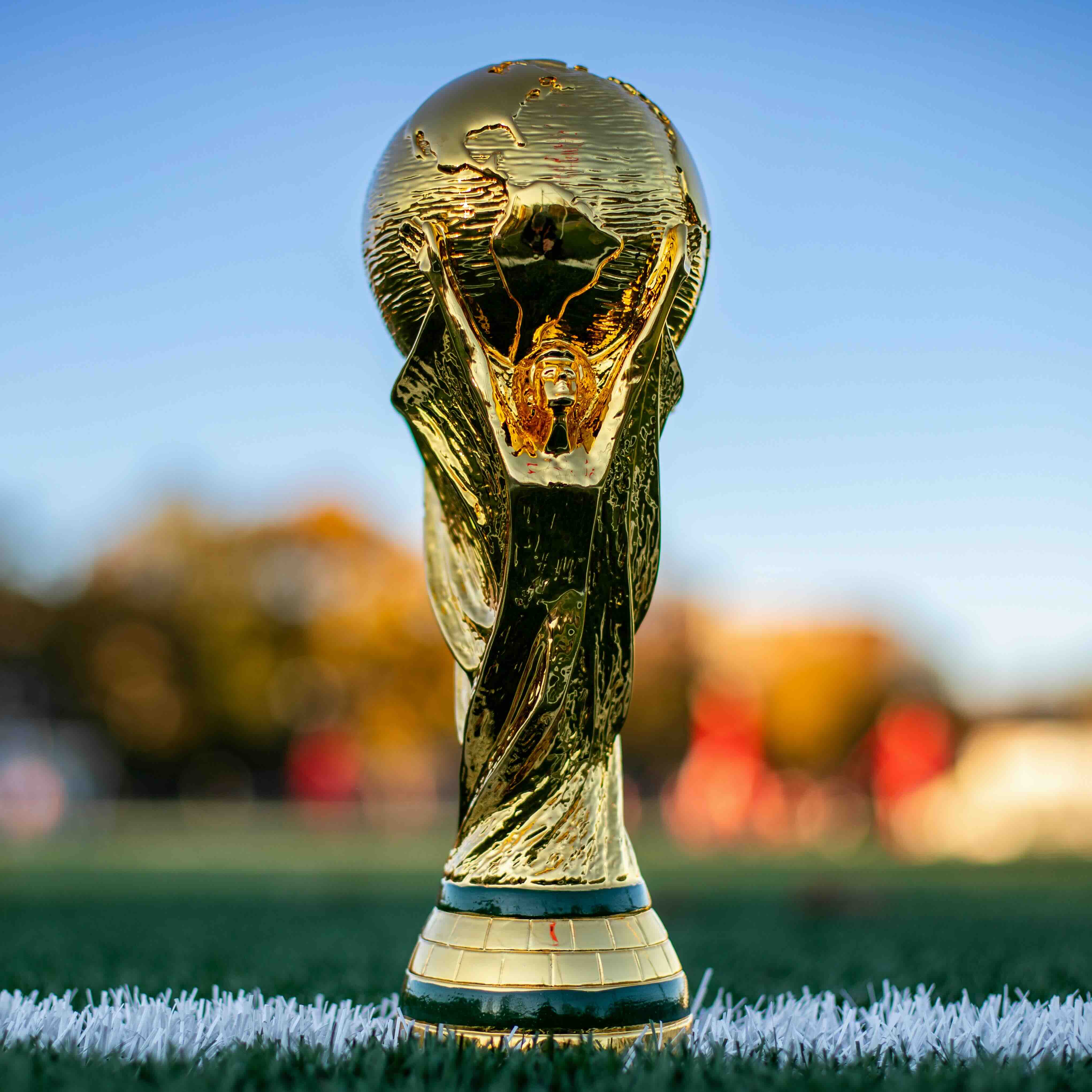
In November 2025, as Italy struggled through qualifying for a tournament they would ultimately fail to reach for the third consecutive time, their coach Gennaro Gattuso offered his analysis of the problem. "In 1990 and 1994 there were two African teams at the World Cup," he said. "Now there are nine. It's not a controversy, but it creates difficulties." The implication was clear: Africa's expanded representation was part of the reason Italy was struggling to qualify. Italy failed to qualify. Gattuso was sacked. The irony landed without requiring much commentary.
Meanwhile FIFA was working on a different response to a different problem in world football. They released a new set of rules for the upcoming competition, and one of the new rules allows referees to issue a red card to any player who covers their mouth during a confrontation with an opponent. This was prompted in significant part by an incident involving Brazil's Vinícius Júnior, who alleged he was racially abused by an opponent who hid his face while speaking. The rule has been informally called the Vinícius rule. It will be enforced at the 2026 World Cup, a tournament with more African teams than any in history, on pitches where African and African-descended players have long reported experiencing exactly the kind of abuse the rule is designed to address.
A record ten African nations will be in North America this summer. Nine qualified automatically through the CAF process: Morocco, Senegal, Egypt, Ivory Coast, Algeria, Ghana, Tunisia, South Africa, and Cape Verde, who qualified for the first time in their history. DR Congo earned the tenth spot by fighting through the African play-offs and then defeating Jamaica in the inter-confederation playoff, returning to the World Cup for the first time since 1974 when the country was still known as Zaire.
Who is absent from that list matters too. Nigeria will not be there, eliminated on penalties by DR Congo in the qualifying play-offs. Cameroon will not be there, beaten by Cape Verde. The teams that defined Africa's World Cup identity in the 1990s and early 2000s are watching from home. New names are carrying the continent forward.
Eight of the ten African teams at 2026 are led by local coaches or members of the diaspora who share a cultural and emotional connection with their squads, a shift from decades past when African federations were criticised for hiring European managers shortly before major tournaments. That change is not cosmetic. It reflects something about how African football is beginning to understand and trust itself.
The continent that gave the world some of its most gifted footballers, that has produced moments of extraordinary beauty at nearly every tournament it has attended, that has been present since 1934 and been told since 1934 that its real arrival is still coming, sends ten teams to North America this summer. The seat at the table is no longer in question. What comes next happens on the pitch.